Whoop Enters the Social Media Space with "Whoop Humans," Promising a 100% Bot-Free Ecosystem Tied to Biometric Data

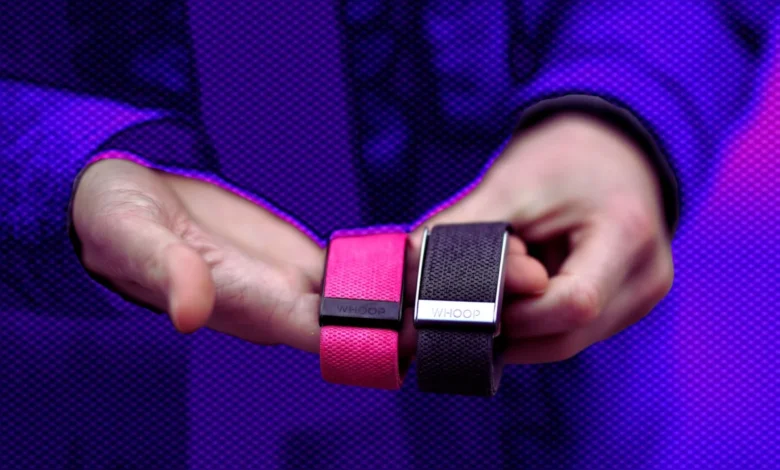
In an era dominated by algorithmic feeds, automated engagement pods, and an escalating flood of generative artificial intelligence, fitness technology company Whoop is taking a decidedly biological approach to social networking. This week, the maker of screenless biometric bands officially launched "Whoop Humans," a dedicated in-app social ecosystem that the company is billing as the first digital community anchored entirely in verified human physiology.
According to corporate announcements, access to the platform is strictly gated behind Whoop’s proprietary hardware. Every profile, post, and reaction on Whoop Humans is tethered to a living, breathing user whose heartbeat is continuously monitored by the wrist-worn device. In launching this feature, Whoop is attempting to bridge the gap between solitary health optimization and collective social support, creating a walled garden where bots, fake accounts, and manufactured engagement are physically impossible.
A Vision for Authenticity in a Digital World
The initiative stems from a broader industry critique articulated by Whoop Founder and Chief Executive Officer Will Ahmed. As digital platforms increasingly grapple with the proliferation of AI-generated content, deepfakes, and automated troll farms, Ahmed believes users are experiencing a profound fatigue with conventional social media.
"In a world that’s becoming increasingly artificial, we’re building something deeply human," Ahmed stated in the official launch release. "Every account represents a real person with a verified heartbeat. They have real goals, challenges, and achievements. That’s what makes Whoop Humans different, and it’s a big area of investment for us."
Rather than focusing on aesthetic curation, follower counts, or viral reach—the traditional currency of legacy social networks—Whoop Humans focuses on physiological data as a shared language. Within the redesigned companion app, members can choose to follow friends, family members, and athletic peers. They can publish updates regarding specific workout milestones, sleep improvements, and recovery streaks, while interacting through direct comments and reactions.
However, the architecture of the network is intentionally designed to promote empathy rather than competition. By granting users visibility into each other’s recovery scores and stress metrics, the platform aims to foster mutual accountability and emotional check-ins.
Mika Bublitz, a Whoop member participating in the initial rollout, highlighted the psychological safety of the platform. "Sometimes people don’t tell you when they’re not feeling their best," Bublitz noted. "If I see a friend’s Recovery is low, I can check in and say, ‘Hey, it’s okay to take it easy today.’ That’s what I like about Whoop Humans. It gives us another way to look out for each other."
Participation in Whoop Humans is entirely voluntary. Users who prefer to keep their fitness journeys private can continue to use the hardware and software suite as a strictly personal health dashboard without opting into the social layer.
The Evolution of Whoop: From Niche Tracker to Mass Market
The rollout of Whoop Humans marks a significant milestone in a 14-year corporate journey that founder Will Ahmed famously describes as taking "a very long time to be an overnight success." Founded with the mission to optimize human performance through continuous physiological monitoring, the company spent its first decade building a loyal following primarily among elite athletes, military operators, and dedicated biohackers.
For years, Whoop distinguished itself from competitors like Fitbit and Apple by adopting a screenless design. By removing the display—which eliminates the distraction of incoming text messages, emails, and notifications—the company encouraged users to wear the device 24 hours a day without cognitive interruption. This hardware philosophy has recently caught on industry-wide, influencing competitors to explore similar form factors.
The company’s growth trajectory has accelerated dramatically in recent years. Reflecting on the timeline during a recent appearance on the All-In Podcast, Ahmed detailed the company’s exponential scaling phase. It took Whoop roughly 12 years to acquire its first one million active members. From there, the momentum compounded rapidly: reaching two million members took approximately 18 months, while the jump to three million occurred in just six months. Driven by high-profile endorsements—such as a heavily publicized, multi-year partnership expansion with professional basketball icon LeBron James—Whoop expects to close out the current fiscal year with a base of approximately four million global members.
Financial backing reflects this market confidence. Whoop operates on an annual membership model, charging between $199 and $359 per year, a fee that covers continuous hardware upgrades and access to its deep-dive analytical software. Company metrics underscore exceptional user stickiness, with internal reports indicating that active members open the Whoop companion app an average of more than eight times per day.
Validating the Wearable Ecosystem
Whoop’s strategic pivot toward community and social engagement is underpinned by growing clinical and behavioral data regarding the efficacy of continuous wearable use. Last year, the company published peer-reviewed research in the scientific journal Sensors, analyzing a 12-week dataset drawn from nearly 12,000 active Whoop members.
The findings suggested a direct correlation between daily device wear and improved lifestyle habits. Participants who wore the Whoop band consistently logged an average of more than 90 additional minutes of exercise per week compared to sporadic users. Furthermore, consistent wearers recorded roughly 20 extra minutes of sleep per night, translating to over two hours of additional rest on a weekly basis.
By introducing Whoop Humans, the company hopes to leverage these behavioral insights through social reinforcement. Behavioral science has long demonstrated that health and fitness goals are more successfully achieved and sustained within a supportive community framework. By turning personal health metrics into a shared social experience, Whoop is banking on peer influence to drive even higher engagement and retention rates across its user base.
Navigating an Increasingly Crowded Market
Despite its rapid expansion and dedicated user base, Whoop operates in an intensely competitive consumer technology landscape dominated by deep-pocketed tech giants. The health and fitness wearable sector has become a primary battleground for companies looking to capture recurring subscription revenue and vital biometric data.
Google has made aggressive moves into the screenless fitness category, rolling out the Fitbit Air earlier this year at an accessible price point of $100. The device directly mirrors Whoop’s minimalist, screen-free philosophy, threatening to undercut Whoop’s premium membership pricing model. Meanwhile, industry analysts and supply chain reports suggest that Apple is actively developing its own screenless wearable device, a move that would pose a direct challenge to both Whoop and its competitors in the emerging minimalist health sector.
In light of these competitive pressures, the launch of Whoop Humans represents more than just a new feature—it is a strategic differentiator. While hardware specifications like battery life, sensor accuracy, and aesthetic design can be easily replicated or matched by rivals, a proprietary, closed-loop social network tied securely to verified physiological data cannot be easily duplicated. By creating a community ecosystem where users are psychologically invested in one another’s real-time well-being, Whoop is attempting to build a formidable "data moat" that protects its market share against commoditization.
Broader Implications and Future Outlook
The introduction of Whoop Humans signals a fascinating convergence of digital health and social media. As mainstream social platforms face mounting distrust due to misinformation, algorithmic polarization, and bots, the concept of a "biometrically verified" network introduces a compelling alternative model for digital interaction.
If successful, Whoop Humans could redefine how digital communities are formed, shifting the foundation of online connection from what people say or post to how their bodies physically respond to daily life. For a company that has spent over a decade tracking sleep, strain, and recovery in isolation, this new chapter transforms the wristband from a private health coach into a passport for collective human connection.
As the feature continues its global rollout across the iOS and Android applications, all eyes will be on whether Whoop members embrace the social experiment—and whether the promise of a bot-free, heart-verified network can successfully carve out a permanent niche in the crowded social media landscape.