Truecaller Launches New Scam Checker Tool to Combat Fraudulent Links and Messages Across the Open Web

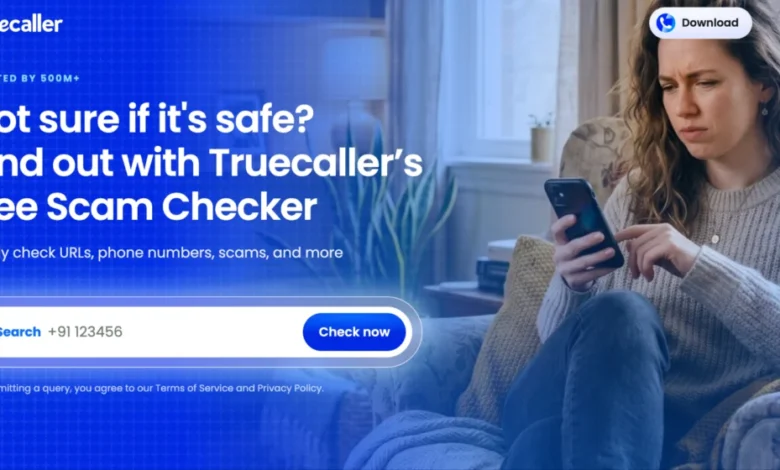
After more than a decade of establishing itself as the global authority on caller identification, Truecaller is evolving its strategy to meet the shifting landscape of digital deception. On Sunday, the Swedish tech giant officially launched Scam Checker, a versatile, free-to-access service designed to verify suspicious phone numbers, URLs, and text messages. Unlike the company’s flagship mobile application, this new tool operates entirely on the open web, requiring no account registration or sign-in process, marking a significant pivot toward broader, frictionless security for internet users.
The service, now available in India with plans for rapid expansion into Latin America, the Middle East, Africa, and Southeast Asia, leverages the massive database of community-reported threats Truecaller has cultivated over its history. By allowing users to copy and paste potentially malicious content, the service provides an immediate risk assessment, helping to bridge the gap between reactive security and proactive user safety.
The Evolution of Digital Fraud
The necessity for a tool like Scam Checker is underscored by the changing tactics of modern bad actors. Historically, mobile fraud was dominated by unsolicited voice calls—the primary vector that propelled Truecaller to its current status as a platform with over 500 million monthly active users. However, the digital threat landscape has become significantly more complex.
Recent data, including a 2025 GSMA survey of Indian adults, reveals that fraudulent activity has migrated heavily toward digital messaging platforms. According to the report, 46% of individuals who identified themselves as victims of scams were targeted through messaging applications. Meanwhile, 37% of incidents occurred via SMS, and only 32% involved traditional voice calls. This migration toward "multi-channel" deception—where scammers combine social engineering with malicious web links—has created a need for tools that can analyze more than just an incoming phone number.
Truecaller’s own internal data mirrors these industry trends. Between September 14 and September 20, the company processed an astonishing 12.9 billion messages, identifying and flagging 20.3 million of them as fraudulent. These figures demonstrate the scale of the challenge and justify the company’s move to expand its defensive perimeter beyond the constraints of a standalone mobile app.
How Scam Checker Works
The functionality of Scam Checker is built on a proprietary risk-analysis engine. When a user inputs a suspicious link, the tool automatically expands shortened URLs and follows redirects to reach the final destination. This final URL is then cross-referenced against Truecaller’s extensive database of known malicious sites and fraud patterns.
For text messages containing mixed content, the service is designed to parse the text, extracting both phone numbers and URLs to perform a multi-layered verification. By tapping into the company’s "ScamFeed"—a community-driven platform where users share details about scams—the tool provides context that is often unavailable through standard browser-based filters. Currently, there are approximately 20,000 active scam reports in the Indian database, with roughly 1,300 new entries being submitted by the community each week.
Despite the power of this new service, Truecaller remains committed to its core application for deeper identity verification. While Scam Checker offers a "safe or suspicious" assessment, the more granular details—such as the specific identity or company name associated with a caller—remain exclusive to the registered Truecaller app. This tiered approach acts as a "freemium" funnel, providing essential utility to the public while maintaining the value proposition for its primary subscriber base.
Strategic Pivot Amid Market Pressure
The launch of Scam Checker is not merely a feature update; it is a strategic response to a maturing market where Truecaller’s traditional dominance in the caller ID space is being challenged. In India, the company’s largest market with over 350 million users, the competitive environment has intensified significantly.

The Indian government has recently begun rolling out a federal Calling Name Presentation (CNAP) service, an initiative that could potentially render third-party caller ID apps redundant. Concurrently, major ecosystem gatekeepers like Apple and Google have integrated native spam-detection and caller identification features directly into the operating systems of mobile devices.
Furthermore, regulatory scrutiny has increased. Just last week, India’s telecom regulator issued a directive requiring caller-ID apps to share their community-reported spam data with telecom operators. Truecaller leadership has been vocal in its criticism of this mandate, characterizing it as a "one-way exchange" that places a disproportionate burden on private innovators while benefiting state-aligned infrastructure without a reciprocal sharing of data.
In light of these pressures, Truecaller’s decision to move beyond the phone dialer is a necessary adaptation. CEO Rishit Jhunjhunwala noted that the company’s internal metrics show roughly 14 million web searches per month specifically targeting the verification of suspicious links and numbers. This user behavior serves as the primary catalyst for the new tool. "When you need it, you’re usually somewhere else," Jhunjhunwala said. "The link shows up on WhatsApp. Your mum gets a message about a traffic fine. A friend forwards you a screenshot and asks, ‘Is this real?’ What people do in that moment is search."
Future Roadmap and Technological Integration
Looking ahead, the company intends to refine the Scam Checker to handle increasingly sophisticated forms of fraud. The roadmap for the tool includes the ability to upload screenshots, which will enable the system to use optical character recognition (OCR) and image analysis to identify fraudulent layouts or phishing attempts embedded in visual media.
Beyond the consumer-facing tool, the intelligence gathered through these reports is expected to bolster Truecaller’s enterprise offerings. Through its "Truecaller for Business" division, the company sells fraud detection and risk assessment services to enterprises. By diversifying the sources of their intelligence—from voice calls to messages and now web links—the company is building a more robust data moat that is less dependent on any single communication channel.
The broader implication of this move is the normalization of cybersecurity as a public utility. By making sophisticated fraud-detection tools accessible without a login or installation, Truecaller is positioning itself as a foundational layer of the internet, similar to how modern browsers have integrated anti-phishing protection.
Industry Context and Analysis
Industry analysts observe that companies like Truecaller are currently in a "race against the scammers" regarding technical agility. As AI-powered phishing and "vishing" (voice phishing) become more prevalent, the speed at which a company can identify and distribute warning signals determines its market relevance.
"The move to the open web is a classic ‘search-and-verify’ model that mimics the utility of platforms like Google Safe Browsing, but with the added layer of human intelligence," said one industry observer. "The challenge for Truecaller will be maintaining the veracity of the crowd-sourced data while scaling it to global markets where fraud patterns may differ significantly from those in India."
For now, the focus remains on user acquisition through utility. By addressing a pain point that occurs outside of its app, Truecaller is effectively expanding its brand footprint into the messaging and social commerce spaces. As the company navigates the tightening regulatory environment in India and the encroaching native features of global tech giants, the success of the Scam Checker may prove to be the litmus test for whether a platform built on phone numbers can successfully pivot into a comprehensive digital safety ecosystem.
As the company prepares for its next phase of growth, the transition from a niche caller ID service to a broader, "platform-agnostic" security entity appears to be the most viable path forward. By following the scammer across channels—from the voice call to the WhatsApp message and the browser link—Truecaller is betting that its most valuable asset is not its user interface, but the massive, real-time intelligence network it has built over the last decade.
Related posts: