Amazon Kindle Colorsoft Review: Assessing the Future of E-Reader Technology

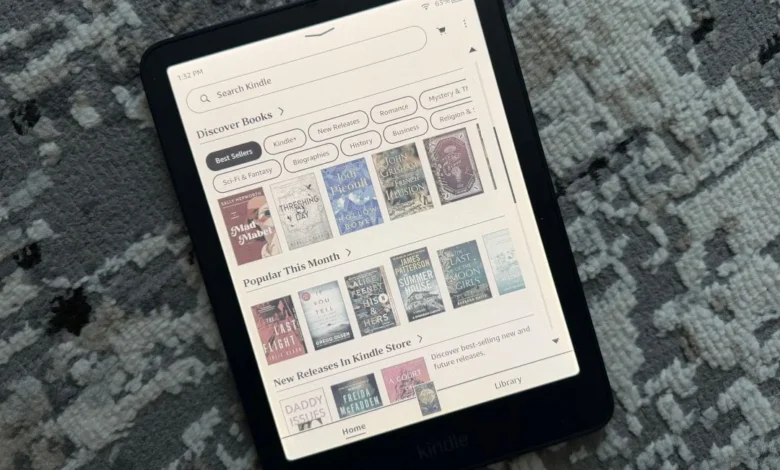
Amazon has officially expanded its industry-leading Kindle lineup, marking a significant transition in how digital literature is consumed. The recent unveiling of a refreshed hardware portfolio, which includes a new basic Kindle, an updated Paperwhite, and the highly anticipated Kindle Colorsoft, represents the company’s most aggressive effort yet to capture the interest of readers who prioritize visual fidelity. With the base Colorsoft model entering the market at $290 and the premium Signature Edition priced at $320, Amazon is positioning these devices not merely as utility tools for text, but as versatile media tablets capable of rendering complex graphical content.
A Chronology of Color Integration
The shift toward color e-ink technology has been a multi-year endeavor for Amazon. While the company maintained its dominance in the e-reader space for over a decade with monochrome displays, market pressure from competitors like Kobo and Onyx Boox necessitated a pivot. In 2024, Amazon introduced the original Colorsoft, a device that served as a proof-of-concept for the integration of E-Ink’s Kaleido technology.
The current generation, released in late 2026, builds upon that foundation by addressing early user feedback regarding ergonomics and hardware responsiveness. The timeline of Amazon’s e-reader evolution reflects a steady progression: from the basic, button-heavy Kindle of 2007 to the touch-integrated Paperwhite series, and now to a refined color ecosystem. The latest hardware iteration demonstrates a clear design philosophy focused on weight reduction and screen-to-body ratio optimization, successfully moving away from the thick bezels that characterized early models.
Hardware Specifications and Ergonomic Refinements
The Kindle Colorsoft Signature Edition is distinguished by its 32GB of internal storage—a doubling of the 16GB capacity found in the standard model. Encased in either a graphite or a distinct "Fig" finish, the device features an aluminum back that provides a premium tactile experience, moving away from the softer, more prone-to-scuffing plastics used in previous iterations.
A critical design change in the 2026 model is the relocation of the power button. Historically, Amazon placed this control on the bottom edge of the device, often leading to accidental power-offs during casual use or when placing the device on a surface. The new, top-right edge placement is a direct response to ergonomics, allowing for a more intuitive user experience. Furthermore, the device is now thinner and lighter than its predecessor, maintaining an edge-to-edge display that creates an immersive, tablet-like aesthetic while retaining the signature matte texture that reduces glare—a key advantage over conventional LCD or OLED screens.

Display Performance and Technical Limitations
The core of the Kindle Colorsoft experience is its 7-inch color E-Ink display. The screen operates with a dual-resolution architecture: 300ppi for standard black-and-white text and 150ppi for color imagery. This discrepancy is a physical limitation of current electrophoretic ink technology, which requires a color filter array overlay that inherently reduces the resolution for color sub-pixels.
Compared to high-end tablets like the Apple iPad, the Colorsoft’s color palette is notably muted. However, this is a purposeful trade-off. By avoiding the high-frequency refresh rates and intense backlighting of traditional tablets, the Colorsoft preserves the "paper-like" reading experience that minimizes eye strain. The addition of an adjustable color temperature—allowing users to shift from a cool blue-white to a warm, amber-toned light—further enhances its utility for late-night reading sessions. Auto-adjusting brightness, powered by integrated ambient light sensors, ensures that the display contrast remains consistent regardless of the environment, from direct sunlight to dark rooms.
Market Positioning and Consumer Use Cases
The price point of the Colorsoft places it in the "prosumer" category of e-readers. At $320 for the Signature Edition, the device is significantly more expensive than the entry-level Kindle ($169.99) or the standard Paperwhite ($199.99). This pricing strategy creates a clear segmentation: the basic models remain the gold standard for pure text-based reading, while the Colorsoft targets a niche demographic of graphic novel enthusiasts, comic book readers, and professionals who frequently utilize highlighting for research.
The utility of color is perhaps most evident in academic and professional settings. Users can now categorize highlights by color, enabling a more robust system for annotating textbooks or technical manuals. For the general reader, the device provides a more vibrant experience for book covers, magazines, and illustrated cookbooks, effectively bridging the gap between a traditional e-reader and a digital multimedia hub.
Battery Life and Environmental Resilience
One of the most persistent concerns regarding the transition to color e-ink is battery efficiency. The Kindle Colorsoft boasts a battery life of up to eight weeks on a single charge. While this is lower than the 12-week threshold of the monochrome Paperwhite, it remains vastly superior to any standard tablet device.
The device is also fully waterproof, a feature that has become standard in Amazon’s mid-to-high-tier offerings. This resilience—tested against accidental submersion in water—makes the device a viable companion for poolside or bath-time reading, addressing the needs of a mobile demographic.

Strategic Implications and Industry Impact
The launch of the Colorsoft series suggests that Amazon is not looking to replace the tablet market but is instead attempting to solidify its hold on the digital publishing ecosystem. By making color "good enough" for reading, Amazon ensures that users who desire color-coded notes or graphical immersion do not feel compelled to switch to competing platforms or multi-purpose tablets, which often lead to distractions.
From an industry perspective, this development signals a cooling of the "spec race" in standard e-readers and a move toward feature-specific refinement. The success of the Colorsoft may dictate whether other manufacturers, such as Rakuten Kobo, continue to prioritize high-vibrancy color displays or shift toward faster processing speeds and improved handwriting input (as seen in the larger Kindle Scribe series).
Analyzing the "Upgrade" Proposition
For existing owners of the first-generation 2024 Colorsoft, the current hardware update offers incremental, rather than revolutionary, improvements. The primary benefits of the 2026 iteration—the thinner profile, the relocated power button, and the refined build materials—are comfort-focused. There have been no reported significant changes to the E-Ink panel technology itself, meaning the display performance remains largely identical to the original version. Consequently, for those already satisfied with their current color e-reader, the upgrade may not be necessary.
However, for prospective buyers currently holding onto a monochrome Kindle, the jump to the Colorsoft represents a significant leap in functionality. While the cost is undeniably high, the value proposition rests on the longevity of the device and the reduction of eye strain compared to traditional screens.
Future Outlook and Conclusion
As Amazon continues to refine its software to better handle color content—specifically through improved page-turn speed and reduced ghosting—the Kindle Colorsoft is likely to see wider adoption. The absence of noticeable ghosting, where residual ink from a previous page remains visible, is a significant technical milestone that improves the reading experience for long-form content.
In conclusion, while the Kindle Colorsoft is not a mandatory purchase for the casual reader, it stands as a sophisticated piece of hardware that satisfies a specific market need. Amazon has successfully mitigated the primary drawbacks of early color e-ink tech while maintaining the battery life and glare-free comfort that have defined the Kindle brand for nearly two decades. Whether the market will support the $300+ price point in the long term remains to be seen, but for now, the Colorsoft stands as the most advanced, dedicated reading device in Amazon’s historical catalog. The company has demonstrated that, at least for now, the future of reading is not just about the words on the page, but the depth and nuance provided by the spectrum of color.