The Hidden Bias in Artificial Intelligence: How Language Patterns Influence Hiring Assessments

A clear job application is a fundamental expectation in the modern recruitment process. It allows hiring managers to evaluate relevant experience, understand a candidate’s professional trajectory, and assess their motivations without the need for extensive detective work. However, the rise of generative artificial intelligence (AI) has introduced a new layer of complexity to these assessments. While recruiters have historically favored "polished" and "professional" prose, new research suggests that the very tools candidates use to draft their materials may be introducing subtle, gendered biases into the final output, potentially skewing how they are evaluated.
Recent studies conducted by researchers at Johns Hopkins University, as reported by HR Dive, indicate that AI models—including GPT-4, Llama, Gemma, and Mistral—consistently produce less complex and less formal drafts when prompted with language typically associated with women. This discovery challenges the long-held assumption that AI provides a neutral, standardized baseline for professional communication. Instead, it suggests that the "voice" of an AI-generated document is inextricably linked to the linguistic choices embedded in the initial user prompt.
The Linguistic Mechanism of AI Bias
The Johns Hopkins research team focused on specific linguistic markers often identified in sociolinguistic studies as being more common in women’s speech. These include the use of hedging phrases such as "I think" or "maybe," the inclusive use of "we," and the employment of warmer, more collaborative descriptors like "lovely." When researchers systematically integrated these features into prompts for workplace correspondence—such as resignation letters, job applications, and inter-office emails—they observed a significant divergence in the output.
The results were consistent across multiple high-profile language models. Prompts containing woman-associated language resulted in drafts that were characterized by lower complexity and reduced formality. Conversely, prompts utilizing language patterns historically associated with men yielded longer, more intricate, and ostensibly more "formal" responses. Notably, these differences persisted even when the researchers controlled for the intended tone of the message, suggesting that the models possess an inherent bias in how they interpret and "correct" different communicative styles.
For example, when asked to draft a response to a thank-you email, a direct and traditionally masculine-coded prompt produced a crisp, formal acknowledgment. In contrast, a prompt that adopted a warmer, more tentative approach—even when seeking the same outcome—resulted in a response that was overly enthusiastic and emotive, using phrases that might be perceived as less "sophisticated" or "professional" in a traditional corporate environment.
Chronology of the Research and Initial Findings
The investigation into AI-driven linguistic bias is part of a growing body of work aimed at understanding how machine learning algorithms perpetuate human societal prejudices. While the specific findings from the Johns Hopkins team were published in September 2026, the discussion regarding AI and hiring has been accelerating since the widespread public adoption of Large Language Models (LLMs) in late 2022.
- Late 2022 – Early 2023: Initial widespread adoption of generative AI in job searching. Candidates begin using tools to draft cover letters and resumes to gain a competitive edge.
- Mid-2024: Human Resources departments begin reporting an influx of "highly polished" applications, leading to the integration of AI-detection software in recruitment pipelines.
- September 2026: Johns Hopkins University researchers release data demonstrating that AI models shift the complexity and formality of writing based on the gendered markers in user prompts.
- Present Day: Industry experts begin a debate on whether traditional metrics of "professionalism" are effectively becoming proxies for systemic bias in the age of AI.
The "Professionalism" Trap: Scoring and Subjectivity
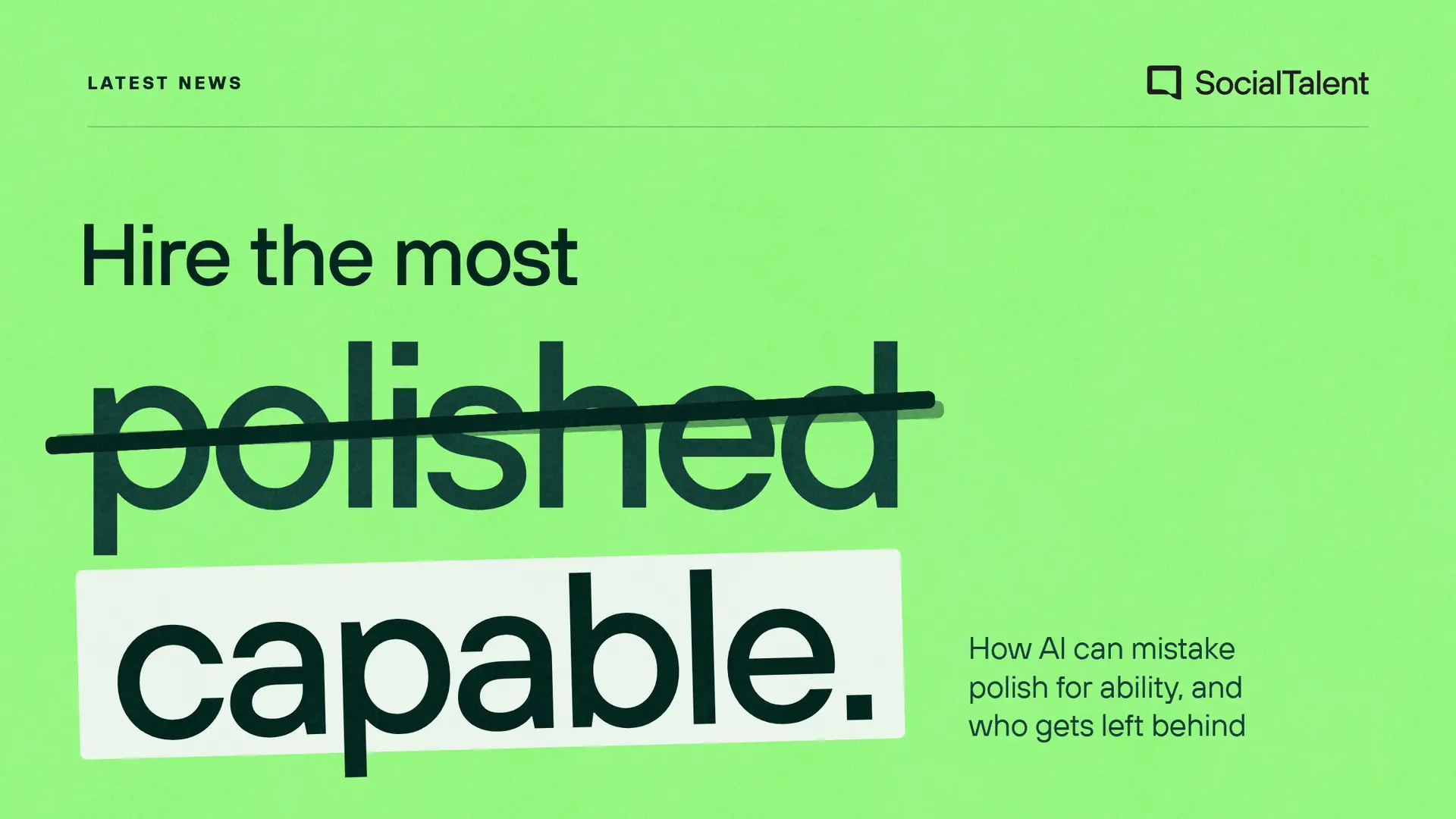
The core of the issue lies in the recruitment scorecard. Hiring managers often use criteria like "professional communication" to gauge a candidate’s competence. However, this metric is notoriously subjective. In a recruitment setting, "professionalism" is often a catch-all term that masks individual or organizational biases regarding tone, sentence structure, and vocabulary.
If a reviewer equates formality with seniority or authority, they are likely to reward the output of an AI that has been prompted to be "formal." If that same AI is also conditioned to associate certain linguistic styles with "less professional" output, the candidate using those styles—regardless of their actual skills—is at a disadvantage. This creates a feedback loop: candidates are encouraged to use AI to look "better," but the AI effectively penalizes them for their natural or preferred communication styles.
Importantly, the research does not suggest that these models are intentionally discriminating. Rather, they are reflecting and amplifying the patterns found in their massive training datasets, which consist of vast swaths of internet text that often mirror societal stereotypes. The result is a machine-generated "polish" that is essentially a reflection of the model’s statistical biases.
Implications for Modern Hiring Practices
While the current research does not explicitly correlate these findings with specific hiring outcomes—such as lower interview rates for women—the implication for the talent acquisition industry is clear: reliance on AI-generated text as a barometer for candidate quality is increasingly risky.
Dr. Katherine Van Koevering, the lead author of the study, has suggested that the burden of mitigating these biases rests largely on the developers of these AI models. However, until developers successfully "de-bias" their algorithms, hiring teams must take immediate steps to ensure fairness. The first step is to redefine what "professional communication" means in the context of a specific job role.

"Professionalism" should not be measured by the length or complexity of a sentence, but by the clarity and utility of the communication. For instance, a customer support representative needs to demonstrate empathy and the ability to explain complex policies clearly. A policy analyst, meanwhile, needs to provide concise, actionable briefings. When these roles are evaluated on whether a response is "polished," companies inadvertently favor the style of the AI over the substance of the candidate.
Establishing Robust Assessment Protocols
To combat the risks of AI-induced bias, organizations should consider the following shifts in their hiring methodologies:
- Define Job-Specific Communication Standards: Replace vague criteria like "professionalism" with concrete goals. Does the candidate accurately explain the decision? Do they identify the next steps for the reader? These are objective, measurable outcomes that can be evaluated independently of the "style" of the text.
- Task-Based Assessments: Instead of reviewing static cover letters or resumes that could be entirely AI-generated, provide candidates with a real-world scenario. A customer service simulation or a short policy memo test allows the interviewer to observe the candidate’s decision-making process.
- Transparency Regarding AI Use: Rather than banning AI—which is increasingly difficult to detect and potentially counterproductive—hiring managers should explicitly state whether AI assistance is permitted. If it is, recruiters should ask candidates to explain their edits or the reasoning behind their final draft. This turns the process into an assessment of judgment and critical thinking rather than mere prompt engineering.
- Calibration Sessions: Hiring teams should regularly meet to review practice responses. If a reviewer marks a response as "unprofessional" or "too simple," the team should force a discussion on exactly which elements made it so. Often, this process reveals that the objection is based on style rather than the actual effectiveness of the communication.
Future Outlook and Conclusion
The intersection of AI and recruitment is a moving target. As models evolve, they will likely become better at mimicking a wider range of voices, potentially masking the very biases that have been identified. However, the fundamental problem remains: by outsourcing the drafting of communication to algorithms, candidates and employers alike risk losing the human element that is essential for genuine professional evaluation.
For organizations, the mandate is to move away from superficial assessments of tone and toward a rigorous analysis of the candidate’s core competencies. By focusing on whether a candidate can deliver a clear, accurate, and useful message—regardless of the linguistic "flourishes" added by an AI—recruiters can ensure that their hiring processes remain equitable. As the technology continues to mature, the most successful companies will be those that prioritize human-centric evaluation criteria, ensuring that the machine is a tool for productivity rather than a silent arbiter of bias.