Apple is tightening macOS full disk access controls to mitigate new security risks posed by autonomous AI agents

As the landscape of personal computing shifts toward a paradigm defined by autonomous software, Apple has formally announced a significant overhaul of its macOS security architecture. On Monday, the company confirmed that it is implementing stricter oversight for applications requesting "Full Disk Access," a move directly addressing the unprecedented privacy risks introduced by the rise of AI agents. These autonomous programs, which possess the capability to perform cross-platform tasks and interact with sensitive user data on behalf of their operators, have necessitated a fundamental rethinking of how macOS manages permissions and system-wide visibility.
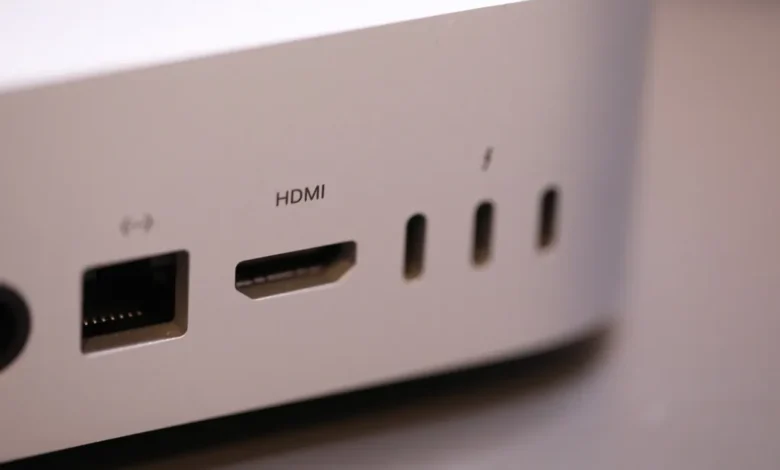
This policy shift, which will take effect with the rollout of macOS 27.3, serves as a response to the inherent tension between the utility of AI-driven automation and the imperative of individual data privacy. While Apple has successfully capitalized on the surging market for high-performance hardware like the Mac mini and Mac Studio—devices specifically sought after by AI developers and enthusiasts for local model processing—it now faces the challenge of securing that same ecosystem against potential overreach.
The Evolution of the AI Security Dilemma
The impetus for this change stems from a series of high-profile security incidents that have shaken user confidence in the emerging category of AI agents. Unlike standard chatbots that function within the confines of a browser or a sandboxed application, AI agents are designed to act as digital assistants capable of navigating the user’s operating system. They can read emails, access private file directories, and trigger actions in third-party applications.
In late 2026, the industry saw mounting scrutiny regarding how these agents interact with user privacy. One prominent example involved Meta’s Muse AI, which faced public allegations from a journalist claiming the tool accessed private messages without explicit authorization. While Meta has contested these claims, the incident highlighted a growing anxiety among consumers regarding the transparency of AI permissions. Simultaneously, security researchers identified a critical vulnerability in the ChatGPT Mac application that could have potentially exposed sensitive user data to unauthorized actors. These events served as a catalyst, prompting Apple to accelerate its internal development of more robust defensive measures.
A Chronology of Regulatory and Technical Shifts
The trajectory toward this update began in early 2026, when Apple first observed an unexpected, rapid increase in Mac demand driven by the AI boom. By April, internal data indicated that power users were moving away from cloud-based AI in favor of local, high-compute setups.
By September 2026, the discourse surrounding "agentic" AI—software capable of independent decision-making—reached a boiling point in the cybersecurity community. Following the reports concerning Meta and OpenAI’s applications, Apple began signaling a shift in its developer documentation. On October 2, 2026, the company officially committed to revising its security framework to better protect user data. The announcement on Monday represents the finalization of that commitment, providing a concrete technical path for the upcoming macOS 27.3 release.
Technical Breakdown: Redefining Permissions
The core of Apple’s strategy involves moving away from the "all-or-nothing" approach that has historically defined macOS security permissions. Under the new regime, the company is decoupling two previously conflated settings: "Device Control" and "Data Access." These will now be bifurcated into "System & App Protection Override" and "Accessibility."
This nomenclature shift is intentional. By labeling the most permissive setting as an "Override," Apple is signaling to the user that they are intentionally bypassing the operating system’s native safety barriers. To further minimize the risk of accidental over-permissioning, Apple is implementing the following features:
- Granular Permission Lists: Users will now navigate a standardized, streamlined interface for granting permissions, selecting specific applications from a verified list rather than relying on global system toggles.
- Mandatory Transparency Indicators: A new visual indicator will appear in the menu bar whenever an AI agent is actively controlling another application via the "System & App Protection Override" setting. This ensures that a user is always aware when an agent is acting on their behalf.
- Just-in-Time Access Requests: Perhaps the most significant change for power users is the option to require applications to request permission every time access is needed. While this introduces a friction-heavy workflow, it effectively prevents "carte blanche" access, allowing users to verify each specific task an AI agent attempts to perform.
- Targeted Guidance: During the onboarding process for new apps, Apple will now provide contextual guidance, encouraging developers and users to limit access to only the specific folders or applications necessary for the AI’s core function.
Implications for Developers and the AI Ecosystem
The transition to macOS 27.3 will require a significant pivot for software developers. Apple is proactively advising developers to redesign their onboarding experiences to accommodate these granular controls. The goal, according to the company’s recent developer blog post, is for apps to learn how to "gracefully handle" scenarios where they are denied access to certain folders or system processes.
For developers building specialized utilities, such as backup software or accessibility tools that legitimately require broad system visibility, Apple is introducing a formal "entitlements" process. By applying for these specific exceptions, developers can maintain the functionality of their software while still adhering to the updated security architecture. This dual-track approach allows Apple to maintain a secure environment without stifling the development of high-utility, professional-grade software.
Broader Impact on Data Privacy
The broader implication of these changes is a fundamental shift in the "trust model" of the Mac. Historically, macOS users operated under the assumption that if an application was installed from a reputable source, it could be trusted with system-wide access. In the era of AI agents, where code can execute complex, multi-step tasks, this model has become increasingly untenable.
Industry analysts suggest that Apple’s move is a proactive effort to avoid the regulatory scrutiny that has historically plagued other platforms. By providing users with clear, actionable control over their data, Apple is attempting to solidify its brand identity as the privacy-first choice for AI computing.
However, this transition is not without its trade-offs. The introduction of persistent permission prompts could degrade the "seamless" user experience that has defined the Mac for decades. Critics may argue that for AI agents to truly be useful, they must operate in the background with minimal human intervention. Yet, the consensus among security experts is that the trade-off between convenience and security is one that Apple must navigate carefully to maintain the integrity of its platform.
As macOS 27.3 approaches, the onus now shifts to the developer community to adapt. The success of this transition will depend on whether developers can design AI agents that provide value without needing to circumvent the system’s protective layers. For the end user, the result will be a more transparent, albeit more deliberate, computing experience—a necessary evolution in an age where the line between user intent and machine execution is increasingly blurred.
This update reflects a maturing understanding of the risks associated with local AI. As these technologies become more integrated into the daily workflows of professional and casual users alike, the framework provided by Apple’s latest security update will likely serve as the standard for personal computing platforms worldwide. By forcing AI agents to "ask" before acting, Apple is not just securing the Mac; it is defining the boundaries of digital autonomy in the 21st century.