Alphabet Earnings Report Shows AI Investments Paying Off Through Explosive Cloud Growth and Record Profits

Alphabet Inc. has delivered a resounding response to months of investor skepticism regarding its multi-billion-dollar artificial intelligence strategy, posting a quarterly earnings report that highlights a significant surge in revenue and a historic jump in net profit. For much of the past year, the market had voiced concerns that the search giant’s aggressive capital expenditure on AI infrastructure might not yield a timely return on investment. However, the latest financial results suggest that the "AI bubble" fears may be premature, as Google’s cloud business and AI-integrated services show unprecedented momentum.
The centerpiece of the report is the performance of Google Cloud, which has transitioned from a secondary business unit into a primary engine of growth for the conglomerate. Driven by the rapid adoption of enterprise AI solutions and high-performance infrastructure, Google Cloud revenue spiked by 82% compared to the same period last year, reaching $24.8 billion. This performance not only exceeded the previous quarter’s 63% growth rate but also significantly outpaced Wall Street’s consensus estimate of $22.46 billion.
The Surge in Enterprise AI Adoption and Cloud Revenue
The remarkable growth in Google’s cloud sector is attributed to a fundamental shift in how businesses are utilizing cloud services. As corporations across the globe race to integrate generative AI into their workflows, they are turning to Google Cloud for both the raw compute power—specifically Google’s proprietary Tensor Processing Units (TPUs)—and the software frameworks required to build and deploy large language models (LLMs).
Alphabet’s management highlighted that the cloud gains were fueled by two main pillars: enterprise AI solutions, such as the Vertex AI platform, and infrastructure adoption. Perhaps more significant for long-term stability is the company’s cloud backlog, which represents contracted work that has yet to be recognized as revenue. This backlog has climbed to a staggering $514 billion, indicating a deep pipeline of enterprise commitment that extends years into the future.
This backlog provides a buffer against market volatility and suggests that the enterprise sector’s appetite for AI is not a fleeting trend but a structural change in corporate technology spending. The ability to convert these contracts into realized revenue will be a key metric for analysts in the coming quarters.
Record-Breaking Profits and Sustained Revenue Growth
Alphabet’s overall financial health appears more robust than ever, with net profit hitting $112.1 billion for the quarter. This represents a nearly fourfold increase from the $28.1 billion reported in the same quarter last year. While the company has historically maintained high margins, this particular jump reflects both increased operational efficiency and the high-margin nature of its scaling AI software services.
Total revenue for the quarter grew by 24% year-over-year, reaching $119.8 billion. This marks Alphabet’s 12th consecutive quarter of double-digit revenue growth, a feat of consistency that underscores the company’s dominance in the digital economy. The "Google Services" segment, which includes the core search business, YouTube, and the Play Store, also performed strongly, with revenue rising 15% to $94.5 billion.
Despite the emergence of AI-powered search competitors, Google’s traditional advertising business remains resilient. The integration of AI Overviews and generative features into the search experience appears to have stabilized user engagement, preventing the "search disruption" that some analysts had predicted would erode Google’s market share.
The Rapid Expansion of the Gemini Ecosystem
On the consumer side, Google’s AI chatbot and assistant, Gemini, is seeing a rapid expansion in its user base. Alphabet reported that the Gemini app now has 950 million monthly active users (MAUs), a substantial increase from the 750 million reported in the fourth quarter of 2025.
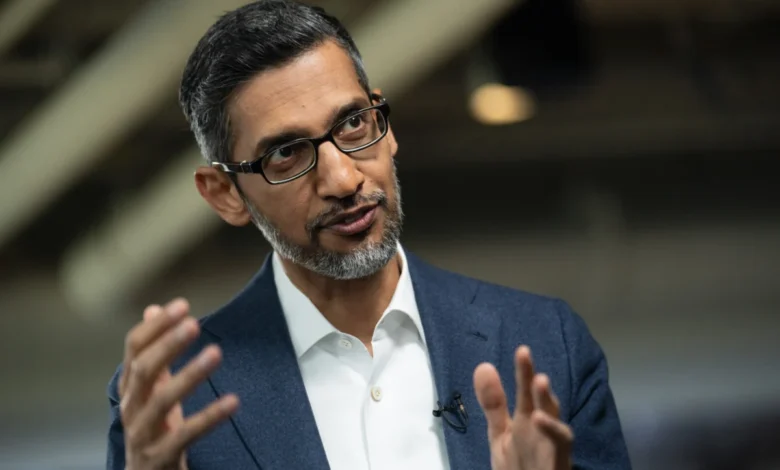
This growth trajectory suggests that Google has successfully leveraged its massive Android and Workspace ecosystems to distribute its AI tools. By embedding Gemini into Gmail, Docs, and the Android operating system, Google has created a low-friction path for user adoption. CEO Sundar Pichai noted during the earnings call that the company’s AI investments are "redefining what’s possible across every part of our business," emphasizing that the momentum is visible across both consumer and enterprise frontiers.
The transition from a traditional search engine to an "AI-first" company has required a massive overhaul of Google’s product suite. The 950 million MAU figure serves as a vital proof point for investors who were concerned that OpenAI’s ChatGPT or Microsoft’s Copilot might permanently peel away Google’s core user base.
Capital Expenditure and the Infrastructure Bet
While the revenue figures were celebratory, the cost of maintaining this lead remains high. Alphabet’s capital expenditure (CapEx) remains a focal point for market analysts. The company estimated that its total CapEx for the year will land between $180 billion and $190 billion. These funds are being directed toward the construction of massive new data centers, the acquisition of advanced semiconductors (including Nvidia’s latest chips), and the expansion of global fiber networks.
During the earnings call, analysts repeatedly questioned the sustainability of this spending and the specific timeline for when these investments would move from the "build-out" phase to the "harvesting" phase. Sundar Pichai defended the aggressive spending, pointing toward 2027 as a pivotal year for compute capacity.
"We are seeing strong demand indicators, including long-term deals," Pichai said, addressing concerns about a potential oversupply of AI compute. "I think, if anything, the dynamics look healthier than where we were about a year ago, so that’s what gives us the confidence to undertake those investments."
Pichai’s comments suggest that Alphabet is looking at a multi-year horizon, viewing the current spending not as a discretionary expense but as a necessary foundation for the next decade of computing. The company’s strategy involves building enough capacity to handle not only its own internal AI needs but also the needs of the millions of businesses now building on the Google Cloud platform.
Historical Context: From "AI-First" to AI-Integrated
To understand the significance of this quarter, one must look back at Alphabet’s decade-long pivot. In 2016, Sundar Pichai famously declared that Google would become an "AI-first" company. For several years, this transition was largely invisible to the average user, manifesting in backend improvements to search algorithms and ad targeting.
The landscape shifted dramatically with the release of generative AI models in late 2022 and early 2023. Google initially faced criticism for being slow to respond to the rise of large language models, leading to a "Code Red" internal mobilization. Since then, the company has consolidated its research divisions (forming Google DeepMind) and accelerated its hardware development.
The current financial results represent the first clear evidence that this mobilization is translating into financial gains. The 82% growth in Cloud revenue is a direct result of the infrastructure investments made during that "Code Red" period, validating the company’s decision to prioritize AI development over short-term margin preservation.
Market Reactions and Industry Implications
The broader tech industry is watching Alphabet’s performance as a bellwether for the "AI trade." If Alphabet can prove that AI spending leads to direct revenue growth and expanded margins, it provides a roadmap for other hyperscalers like Amazon (AWS) and Microsoft (Azure).
Market analysts have largely reacted positively to the report, though some caution remains regarding the regulatory environment. Alphabet continues to face significant antitrust scrutiny in the United States and Europe, particularly concerning its dominance in digital advertising and its search engine defaults. However, the diversification of its revenue through Google Cloud provides a strategic hedge against potential regulatory actions targeting its advertising business.
The "AI bubble" narrative, which suggests that tech companies are over-investing in technology that lacks a clear monetization path, has been at least partially debunked by Alphabet’s $514 billion cloud backlog. This figure represents tangible corporate demand, suggesting that the "bubble" is actually a massive infrastructure cycle similar to the build-out of the internet in the late 1990s.
Future Outlook: The Road to 2027
Looking ahead, Alphabet’s focus will remain on scaling its AI infrastructure while maintaining the profitability of its core services. The company’s emphasis on 2027 as a milestone for compute capacity suggests that the next two years will be characterized by continued high CapEx.
Investors will likely monitor the conversion of the $514 billion backlog into revenue as a primary indicator of health. Additionally, as Gemini nears the one-billion-user mark, the challenge will shift from user acquisition to monetization—determining how to integrate premium AI features into Workspace and Search without alienating the existing user base.
In conclusion, Alphabet’s latest earnings report serves as a powerful validation of its AI-centric strategy. By delivering record profits alongside explosive growth in its cloud division, the company has demonstrated that its massive investments in artificial intelligence are not just a defensive measure, but a highly profitable offensive strategy that is reshaping the future of the enterprise and consumer tech landscapes.