The modern corporate landscape is undergoing a profound transformation, moving away from traditional classroom-based training toward a dynamic, digital-first learning ecosystem. As organizations navigate the complexities of a hybrid workforce and rapid technological advancement, the role of the Learning and Development (L&D) professional has evolved from a content creator to a strategic business partner. In this high-stakes environment, an Instructional Design (ID) certificate has emerged as a vital credential, signaling to employers that a practitioner possesses the technical acumen, pedagogical foundation, and strategic foresight necessary to drive organizational performance.
As businesses increasingly rely on data-driven outcomes to justify training budgets, the demand for professionals who can bridge the gap between learning theory and measurable business impact has skyrocketed. According to recent labor market projections, the demand for training and development specialists is expected to grow by 6% through 2032—a rate faster than the average for all occupations. This surge is fueled by the integration of Artificial Intelligence (AI) and the requirement for agile learning methodologies that can adapt to shifting market conditions in real-time.
The Evolution of Instructional Design: From Classroom to Cloud
The history of instructional design is rooted in the early 20th century, drawing heavily from behavioral psychology and military training programs developed during World War II. It was during this period that the need for systematic, modular training emerged, leading to the formalization of models like ADDIE (Analysis, Design, Development, Implementation, and Evaluation) in the 1970s. For decades, these frameworks provided a reliable blueprint for educators and corporate trainers alike.
However, the late 2010s marked a significant pivot point. The rapid adoption of cloud-based Learning Management Systems (LMS) and the rise of remote work necessitated a shift toward Learning Experience Design (LXD). Today, the focus is no longer merely on content delivery but on the holistic user experience. Professionals are now tasked with leveraging generative AI for personalized learning paths, ensuring that training content is not only accessible but also optimized for retention and application in a distracted, fast-paced digital environment.
Bridging the Skills Gap: The Necessity of Certification
The professional landscape is currently bifurcated between seasoned practitioners and those transitioning from fields like traditional education, HR, or graphic design. This shift has necessitated a standardized approach to validating expertise. While a degree offers deep theoretical knowledge, an ID certificate is specifically engineered to provide the "just-in-time" skills required for immediate workplace application.
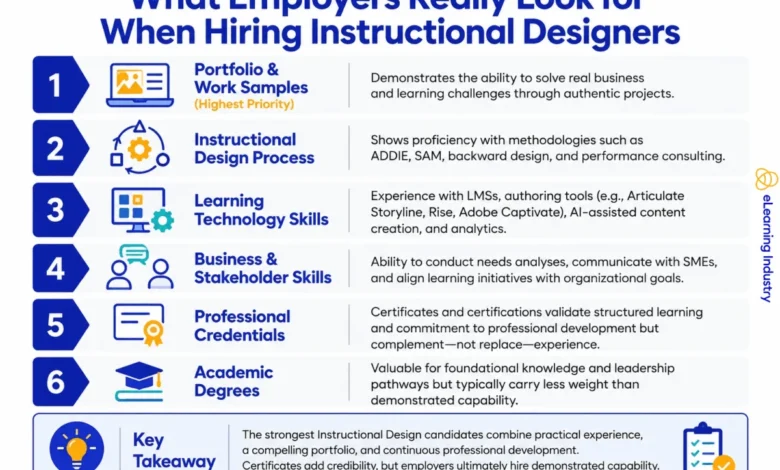
Recent data from industry surveys suggests that over 70% of hiring managers in the L&D sector prioritize practical portfolio evidence over academic transcripts alone. This shift reflects a broader trend toward skills-based hiring, where the ability to demonstrate proficiency in industry-standard authoring tools—such as Articulate Storyline, Adobe Captivate, or AI-powered content generators—is often the deciding factor in recruitment.
Core Competencies and Technical Requirements
A robust certificate program is typically designed to address five foundational pillars that are critical to success in the modern corporate sphere:
- Needs Analysis and Performance Consulting: Before a single slide is designed, a professional must conduct a rigorous needs analysis. This involves identifying whether a performance gap is caused by a lack of knowledge, a lack of resources, or a structural issue within the organization.
- Cognitive Science and Adult Learning Principles: Effective training must account for cognitive load theory, which suggests that learners have limited processing capacity. By managing this load, instructional designers can create content that is easier to process and store in long-term memory.
- Instructional Frameworks (ADDIE vs. SAM): While ADDIE remains the industry standard for large-scale, complex projects, the Successive Approximation Model (SAM) has gained popularity in agile environments. Certificate programs now emphasize the ability to choose the right model based on project scope and timeline.
- AI-Integrated Workflow Management: The modern designer must know how to use AI for rapid prototyping, script drafting, and image generation. This does not replace human design but acts as a force multiplier, reducing the time from ideation to deployment.
- Assessment and Data Analytics: Perhaps the most critical skill in the current climate is the ability to measure ROI. Professionals must be adept at mapping training outcomes to Key Performance Indicators (KPIs), using data to iterate on designs and demonstrate clear value to stakeholders.
A Comparative Analysis of Credentialing Pathways
Choosing the right program requires an assessment of one’s career trajectory. The market currently offers four distinct pathways, each catering to different professional needs:

University Graduate Certificates
These are academic programs, often part of a Master’s degree curriculum. They are ideal for individuals seeking to move into senior leadership or higher education administration. They provide a comprehensive understanding of educational technology policy and advanced pedagogy but often require a greater time and financial commitment.
Professional Association Credentials
Organizations such as the Association for Talent Development (ATD) offer certifications that are highly regarded for their focus on industry standards and networking opportunities. These credentials are often preferred by corporate trainers who need to stay current with global best practices and regulatory standards in workplace learning.
Bootcamps and Specialized Online Providers
For those transitioning careers, intensive, project-based online bootcamps are often the most efficient route. These programs prioritize the creation of a professional portfolio—a collection of work samples that can be presented to recruiters. The primary advantage here is the emphasis on "applied" skills, such as video editing, gamification, and UI/UX design for learning.
Employer-Sponsored Development
Many Fortune 500 companies have moved to build internal "learning academies." While these do not always provide a transferrable credential, they offer a unique advantage: the ability to learn within the context of a specific corporate culture and technical ecosystem.
Implications for the Future of Work
The rise of the Instructional Design certificate is a symptom of a larger, systemic change in how organizations view human capital. As automation continues to displace routine tasks, the "human" element of the workplace—critical thinking, leadership, and specialized technical execution—is becoming more valuable. Instructional designers are the architects of this human development.
The implication for professionals is clear: the era of the "generalist" trainer is waning. The industry is moving toward a model where specialists in data-driven design, AI-workflow integration, and performance consulting will command significantly higher compensation and professional influence.
Strategic Evaluation: Choosing the Right Path
When evaluating potential programs, prospective students should look beyond marketing claims and focus on three key metrics:
- Portfolio Integration: Does the program provide a structured environment to build tangible projects? A certificate without a portfolio is often insufficient for entry into the competitive job market.
- Faculty Practitioner Status: Are the instructors currently active in the field, or are they purely academics? The most valuable insights come from those who have navigated the challenges of a corporate stakeholder environment.
- Alumni Outcomes: Look for transparency regarding career placement. A reputable program will provide data on the roles and industries their graduates have entered within six months of completion.
Ultimately, the decision to pursue an Instructional Design certificate should be driven by a desire to master the intersection of human behavior and technological innovation. As the gap between what employees know and what the business requires continues to widen, the professional instructional designer will remain the critical bridge, ensuring that organizational learning is not just a compliance exercise, but a powerful engine for growth. By grounding their practice in sound design principles and staying agile in the face of emerging technology, these professionals are well-positioned to lead the next generation of workforce development.