How to redesign employee development to drive engagement, application, and real results


In contemporary corporate environments, a recurring paradox plagues human resources departments and executive boards alike: massive capital expenditures on employee training yield virtually negligible shifts in organizational behavior, productivity, and innovation. This systemic disconnect has prompted a comprehensive re-evaluation of how modern enterprises approach workforce education. Recent findings from workplace research indicate that while corporate learning budgets continue to expand, the translation of theoretical knowledge into daily operational excellence remains critically low. Industry analysts and organizational psychologists point to a fundamental flaw in traditional corporate pedagogy—namely, an overemphasis on rote compliance and procedural task execution at the expense of cognitive engagement and critical thinking.
The origins of this persistent training deficit trace back to historical corporate structures that prioritized standardized processes over autonomous problem-solving. Throughout the late twentieth century, workforce training evolved largely as an administrative mechanism designed to ensure regulatory compliance, software adoption, and baseline operational safety. Employees were viewed as recipients of information rather than active agents of enterprise strategy. Consequently, learning and development (L&D) departments developed a reliance on passive e-learning modules, compliance checkboxes, and auditorium-style lectures. While these methods successfully documented course completion rates for corporate audits, they routinely failed to alter the cognitive habits of the workforce. As modern markets accelerated, driven by digital transformation and macroeconomic volatility, the limitations of this compliance-driven model became acutely pronounced.
Data from national workforce studies on workplace thinking and engagement underscore the scale of this issue. According to recent surveys, a substantial majority of surveyed employees report feeling fundamentally underutilized in their intellectual capacity, despite participating in routine organizational training programs. While over 70 percent of workers complete mandatory professional development hours annually, less than 30 percent report that these programs actively required them to question assumptions, challenge existing workflows, or contribute original insights to their teams. Furthermore, organizational productivity metrics frequently reveal a post-training plateau, where performance metrics remain static despite 100 percent course completion rates across departments. This empirical evidence suggests that the modern crisis in employee development is not an issue of employee apathy, but rather a structural failure in how educational content is curated and delivered.
Corporate leadership and human resources executives have increasingly voiced frustration over this phenomenon. In recent executive roundtable discussions hosted by major management associations, leaders frequently report the paradox of fully compliant yet disengaged teams. Speaking anonymously due to internal corporate policies, a senior operations director at a Fortune 500 manufacturing firm noted, "We recently deployed a multimillion-dollar operational efficiency curriculum across our global facilities. Every single employee completed the modules within the mandated window. Yet, on the ground, workflow bottlenecks remained entirely unchanged because employees simply reverted to their legacy habits the moment they closed their laptops." Such reactions highlight a growing consensus among management circles that conventional metrics of training success—such as completion rates and participant satisfaction scores—are profoundly disconnected from genuine behavioral modification and business outcomes.

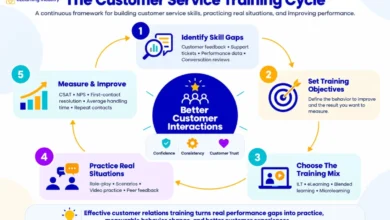
To bridge the chasm between educational expenditure and tangible operational performance, learning strategists advocate for three fundamental pedagogical shifts. The first intervention involves replacing linear, content-heavy presentations with deliberate thinking prompts. Educational theorists note that human cognitive retention is heavily dependent on active reflection rather than passive exposure. By integrating structured inquiry—such as asking learners to identify potential operational vulnerabilities or theorize alternative applications—training designers can stimulate higher-order cognitive processing. This shifts the learner from a passive consumer of corporate data to an active participant in problem articulation.
The second critical adjustment centers on the substitution of conventional knowledge-check quizzes with immersive, real-world scenario simulations. Traditional multiple-choice assessments measure short-term recall but fail to prepare personnel for high-pressure, ambiguous workplace environments. By challenging teams to navigate simulated communication breakdowns, negotiate conflicting project priorities, or resolve live customer grievances, organizations foster applied critical thinking. Crucially, when these simulations are executed in collaborative cohorts, they simultaneously break down operational silos and improve peer-to-peer communication channels, thereby reinforcing cultural cohesion alongside tactical skill acquisition.
The third and perhaps most vital phase of modern training redesign addresses the post-training environment through managerial reinforcement. The corporate graveyard is replete with high-potential training initiatives that withered simply because employees returned to unsupportive micro-cultures where daily pressures crowded out newly acquired methodologies. To counteract this decay curve, progressive organizations are equipping middle managers with lightweight coaching frameworks. Rather than operating as passive overseers, managers are trained to facilitate routine reflective dialogues, querying team members on how new concepts are being applied, where friction points lie, and what adjustments can be implemented in subsequent cycles. This transforms continuous learning from an episodic HR event into an integrated operational habit.
The macroeconomic and organizational implications of pivoting toward cognition-centered employee development are profound. Enterprises that successfully re-engineer their training architectures to prioritize critical thinking and autonomous problem-solving consistently report higher retention rates, accelerated product innovation cycles, and more resilient organizational cultures. When employees are systematically encouraged to interrogate assumptions and co-create solutions, psychological safety improves markedly, which in turn drives higher discretionary effort and cross-functional collaboration. Conversely, organizations that cling to outdated, compliance-oriented training models risk severe competitive disadvantage in labor markets that increasingly demand agility, creativity, and rapid cognitive adaptation. Ultimately, the future of effective employee development hinges on a decisive evolution: shifting the primary objective of corporate education from teaching people what to execute to mastering how they think.