Why the 2017 HR Tech Conference Represented a Watershed Moment for Industry Partnerships

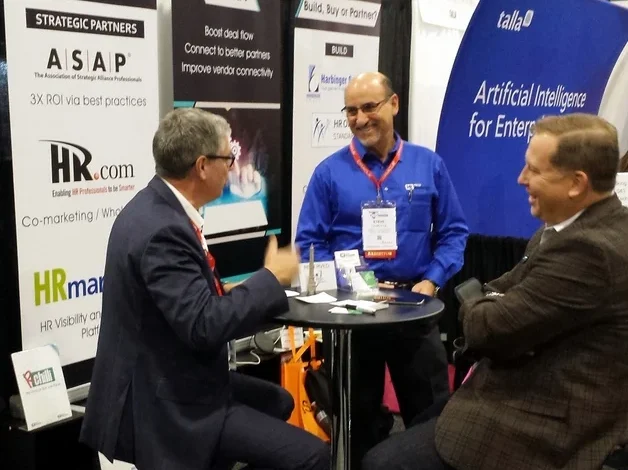
The 2017 HR Technology Conference and Exposition, held in Las Vegas, marked a definitive turning point in how software vendors, service providers, and strategic partners interact within the global human resources ecosystem. Having served as a primary gathering point for the HR industry for two decades, the 2017 iteration transcended its traditional role as a simple exhibition hall to become a hub for high-level business development and formal alliance-building. While the event lacked formal "collaboration zones" or mandated speed-networking sessions, the sheer density of industry stakeholders created an environment where sophisticated, long-term partnerships were forged at an unprecedented rate.
Historical Context: From Trade Show to Innovation Ecosystem
For twenty years, the HR Tech Conference has functioned as the definitive barometer for the HR technology sector. In its early years, the event was characterized by a linear relationship: vendors showcased products, and HR practitioners evaluated them for procurement. However, as the industry matured, the complexity of the enterprise technology stack shifted. Organizations moved away from monolithic, single-vendor solutions toward integrated ecosystems.
By 2017, the pressure on vendors to provide seamless, interoperable platforms became the primary driver of market behavior. The transition from "accidental connections"—chance meetings on the showroom floor—to deliberate, strategy-driven alliances became a necessity for survival. Companies that once viewed each other solely as competitors began to adopt "coopetition" models, recognizing that customer success often required a constellation of integrated tools rather than a single, isolated application.

The Evolution of Strategic Alliances
The 2017 conference provided a window into the strategic thinking of major industry players. Interviews conducted during the event with representatives from companies such as Lumesse, Leoforce, Cegid, and Symphony Talent underscored a universal shift in priorities. These firms were no longer merely looking to fill booth space; they were actively scouting for technology partners that could offer complementary value, whether through job distribution, advanced analytics, or assessment integration.
For instance, Lumesse, through its leadership, signaled a pivot toward a more open, agnostic platform strategy. By integrating with third-party providers like CEB, Broadbean, and eQuest, they demonstrated that modern HR tech value is defined by the ability to orchestrate a wider network of services. Similarly, companies like Leoforce emphasized the importance of active participation in organizations like the HR Open Standards committee. This move toward standardized APIs and open architecture represents the technical backbone of modern partnership strategies, ensuring that data flows frictionlessly between disparate software systems.

Data-Driven Growth and Partner Selection
The shift toward formal alliances is not merely a cultural trend but a strategic response to changing market demands. According to industry analysts tracking the 2017 event, the number of exhibitors focusing on partnership development increased by nearly 30% compared to previous years. This growth is largely fueled by the "Platform Economy," where the primary competitive advantage is no longer just the core software, but the breadth of the ecosystem surrounding it.
During the conference, industry leaders highlighted three critical themes regarding modern alliance management:

- Strategic Intent: Moving beyond opportunistic, ad-hoc partnerships toward long-term, value-aligned collaborations that solve specific customer pain points.
- Interoperability Standards: A renewed focus on technical integration. If a partner’s solution cannot communicate with an Applicant Tracking System (ATS) or CRM via open APIs, the likelihood of a successful, long-term partnership is significantly reduced.
- Customer-Centric Innovation: Partnerships are now increasingly driven by user demand. Vendors are listening to their client base to identify gaps in their offerings, then sourcing best-in-class partners to fill those voids, effectively creating a "best-of-breed" experience within a single interface.
Industry Perspectives: The View from the Floor
The perspective of those on the ground at the 2017 conference reflected a newfound professionalization of the alliance-building process. Carlson Colomb of Cegid noted that the event had become an essential venue for vetting potential resellers and systems integrators. His comments highlighted a transition from quantity-based partner acquisition to quality-based selection. "It’s not about the number of partners we have," Colomb noted, "it’s about picking the right partners that make sense to deliver a true, valuable solution to our customers."
This sentiment was echoed by Mark Baker of Symphony Talent, who emphasized the necessity of strategic alignment. For Symphony Talent, the focus was on identifying partners who prioritize solving customer problems over simple product promotion. This philosophy marks a significant departure from the early 2000s, where partnership agreements were often superficial or purely transactional. Today, these agreements are frequently defined by joint product development, shared roadmaps, and co-marketing initiatives that require significant organizational commitment.

The Role of HR Tech Alliances
Amidst the chaos of a large-scale conference, organizations like HR Tech Alliances, co-founded by Ward Christman and Larry Cummings, emerged as critical facilitators. Their presence at the 2017 event served as a focal point for those looking to formalize their partnership efforts. By moderating discussions between executives from firms like PeopleSpheres and CareerBuilder, they helped bridge the gap between abstract business development and tangible, actionable collaboration.
The emergence of such entities reflects a broader trend in the tech industry: the professionalization of the "Partner Manager" role. As companies scale, the ability to manage a portfolio of external integrations becomes a core competency, often as vital as sales or product engineering.

Broader Implications and Future Outlook
The 2017 HR Tech Conference serves as a case study for the maturation of the HR technology market. The lessons learned during that year set the stage for the next decade of industry development. The key takeaways for stakeholders include:
- The Decline of Silos: The era of the "all-in-one" vendor that does everything perfectly is over. The future belongs to those who build highly specialized, deeply integrated platforms.
- The API-First Mandate: Companies that do not invest in open APIs will find themselves increasingly isolated from the broader ecosystem, leading to churn as customers demand more flexible, interconnected solutions.
- Coopetition as a Strategy: Competitors will continue to find themselves in shared environments. The companies that successfully navigate these relationships to the benefit of the end-user will emerge as the dominant market leaders.
As the industry continues to evolve, the methodologies observed in 2017—prioritizing technical compatibility, strategic alignment, and customer-driven innovation—remain the gold standard for success. The 2017 event was not just a successful exhibition; it was a blueprint for the future of the HR technology landscape, proving that in a complex, digital world, the most successful organizations are those that collaborate effectively.

Ultimately, the best HR tech shows of the future will be those that recognize this reality, moving beyond mere vendor showcases to provide the necessary infrastructure—be it through formal collaboration zones or specialized networking tracks—to foster the next generation of strategic partnerships. The 2017 event demonstrated that while the industry is capable of self-organizing, the next phase of growth will require intentional, structural support for the alliances that keep the global HR engine running.