Flock Safety offers voluntary buyout packages to staff amid mounting privacy backlash and contract terminations

Flock Safety, the prominent surveillance technology firm known for its widespread network of license plate recognition cameras, has initiated a voluntary separation program for its 1,500-person workforce. The move, announced internally on Friday, September 19, 2026, marks a pivotal moment for the company as it grapples with a deepening crisis of public confidence and a surge in contract cancellations from municipal partners across the United States. According to reports, the company intends to grant these severance packages to a majority of interested employees, describing the offer as the most generous in the firm’s history. This strategic reduction in force is widely interpreted as a proactive measure to manage internal morale and financial stability in an environment where mandatory layoffs appear increasingly inevitable.
A Chronology of the Crisis
The current turmoil surrounding Flock Safety did not emerge in a vacuum. For years, the company operated as a darling of the "smart city" movement, pitching its Automated License Plate Recognition (ALPR) systems as a revolutionary tool for law enforcement to solve property crimes and locate missing persons. However, the trajectory of the company shifted dramatically in the summer of 2026.
In August 2026, a comprehensive investigative report published by The Washington Post brought the issue of surveillance abuse to the forefront of the national conversation. The investigation identified 46 distinct cases in which police officers were accused of using the Flock camera network for non-professional purposes. Among the allegations were instances of officers tracking the movements of estranged spouses, romantic partners, and ex-partners—a revelation that effectively stripped away the veneer of professional-only utility that the company had long championed.
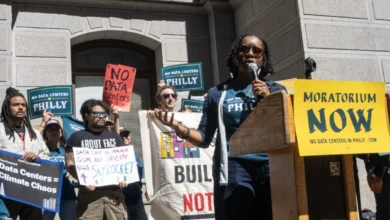
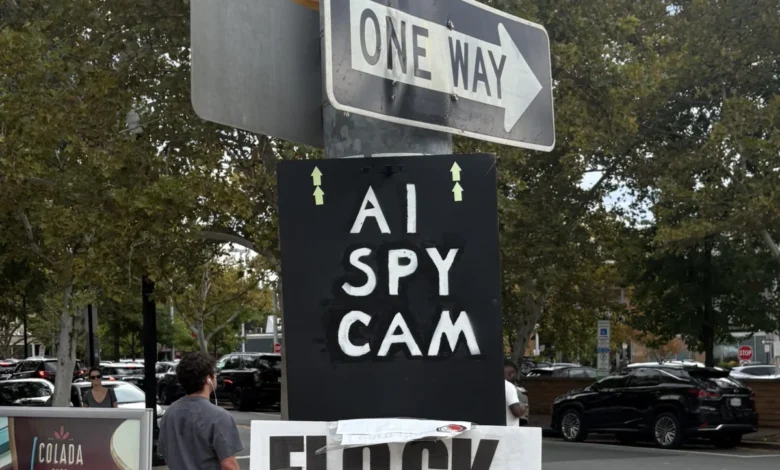
The impact of these revelations was near-immediate. By late August, the ripple effect had transformed into a wave of institutional rejection. Privacy advocates, who had long warned of the potential for mission creep in AI-enabled surveillance, saw their concerns validated. This triggered a record-breaking month of contract terminations. Data from anti-surveillance advocacy groups indicated that 90 cities opted to terminate their agreements with Flock in August alone, a figure representing a fourfold increase compared to the previous month.
The Legislative and Municipal Backlash
The fallout has not been limited to individual city councils rescinding their contracts. State-level legislative and executive actions have signaled a broader regulatory reckoning. Following the Washington Post report, officials in Florida and Texas—states that had previously been major hubs for the deployment of Flock technology—announced intentions to restrict or completely block the use of the company’s infrastructure.
These state-level interventions are particularly damaging to the company’s business model, which relies on a dense, interconnected grid of cameras to provide "real-time" intelligence to law enforcement. When key nodes in this grid are removed due to government mandates, the value proposition of the remaining network diminishes significantly, creating a feedback loop of declining utility and further contract losses.
Managing Internal Morale and Economic Reality
The decision to offer voluntary buyouts is a calculated effort by the Flock leadership team to navigate this period of intense scrutiny. In a recent appearance on the All-In podcast, CEO Garrett Langley candidly admitted that the most profound damage sustained by the organization has been to "internal morale."
For a company that once prided itself on a mission-driven culture, the shift in public perception—from being a provider of public safety to being perceived as a facilitator of state-sponsored stalking—has created a disconnect for many employees. By offering voluntary departure packages, the company is effectively allowing staff members who are uncomfortable with the firm’s current standing to exit with financial support, while simultaneously reducing payroll costs without the immediate, negative optics of a traditional mass layoff.
Industry analysts observe that without this voluntary program, the financial pressure caused by the sudden drop in revenue from cancelled contracts would have forced the company to implement involuntary layoffs. By framing the reduction as a "generous" choice for the employee, Flock is attempting to maintain a degree of brand integrity and internal goodwill during what is undeniably the most difficult fiscal quarter in the company’s history.

The Data Behind the Decline
To understand the scale of the challenge, one must examine the metrics of the company’s rapid expansion and current contraction. Flock Safety grew at an aggressive pace, saturating suburban and urban environments with cameras capable of capturing granular data on vehicle movements. This growth was predicated on the assumption that law enforcement agencies would remain the primary, responsible stewards of this data.
The 46 cases of misuse identified in August are likely just the tip of the iceberg, according to privacy researchers. Because auditing logs for surveillance technology is often complex and rarely transparent, the actual incidence of abuse may be significantly higher. As more municipalities conduct internal audits to verify whether their officers adhered to usage policies, there is a strong probability that the number of cities terminating contracts will continue to climb throughout the remainder of 2026.
Furthermore, the "fourfold increase" in contract cancellations is a lagging indicator. Many cities operate on multi-year procurement contracts; the fact that 90 cities were willing to break these contracts or allow them to expire early suggests that the political cost of retaining Flock has begun to outweigh the perceived safety benefits.
Implications for the Surveillance Industry
The plight of Flock Safety serves as a case study for the broader surveillance industry. The integration of high-resolution sensors and artificial intelligence into public spaces has outpaced the development of legal and ethical frameworks designed to govern their use. The "Flock model" was built on the idea that technology is neutral and that abuse is an edge case to be handled by individual department policies.
However, the 2026 backlash suggests that the public and lawmakers are no longer willing to accept that premise. The implication for the future of surveillance tech is clear: companies will likely face stricter requirements for data provenance, more frequent third-party audits, and potentially federal oversight.
For Flock specifically, the path forward remains precarious. The company must simultaneously address the technical vulnerabilities that allowed for the reported misuse—such as better identity management and access controls—while attempting to win back the trust of skeptical city governments. Whether a smaller, more streamlined workforce can achieve this transition, or if the brand has been too severely compromised to recover its former market share, remains an open question for investors and stakeholders.
Future Outlook and Stakeholder Response
As of mid-September 2026, the silence from many of the company’s primary law enforcement partners is deafening. While departments have been quick to pull the plug on contracts, there has been little coordinated effort to establish a new standard for ethical camera use.
TechCrunch and other industry observers continue to monitor the situation, specifically tracking whether the voluntary buyout program will be sufficient to stabilize the company’s financial position. If the take-up rate for the buyouts is low, or if the cost of the packages exceeds current cash flow, further restructuring may be required.
The story of Flock Safety in 2026 is one of rapid technological adoption followed by an equally rapid societal correction. As the firm navigates this transition, the broader tech sector will be watching closely, as it highlights the inherent risks of scaling surveillance products without robust, baked-in protections against the human tendency toward misuse. For now, the "generous" severance packages are the immediate priority, but the long-term survival of the company will depend on whether it can prove to the public—and to its remaining municipal clients—that it can exist in a world that is no longer willing to trade privacy for a sense of automated security.
Related posts: