The Great Decoupling: How Artificial Intelligence and Shifting Economics Redefined the Modern Employment Landscape

The contemporary global workforce is undergoing a profound structural shift, characterized less by cyclical economic fluctuations than by a permanent severing of traditional bonds between employer and employee. Over the past three decades, the corporate ecosystem has pivoted away from mutual long-term commitment toward a transactional, highly fragmented model of labor. This evolution—accelerated by globalization, legislative and macroeconomic shifts, and the rapid ascent of artificial intelligence—has redefined the trajectory of modern careers, corporate accountability, and economic security.
To understand the current state of labor, one must examine the historical framework that governed the twentieth-century workplace. Following the post-World War II industrial expansion, large corporations frequently operated as paternalistic institutions. Stable employment, defined by defined-benefit pensions, predictable corporate ladders, and robust labor union representation, formed the bedrock of the middle-class economy. S&P 500 corporations maintained an average longevity of twelve to fifteen years during the 1970s and 1980s, providing a predictable tenure that fostered institutional loyalty.

However, the architecture of work began to fracture in the late twentieth century. Driven by deregulation, global trade agreements such as the North American Free Trade Agreement (NAFTA), and a corporate governance philosophy prioritizing shareholder value above all else, businesses began restructuring. The prevailing economic doctrine shifted toward what political administrations termed the "ownership economy." Responsibilities traditionally shouldered by corporations—such as retirement planning and healthcare contingency funding—were systematically transferred to the individual via 401(k) accounts and health savings accounts. Simultaneously, corporate life expectancies plummeted; modern S&P 500 companies now average a lifespan of just four to five years, heightening competitive pressures and eroding organizational permanence.
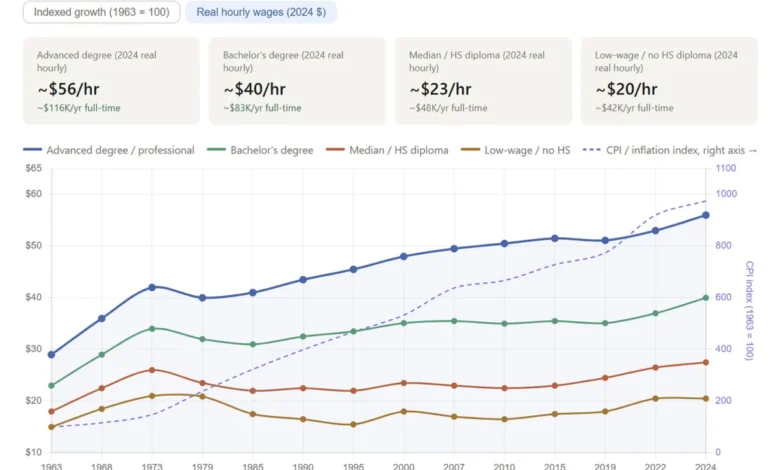
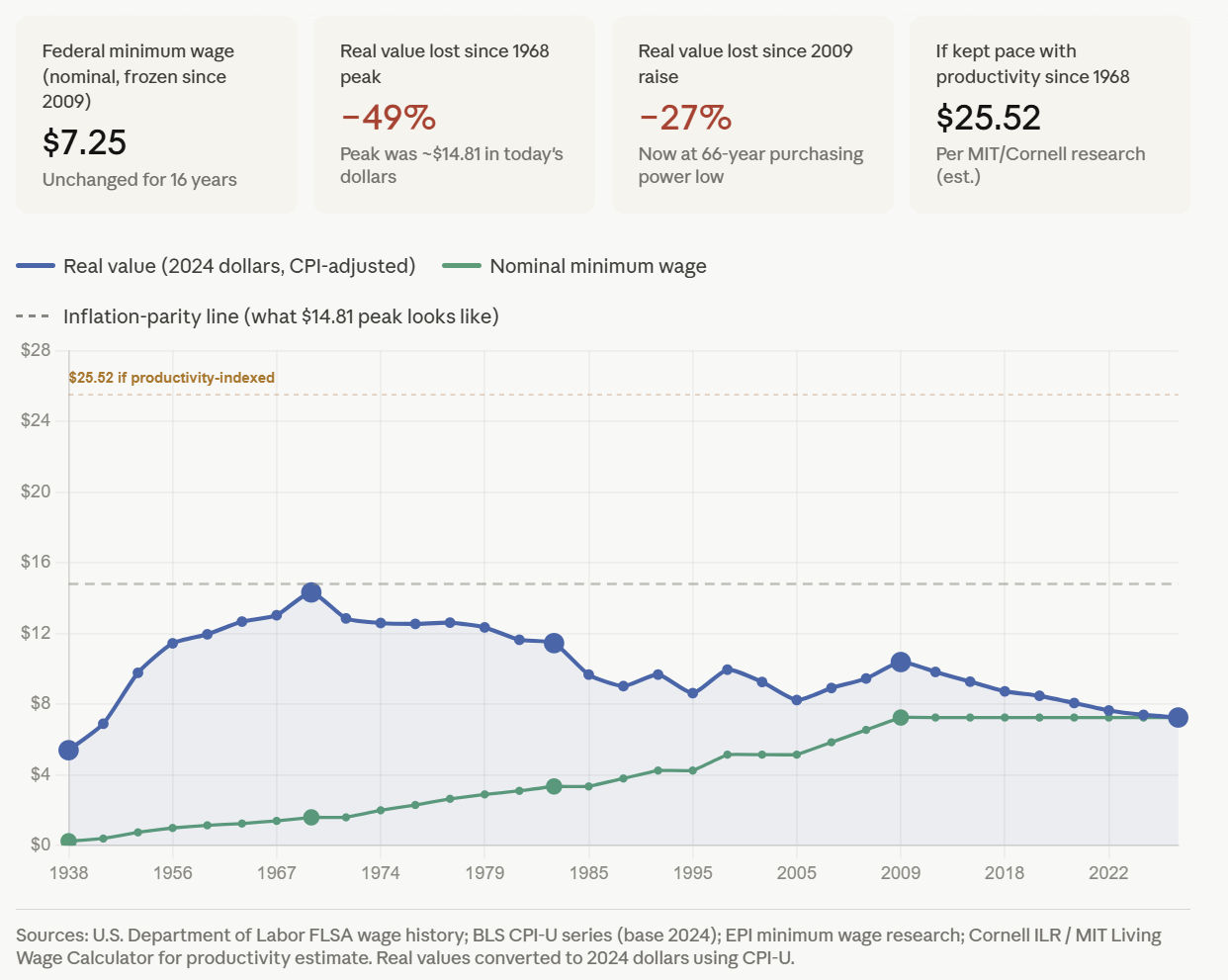
This structural evolution materialized across decades of macroeconomic data. The federal minimum wage, which has remained stagnant at $7.25 per hour since July 2009, represents the longest period in United States history without a federal statutory increase, resulting in a severe erosion of purchasing power. Concurrently, broader wage trends highlight a growing disparity between compensation and inflation. Historical tracking indicates that while wage growth kept pace with or exceeded inflation through the mid-twentieth century, the inflation shocks of the 1970s initiated a persistent lag. Low-wage earners and high school graduates experienced standard-of-living contractions first, followed by college graduates in the late 1990s, and eventually workers with advanced degrees by the 2020 pandemic era.
Compounding these wage dynamics is an acute collapse in institutional trust. According to longitudinal data from organizations such as Pew Research and Edelman, the confidence employees place in their leadership has steadily declined. Data compiled by PwC in 2024 revealed that overall employer trust stands at roughly 67 percent, dropping to less than 50 percent among frontline workers, who comprise the vast majority of the labor force. Trust in executive leadership specifically has experienced a sharp downward trajectory, falling from roughly 25 percent in 2019 to under 20 percent in subsequent years. While the initial phases of the COVID-19 pandemic saw a temporary spike in worker-employer solidarity, subsequent waves of corporate downsizing and executive discourse surrounding automation have accelerated this erosion.
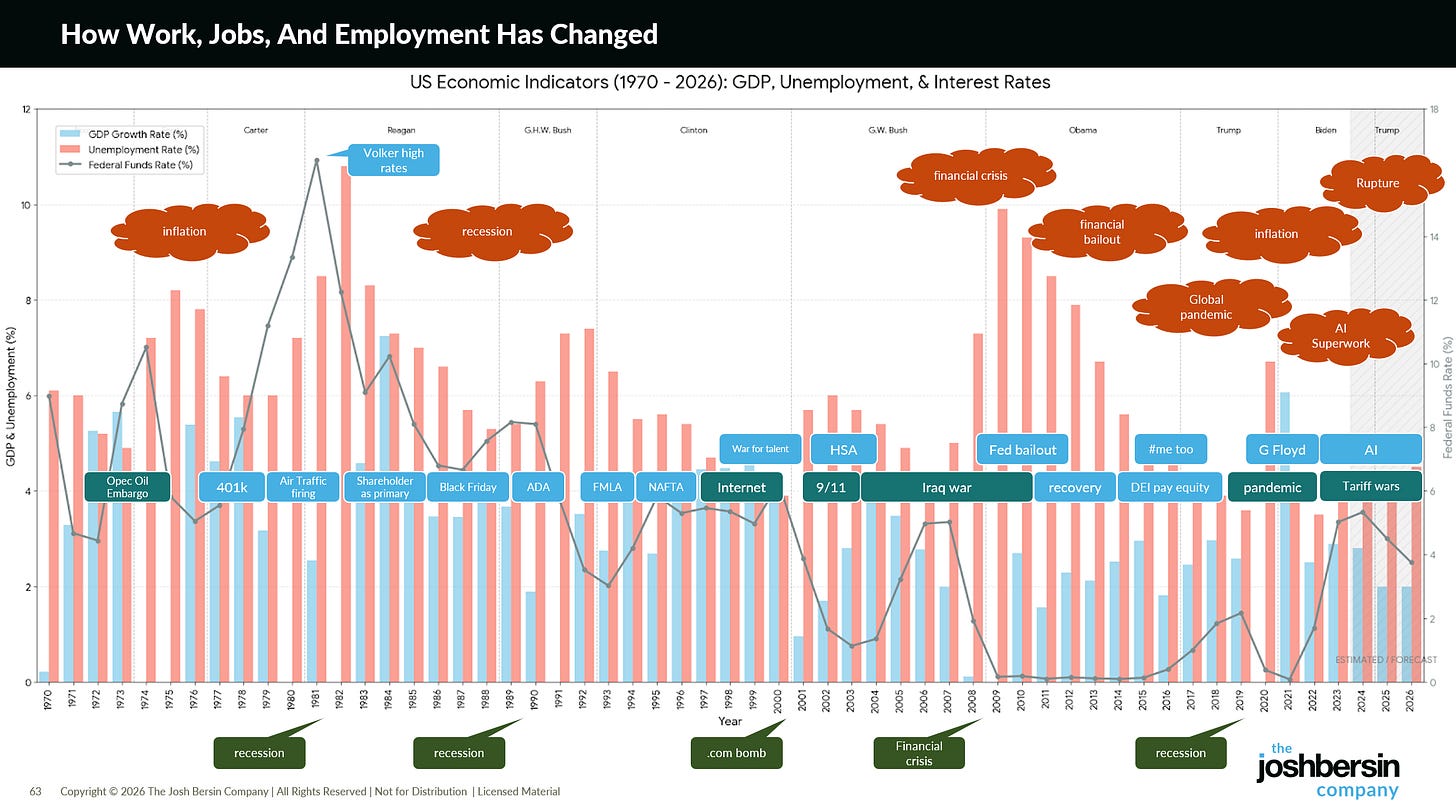
At the core of this transition is the phenomenon known as labor decoupling. Rather than relying on traditional full-time staff, contemporary enterprises increasingly leverage global contractor networks, gig economy platforms, and sophisticated workplace surveillance tools to optimize headcount dynamically. Statistics indicate that the average American worker will face approximately 2.5 layoffs over the course of a career—a figure that has more than doubled over the last thirty years. In response, more than 65 percent of the workforce maintains supplementary income streams or "side hustles," signaling a widespread retreat from reliance on single-employer stability.
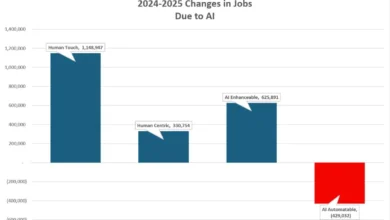
The introduction of generative artificial intelligence has intensified these anxieties, transforming the perception of labor from an appreciating human asset into a variable operational expense. Financial markets frequently reward corporations with immediate stock price appreciations following layoff announcements, reinforcing the institutional perspective that human capital is a cost center rather than a long-term investment. While specialized professionals in fields like skilled trades, nursing, and advanced AI engineering command substantial remuneration—with newly minted AI developers routinely securing compensation packages exceeding $500,000—administrative, clerical, and mid-tier analytical workers face mounting displacement risks.
Corporate reaction to these systemic shifts remains sharply polarized. Proponents of rapid workforce agility argue that continuous corporate restructuring and contractor-based models are essential for survival in a technology-driven marketplace. Companies operating within high-growth sectors, particularly venture-backed technology startups and generative AI developers, frequently scale headcounts rapidly to capture emerging markets, viewing high employee turnover as an inherent byproduct of rapid innovation.
Conversely, enduring multinational organizations across sectors such as energy, hospitality, and technology often adopt a more measured human capital strategy. Enterprises that prioritize long-term workforce retention view their personnel as critical appreciating assets, deliberately avoiding reactive overhiring and subsequent mass layoffs to preserve institutional knowledge and corporate culture.
Policymakers and labor economists continue to debate effective interventions to address these systemic imbalances. Proposed solutions range from enhanced federal and state investments in vocational reskilling and foundational adult education—noting that a significant percentage of the adult population struggles with advanced reading and text synthesis required in a modern knowledge economy—to fundamental reforms in corporate accounting standards that reclassify labor from a disposable expense to a strategic capital investment.
Ultimately, the trajectory of the modern labor market depends on corporate strategy. As enterprises navigate the integration of artificial intelligence and advanced automation, the choices made by leadership regarding workforce retention and long-term development will dictate not only corporate resilience, but the broader stability of the global economic fabric.