Cultural awareness training has evolved from a niche human resources initiative into a foundational business competency, essential for organizations operating within an increasingly interconnected global economy. As companies navigate the complexities of remote work, international expansion, and the integration of diverse talent pools, the ability to bridge cultural divides has become a primary driver of operational efficiency. Unlike traditional Diversity, Equity, and Inclusion (DEI) compliance programs, which often focus on legal frameworks and policy adherence, modern cultural awareness training prioritizes the development of interpersonal agility. This shift aims to foster psychological safety, catalyze innovation through diverse perspectives, and optimize business outcomes by minimizing the friction often associated with cross-cultural collaboration.
The Evolution of Cultural Competency in the Workplace
The trajectory of cultural awareness training mirrors the global shifts in labor demographics over the last two decades. In the early 2000s, initiatives were largely reactive, prompted by legal requirements or the need to mitigate workplace discrimination. However, the 2010s marked a pivot toward viewing cultural intelligence (CQ) as a strategic advantage. This transition was accelerated by the rapid adoption of digital collaboration tools and the post-2020 normalization of remote, borderless teams.
Recent longitudinal data underscores the urgency of this transition. A study by McKinsey & Company has consistently demonstrated that companies in the top quartile for ethnic and cultural diversity outperform their peers in profitability by as much as 36%. These findings suggest that cultural awareness is not merely a soft skill but a quantitative driver of financial performance. Organizations that fail to institutionalize these practices risk high turnover rates, as employees who feel culturally alienated are statistically less likely to remain with an employer for the long term.
The Mechanism of Cultural Awareness: Beyond Surface-Level Understanding
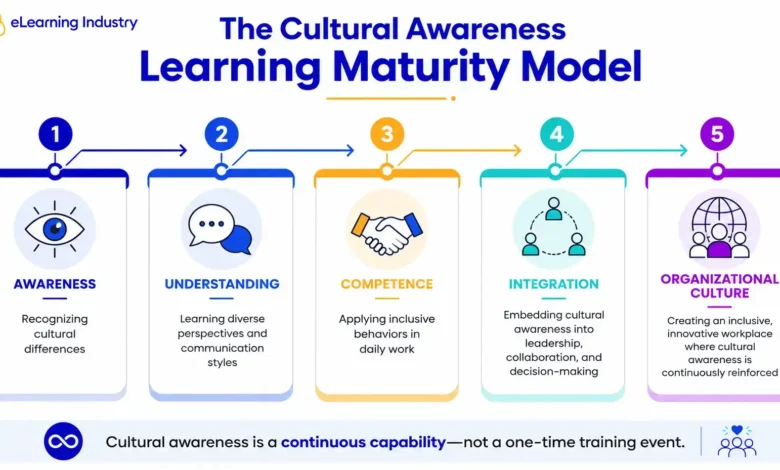
At its core, cultural awareness is the capacity to perceive, evaluate, and navigate the nuances of human interaction shaped by upbringing, societal values, and belief systems. It moves beyond the superficial acknowledgment of differences—such as cuisine or traditional dress—and into the deeper realms of communication styles and decision-making logic.
Effective training programs are now structured around the principle of "self-first" reflection. Before an employee can interpret the cultural behaviors of a colleague, they must understand their own inherent biases and "cultural lenses." Psychologists and organizational behaviorists argue that this introspective phase is vital for dismantling unconscious bias. By identifying mental shortcuts—often referred to as heuristics—employees can learn to pause before making snap judgments, thereby reducing the prevalence of microaggressions and fostering a more objective professional environment.
Strategic Implications and Industry-Specific Applications
The necessity of cultural awareness varies by sector, yet the impact remains universally significant. In the healthcare and behavioral health sectors, the stakes are elevated from professional efficiency to patient outcomes. Research from the National Institutes of Health (NIH) indicates that a lack of cultural competency among providers is a major contributor to health disparities, as communication barriers can lead to misdiagnosis or patient non-compliance with treatment plans. Consequently, many medical institutions have integrated cultural safety training into their mandatory continuing education requirements, focusing on trauma-informed care and the impact of intersectionality on patient health.
In the corporate sector, the focus is largely on team cohesion and global market penetration. As organizations expand into emerging markets, the ability to negotiate across cultures is a key differentiator. A failure to adapt communication styles—such as the difference between high-context cultures, where meaning is derived from nuance and relationship, and low-context cultures, which rely on explicit, direct communication—can lead to stalled projects and eroded trust.

Best Practices for Instructional Design
The transition from theory to practice is the greatest challenge for modern Learning and Development (L&D) departments. The industry has largely moved away from one-off, lecture-style seminars in favor of high-engagement, scenario-based learning models.
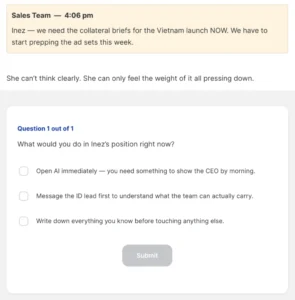
- Scenario-Based Simulations: By placing employees in realistic, high-pressure situations—such as a cross-border negotiation or a team conflict involving clashing work styles—training programs provide a controlled environment to practice conflict resolution.
- Continuous Reinforcement: The "forgetting curve," a concept in cognitive science, suggests that information not reinforced is quickly lost. Modern programs utilize spaced repetition, involving short, micro-learning modules and quarterly refreshers to ensure cultural awareness remains a top-of-mind priority.
- Inclusive Decision-Making Frameworks: Organizations are increasingly adopting structural tools to prevent "groupthink." This includes assigning "devil’s advocates" during meetings or utilizing anonymous input tools to ensure that individuals from minority cultures feel empowered to voice dissenting or unique viewpoints.
Data-Driven Outcomes and Psychological Safety
Google’s landmark "Project Aristotle" remains a cornerstone in the argument for cultural awareness. The study, which analyzed hundreds of teams within the tech giant, concluded that psychological safety—the belief that one will not be punished or humiliated for speaking up—is the single most important predictor of a high-performing team. Cultural awareness training acts as the primary engine for building this safety. When team members understand the cultural foundations of their peers, the propensity for judgment decreases, and the threshold for open communication rises.
Industry analysts observe that the long-term impact of these programs is a more resilient organizational culture. When teams are capable of navigating internal differences, they are better equipped to handle external volatility. In a globalized market, where consumer preferences shift rapidly and differ wildly across borders, a culturally agile workforce is better positioned to innovate and respond to localized demands.
The Role of Leadership and Organizational Culture
The success of any cultural awareness initiative is ultimately contingent upon leadership buy-in. According to Christopher Pappas, founder of eLearning Industry, cultural awareness must be treated as a core business skill, with the same rigor applied to its implementation as one would apply to technical training or compliance. When executives model inclusive communication and demonstrate curiosity regarding diverse viewpoints, it signals to the rest of the organization that these behaviors are expected and valued.
Furthermore, the integration of "reverse mentoring" programs has gained traction. In these setups, junior employees from different cultural backgrounds mentor senior leaders, providing the latter with insights into the lived experiences of a diverse workforce. This horizontal transfer of knowledge helps bridge the generational and cultural gaps that often exist within the C-suite, ensuring that strategy remains informed by a broad spectrum of perspectives.
Conclusion and Future Outlook
As the global labor market continues to shift toward a model characterized by remote collaboration and cross-continental interaction, the demand for sophisticated cultural awareness training will only grow. The transition from a compliance-heavy, "check-the-box" approach to a strategy rooted in ongoing, practical, and behavior-changing education is already underway.
The broader implications are clear: organizations that prioritize the cultural competence of their workforce are not only mitigating the risks of misunderstanding and conflict but are actively building a competitive advantage. By investing in the human element of business—the capacity for empathy, active listening, and inclusive decision-making—companies ensure that they are not just reacting to a diverse world, but are effectively leveraging that diversity to drive growth, innovation, and long-term sustainability. The future of the global workplace lies in the ability of its participants to see beyond their own perspectives and engage with the world with nuance and respect.