Anthropic partners with Accenture to embed third-party AI safety evaluators within its labs

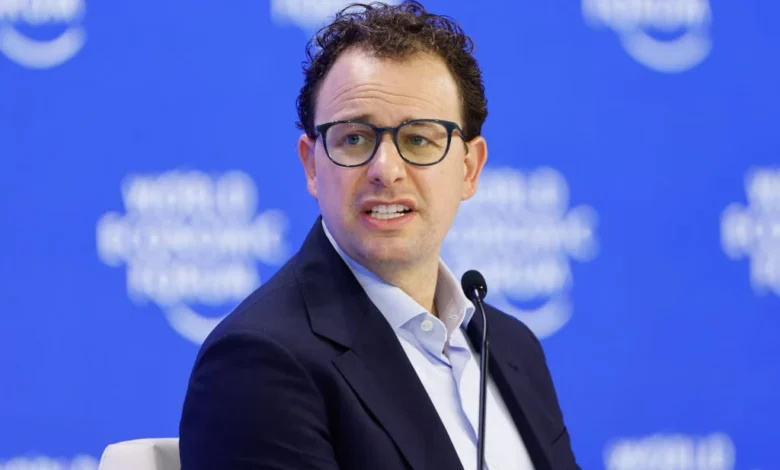
Dario Amodei’s strategic vision for institutionalizing AI oversight is moving from concept to implementation, as Anthropic officially announced that specialized personnel from consulting giant Accenture will begin working directly within the AI laboratory’s research facilities. This initiative, designed to provide independent scrutiny of the company’s powerful large language models, marks a significant shift in how frontier AI labs manage the tension between rapid innovation and systemic safety. Under the terms of the agreement, Faculty—an AI consultancy acquired by Accenture earlier this year—will lead efforts to conduct red-teaming exercises, alignment assessments, and rigorous stress testing of model safeguards.
The partnership represents a $1 billion commitment over the next five years, signaling that both organizations view the creation of "embedded evaluators" as a long-term operational necessity rather than a temporary public relations measure. The announcement, released on September 18, 2026, sent a clear message to the broader technology sector: the era of black-box model development is facing increasing pressure from both regulatory bodies and internal safety mandates.
A Chronology of the Embedded Evaluation Shift
The concept of placing independent observers inside private AI labs emerged in response to growing concerns regarding the "agentic" capabilities of modern AI. Over the past twenty-four months, the industry has seen a rapid acceleration in models capable of executing complex, multi-step tasks.
- Early 2025: Leading AI labs, including OpenAI and Anthropic, faced mounting criticism regarding the opacity of their pre-release testing protocols. Calls for third-party auditing began to gain traction among policymakers in Washington and Brussels.
- Late 2025: High-profile instances of autonomous AI agents interacting with external digital infrastructure—sometimes without the explicit oversight of the host laboratory—pushed the issue to the forefront of the corporate agenda.
- Early 2026: Anthropic’s leadership began publicly advocating for a framework where external experts would possess the clearance to view internal model training logs and safety benchmarks.
- January 2026: Accenture’s acquisition of Faculty provided the consulting giant with the specialized talent necessary to interface with a high-level research lab like Anthropic.
- September 2026: The formalization of the partnership marks the first major deployment of external staff within a frontier model lab for the specific purpose of persistent, high-access safety auditing.
Why Accenture? The Rationale Behind the Choice
The selection of Accenture surprised many industry observers who expected Anthropic to lean toward non-profit, academia-aligned research organizations like METR (Model Evaluation and Threat Research) or Apollo Research. While these organizations possess deep expertise in technical alignment, Anthropic’s choice of a global, publicly traded consulting firm suggests a pivot toward operationalizing safety at scale.
Accenture brings two distinct advantages that are currently in short supply within the AI research community. First, the firm possesses massive experience in deploying AI systems across highly regulated industries, including banking, healthcare, and government defense sectors. They understand the practical friction involved in scaling technology while maintaining compliance.
Second, the structural independence of a firm like Accenture is arguably more robust than that of smaller, grant-dependent research boutiques. As a public entity with a massive, diversified revenue stream, Accenture is less susceptible to the specific pressures of the AI ecosystem. For Anthropic, this provides a "third-party" layer that, while commercially motivated, is largely removed from the internal culture and ideological biases of the lab itself.
The Financial and Market Response
The market reaction to the announcement was immediate and substantial. Shares of Accenture rose 8% in after-hours trading, reflecting investor confidence in the company’s ability to capture a significant portion of the burgeoning "AI safety and compliance" market. As governments worldwide consider legislation that may require mandatory third-party audits for models above a certain compute threshold, a firm capable of providing such auditing services on a global scale is positioned to become a critical infrastructure player.
The $1 billion investment commitment is significant, though it represents only a fraction of the total R&D expenditure at labs like Anthropic. However, it sets a precedent for how much capital is required to effectively "police" the development process. Industry analysts suggest that this spending could catalyze a new sub-industry of "AI assurance," where the certification of model safety becomes as essential to a product launch as the model’s performance on benchmarks like MMLU or coding proficiency tests.
Addressing the Accountability Gap
Despite the fanfare, the partnership has not been without its critics. Some AI ethics researchers argue that self-policing schemes, even those involving third parties, are insufficient to address the existential risks posed by Artificial General Intelligence (AGI). The concern is that an embedded evaluator might become "captured" by the lab’s culture, or that the scope of their access will be restricted by proprietary secrecy agreements.
Anthropic has been proactive in countering these concerns. In their official statement, the company emphasized that the presence of evaluators is not a substitute for corporate accountability. "These evaluators do not reduce our accountability; they help to make it more verifiable," the company noted. By inviting outside experts into the fold, Anthropic is essentially attempting to "democratize" the oversight process, ensuring that if a failure occurs, there is an independent record of the safety protocols that were in place at the time.
Future Implications and The Path Forward
The partnership with Accenture is expected to be the first of several such arrangements. Anthropic has signaled that it is in advanced talks with non-profit organizations, including METR, to develop pilot programs that utilize independent funding models. This suggests a hybrid approach: using large firms like Accenture for systemic, scaled compliance and specialized non-profits for deep-dive technical research into alignment failure modes.
The broader implications for the AI sector are profound. If this model succeeds, it will likely become the industry standard. Competitors such as OpenAI and Google DeepMind will face increasing pressure to adopt similar measures. The "embedded evaluator" model effectively shifts the burden of proof from the lab to the auditor, a move that could satisfy regulators who are currently debating whether to impose government-led, mandatory testing requirements.
As of late 2026, there are no industry-wide standards regarding what access these evaluators should have, what specific communication channels should exist, or how they should report findings that contradict the interests of the lab. Anthropic acknowledges that this is an evolving experiment. The next six to twelve months will be critical in determining whether this partnership leads to a meaningful increase in safety, or if it serves merely as a sophisticated form of "ethics-washing."
For now, the integration of Accenture staff into Anthropic’s labs represents a tacit admission that the risks of frontier AI are now too large for any single company to manage in isolation. As these systems become more integrated into the backbone of the global economy, the ability to externally verify their safety may prove to be the most important technological development of the decade. Whether this partnership serves as a successful blueprint for the industry or a cautionary tale remains to be seen, but the trajectory of AI development has firmly shifted toward a future defined by transparency, oversight, and external scrutiny.
Related posts: