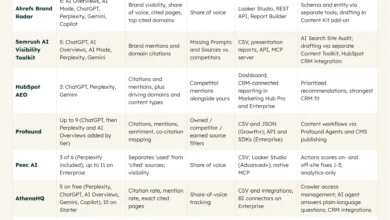
Scrunch and Ahrefs Brand Radar Reshape Digital Marketing Strategies as Answer Engine Optimization Becomes a Corporate Priority for 2026

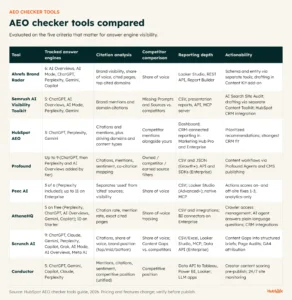
The landscape of digital discovery has undergone a fundamental shift as traditional Search Engine Optimization (SEO) evolves into Answer Engine Optimization (AEO). In this maturing market, two platforms—Scrunch and Ahrefs Brand Radar—have emerged as the primary contenders for enterprise brands seeking to monitor and improve their visibility within AI-generated responses. While both tools aim to solve the problem of brand "un-findability" in the age of Large Language Models (LLMs), they represent two distinct philosophies: Scrunch as a dedicated, purpose-built AEO suite, and Ahrefs Brand Radar as a strategic extension of a legacy SEO powerhouse.
As organizations prepare their 2026 marketing budgets, the choice between these platforms has become a litmus test for a brand’s technical maturity. Recent industry data from Gartner suggests that traditional search engine volume could see a decline of up to 25% by 2026 as users migrate toward conversational interfaces like ChatGPT, Perplexity, and Claude. Consequently, the ability to track "Share of Model" has become as critical as tracking "Share of Voice" was in the previous decade.
The Evolution of AI Visibility: A Four-Year Timeline
The emergence of Scrunch and Ahrefs Brand Radar is the result of a rapid technological progression that began in late 2022. Understanding this chronology is essential for contextualizing the current capabilities of these platforms.
- November 2022: OpenAI releases ChatGPT, sparking the first wave of "Answer Engine" queries.
- Early 2023: Microsoft integrates GPT-4 into Bing, while Google announces Search Generative Experience (SGE), now known as AI Overviews.
- Late 2023: Perplexity AI gains traction as a "citation-first" search engine, highlighting the need for brands to track not just mentions, but the specific sources AI models use.
- 2024: Dedicated AEO tools like Scrunch enter the market to address the limitations of traditional SEO software, which struggled to parse non-linear AI responses.
- 2025: Ahrefs launches Brand Radar, leveraging its massive historical keyword database to provide a hybrid view of traditional and AI search.
- 2026 (Projected): AEO becomes a standard line item in enterprise marketing budgets, with brands requiring real-time "Agent Traffic" monitoring to defend their market share.
Scrunch: The Purpose-Built AEO Architecture
Scrunch is positioned as a specialist tool for teams whose primary objective is the active optimization of AI interactions. Unlike traditional platforms that treat AI as a secondary channel, Scrunch’s entire workflow is centered on how LLMs perceive, crawl, and cite digital content.
One of the platform’s most significant technical differentiators is its AI Experience Platform (AXP), an enterprise-only feature implemented at the site’s edge. AXP serves a "token-light" version of a website specifically to AI bots, reducing the computational load for the agent. This addresses a common failure point in AEO: AI agents often get "stuck" on complex Javascript or heavy markup, leading them to ignore a brand’s most valuable content. By serving an optimized, parallel experience to bots, Scrunch reports a reduction in token loads by up to 26%, significantly increasing the likelihood of a brand being cited in a response.
Furthermore, Scrunch’s "Agent Traffic" tool allows webmasters to distinguish between human visitors and AI crawlers from platforms like OpenAI, Anthropic, and Google. This data is vital for attribution, allowing marketers to prove that their AEO efforts are resulting in actual bot engagement.
Ahrefs Brand Radar: The Power of Scale and Integration
In contrast to Scrunch’s specialist approach, Ahrefs Brand Radar is built for the "unified marketer." It functions as an add-on to the broader Ahrefs ecosystem, allowing teams to view AI visibility alongside traditional metrics such as backlinks, keyword rankings, and Reddit mentions.
The primary advantage of Brand Radar lies in its data source. Ahrefs utilizes a database of over 406 million monthly prompts derived from real user behavior rather than synthetic or "prompt-engineered" queries. This provides a more accurate reflection of what actual buyers are asking in the wild. For an SEO lead who is already managing a site’s health through Ahrefs, Brand Radar provides a low-friction entry point into AEO without the need for a new vendor relationship or a separate dashboard.
Ahrefs also provides an MCP (Model Context Protocol) Server, which allows users to pull live Ahrefs data directly into Claude or ChatGPT. This integration enables "in-workflow" analysis, where a marketer can ask an AI to analyze its own visibility using the Ahrefs data as a factual anchor.
Data Methodology: Synthetic vs. Real-World Signals
The debate between Scrunch and Ahrefs often centers on how they collect and interpret data. This is a critical distinction for data scientists and CMOs who must validate the ROI of these platforms.
Scrunch’s NLP and Browser Automation
Scrunch utilizes a combination of official APIs and browser automation to simulate user interactions across various LLMs. It then applies proprietary Natural Language Processing (NLP) to determine the sentiment of the response and the authority of the cited sources. This "synthetic" approach allows for highly controlled testing. A brand can run 125 unique prompts daily to see exactly how a new product launch is being represented across ChatGPT and Perplexity.
Ahrefs’ Prompt Database
Ahrefs relies on its massive scale, sampling a wider pool of global traffic. This is advantageous for identifying broad trends and benchmarking against competitors on a macro level. However, some third-party audits have noted accuracy gaps in how Brand Radar tracks specific engines like Perplexity, which has a more volatile response structure than Google’s AI Overviews.
Financial Considerations and Market Tiering
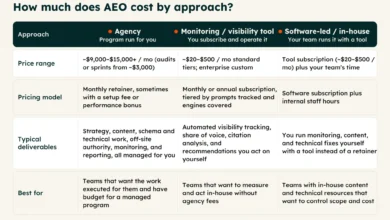
The pricing models of these two platforms reflect their target audiences. Scrunch’s entry-level Brand Core plan starts at $250 per month, which includes coverage for ChatGPT, Perplexity, Google AIO, and Copilot. However, access to more specialized models like Claude or Gemini—and the highly touted AXP edge delivery—is gated behind Enterprise pricing.
Ahrefs Brand Radar offers a more modular pricing structure. Standalone access starts at $199 per month, making it the most cost-effective "serious" tool for small to mid-sized agencies. For existing Ahrefs users, the cost can be as low as $50 per month for custom prompt tracking, though full access to the 406-million-prompt database requires a higher tier.
HubSpot has also entered this space with its "AEO Grader," a free tool that provides a scored snapshot of brand visibility. While not a replacement for the deep tracking of Scrunch or Ahrefs, it has become the standard for "day zero" benchmarking, allowing teams to assess their needs before committing to a paid platform.
Strategic Implications: Choosing the Right Tool for the Problem
The decision between Scrunch and Ahrefs should be dictated by the specific problem a brand is trying to solve.
The "Fix-It" Scenario: If a brand is consistently omitted from AI answers for high-intent buying prompts, Scrunch is the superior choice. Its Site Maps and AXP features are designed to diagnose and repair technical "blind spots" that prevent AI agents from reading a site. It is a tool for action and optimization.
The "Monitoring" Scenario: If a brand is already performing well and simply needs to monitor its share of voice across all discovery channels (Search, AI, Social, and Forums), Ahrefs Brand Radar is the more logical fit. It provides the context of how AI visibility correlates with traditional search traffic, preventing the siloed reporting that often plagues large marketing departments.
The Future of Discovery: Will AEO Replace SEO?
A central question for the industry is whether AEO will eventually render traditional SEO obsolete. The consensus among technical experts at both Scrunch and Ahrefs is a definitive "no." Instead, the two disciplines are expected to run in parallel.
Scrunch’s own technical architecture supports this view: the human-facing website remains optimized for traditional search engines and user experience, while the AXP layer handles the bot-facing optimization. Brands that pivot entirely to AEO while neglecting their SEO foundations risk losing the very authority that AI models look for when choosing which sources to cite.
As we move into 2026, the successful marketing team will be one that views AI visibility not as a "black box" of magic, but as a technical requirement. Whether through the specialized optimization of Scrunch or the integrated insights of Ahrefs Brand Radar, the goal remains the same: ensuring that when a customer asks an AI for a recommendation, your brand is the one it trusts to answer.