Profound versus Athena AI for Answer Engine Optimization: A Definitive Comparative Analysis

The rapid emergence of generative AI has fundamentally altered the landscape of digital search, shifting user behavior from traditional keyword-based queries on platforms like Google toward conversational, synthesized answers provided by Large Language Models (LLMs). This seismic shift has necessitated the rise of Answer Engine Optimization (AEO), a specialized discipline focused on ensuring brand visibility within AI-generated responses. As businesses scramble to adapt, two platforms—Profound and Athena AI (branded as AthenaHQ)—have established themselves as the primary contenders for AEO tooling. However, the market for these solutions is often clouded by vendor-sponsored content and affiliate marketing. This analysis provides a rigorous, fact-checked comparison of these two platforms, based on data verified as of September 2026, to assist marketing leaders in making informed procurement decisions.
Background and Evolution of the AEO Category
To understand the rivalry between Profound and Athena AI, one must first recognize the underlying problem they aim to solve. Unlike traditional SEO, which relies on click-through rates from a list of blue links, AEO addresses "zero-click" scenarios where an AI engine—such as ChatGPT, Perplexity, or Google’s AI Overviews—provides a definitive, immediate answer. If a brand is not cited or referenced within that response, it effectively disappears from the user’s consideration set.
Historically, both Profound and Athena AI began as niche startups responding to the volatility of the AI landscape. Their evolution has been rapid; in the last twelve months alone, both companies have pivoted their pricing and feature sets to align with the needs of enterprise clients. Profound has shifted from a self-serve model to a high-touch, sales-led enterprise strategy, while Athena AI has maintained a public-facing self-serve tier while gating its most advanced analytical capabilities behind custom contracts.
Comparative Analysis of Monitoring Capabilities
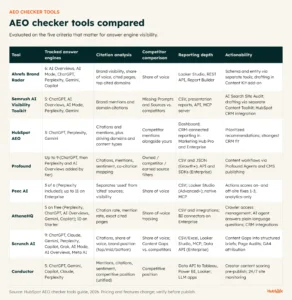
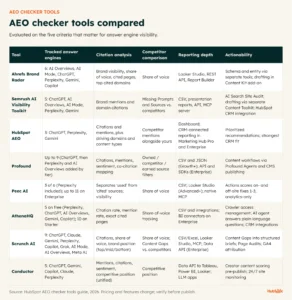
The core utility of any AEO tool is its ability to monitor brand presence across disparate AI engines. Profound, through its "Answer Engine Insights" module, utilizes a credit-based system of autonomous agents that run structured prompts to evaluate citations, sentiment, and competitive positioning. As of September 2026, Profound’s free trial is limited to three primary engines—ChatGPT, Gemini, and Google AI Overviews—with its full potential of nine engines reserved for enterprise-level clients.
Athena AI takes a different architectural approach. Its platform operates on a unified credit system where every "check" (one prompt, one engine, one day) consumes a single credit. This system is highly transparent but can be deceptively expensive for teams that do not strictly manage their prompt volume. While Athena AI’s starter plan offers broader out-of-the-box engine coverage—listing 11 models including Claude, Copilot, Grok, and Mistral—the most sophisticated features, such as their "Citation Engine" and multi-region tracking, are restricted to enterprise agreements.
The fundamental trade-off for the buyer is clear: Profound offers a deep, agent-based analytical layer for companies with the resources to manage complex workflows, while Athena AI provides a more accessible, entry-level product that allows for faster deployment but requires vigilant credit management.
Pricing Structures and Financial Predictability
Pricing transparency remains a significant differentiator between the two firms. Profound currently operates without a published self-serve paid tier, requiring potential users to engage in a sales-led procurement process. This represents a marked departure from earlier versions of the software, which previously advertised monthly subscription plans ranging from $99 to $399. This lack of public pricing data makes initial budgetary forecasting difficult for teams that prefer self-service purchasing.
Conversely, Athena AI maintains a published pricing page, offering a "Starter" plan at $295 per month, which includes 3,600 credits. While this allows for easier initial budgeting, it carries the risk of "scale-up shock." Because monitoring frequency, prompt volume, and engine breadth all draw from the same credit pool, organizations that fail to optimize their queries can quickly burn through their monthly allowance, leading to significant overage costs or the need for an expensive mid-contract upgrade to an enterprise tier.
Operational Workflows and Content Optimization
Both platforms are designed to facilitate a "Measure, Prioritize, Create, Monitor" loop. However, the execution of these stages varies significantly. Profound’s "AI Marketer" agents excel at creating content, but the most advanced capabilities are locked behind the enterprise paywall. For teams with high-volume requirements, the cost-to-benefit ratio of these agents must be carefully calculated during the negotiation phase.

Athena AI, meanwhile, emphasizes "actionable" insights. Its content optimization agent is available at the starter level, allowing teams to begin improving their content visibility immediately upon subscription. The limitation here is that Athena AI’s "Recommendation Engine"—the platform’s internal logic for determining which content gaps are most critical to address—is an enterprise-only feature. Consequently, while a starter-tier customer can execute content changes, they lack the sophisticated guidance required to prioritize those changes effectively.
Security and Trust Compliance
In the enterprise software sector, security documentation is as critical as feature functionality. Both companies utilize SafeBase-powered trust centers to manage their compliance documentation. Profound has secured SOC 2 Type 2 certification and maintains alignment with HIPAA standards, NIST 800-53, and ISO 27001. Athena AI also holds SOC 2 Type 1 and Type 2 certifications and is GDPR compliant.
It is imperative that procurement teams do not conflate "alignment" with "certification." When evaluating these vendors, it is standard practice to request the full, unredacted audit reports directly from the vendors rather than relying on marketing badges displayed on their websites. This is particularly vital for organizations operating in highly regulated industries such as finance or healthcare.
Agency Considerations and Market Fit
For digital agencies, the selection criteria shift toward multi-tenancy, reporting, and white-label capabilities. Athena AI has developed a more robust, publicly documented agency program that includes pitch workspaces and reseller licensing. Profound maintains a presence in the agency space but relies more heavily on custom-tailored agreements. Agencies should prioritize questions regarding workspace management and data retention policies, as these factors directly impact long-term profitability when managing multiple client domains.
The Role of Integrated Ecosystems
An emerging trend in the AEO space is the integration of these tools into broader marketing stacks. A primary critique of both Profound and Athena AI is that they function as "siloed" tools; they provide the insights, but the actual execution of content updates must occur in a separate platform. This has prompted the entry of integrated solutions like HubSpot AEO.
HubSpot AEO offers a different value proposition: it links AI visibility scores directly to the CRM, allowing for "context-aware" content creation. By utilizing actual deal and customer data to inform the optimization of content, this approach addresses the "closing the loop" problem that standalone AEO tools often struggle with. For organizations already invested in mature marketing platforms, the cost of adding a specialized third-party AEO tool must be weighed against the potential efficiency gains of an integrated, platform-native solution.
Strategic Recommendations for Selection
Choosing between Profound and Athena AI is not a matter of identifying the "superior" tool, but rather identifying the better fit for an organization’s operational maturity.
- Analytical Depth: If an organization possesses the internal resources to operationalize complex data and requires deep, multi-engine benchmarking, Profound’s enterprise-tier capabilities are the industry standard for depth and agent-based sophistication.
- Time-to-Value: For teams that require immediate, predictable, self-serve access to AEO tools, Athena AI’s starter plan is the most viable path to market, provided the team is capable of maintaining strict discipline regarding credit consumption.
- Agency Scaling: Agencies should prioritize vendors that offer clear, multi-tenant administrative controls. While both vendors support this, Athena AI’s current documentation for agency workflows is more comprehensive, though individual negotiations remain key.
Conclusion
The AEO category is currently in a state of rapid flux. As AI engines themselves evolve, the tools built to track them must likewise pivot. The "arms race" between Profound and Athena AI has resulted in high-quality software, but potential customers must look beyond headline features and marketing claims. A thorough, evidence-based evaluation—centered on real-world usage data, verifiable security certifications, and a clear understanding of credit-based cost structures—is the only way to ensure that an AEO investment yields a measurable return. As the market moves toward 2027, the focus will likely shift from simple monitoring to the deep integration of AI insights into the broader customer journey, potentially favoring platforms that can unify analytics with content execution.