The Essential Guide to AI SEO Tools for Small Businesses and the Strategic Shift Toward Answer Engine Optimization

The rapid integration of artificial intelligence into the digital marketing ecosystem has fundamentally altered how small businesses approach search engine optimization. As global search engines transition from simple link repositories to sophisticated answer engines, the tools required to maintain visibility have evolved from optional luxuries to operational necessities. For lean teams operating with limited budgets and personnel, the challenge no longer lies in finding an AI tool, but in identifying which platforms provide genuine time-to-value versus those that contribute to "tool sprawl" and fragmented data.
The Current State of AI Adoption in Marketing
The shift toward AI-driven SEO is supported by significant industry data. According to recent reports from HubSpot, the adoption of artificial intelligence among marketers has reached a critical mass. Globally, two-thirds of marketing professionals now utilize AI within their daily workflows to automate repetitive tasks and enhance data interpretation. In the United States, this trend is even more pronounced, with 74% of marketers reporting regular use of AI tools.
This widespread adoption is driven by the necessity to do more with less. Small businesses, which often lack the dedicated SEO departments of enterprise-level competitors, are leveraging AI to bridge the expertise gap. However, the market’s saturation with tools promising "one-click rankings" has created a secondary challenge: discerning which investments will yield a measurable return on investment (ROI).

Framework for Evaluating AI SEO Solutions
For a small business, the procurement of an AI SEO tool is a decision that impacts both cash flow and human capital. Industry analysts suggest that buyers prioritize four key metrics when evaluating new software:
1. Time-to-Value (TTV): This measures the duration between the initial setup and the delivery of actionable insights. For small businesses, a high TTV is often a deal-breaker. Tools like Google Search Console (GSC) offer near-instantaneous value by providing performance data within 24 hours of script installation. In contrast, complex enterprise platforms may require weeks of configuration and external consultancy, which can drain resources before providing a single recommendation.
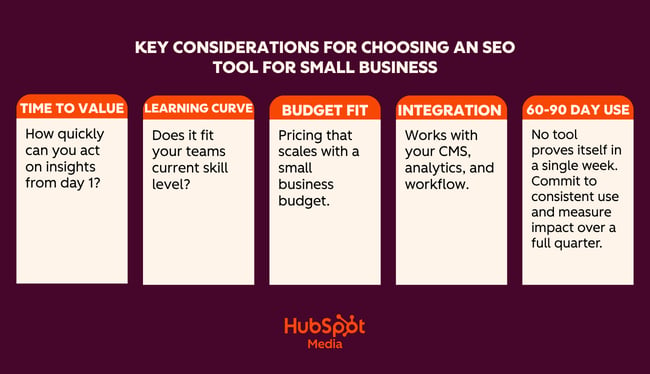
2. The Learning Curve: A tool’s utility is capped by the team’s ability to use it. Small business owners should seek platforms that offer guided workflows and plain-language recommendations. If a tool requires a deep understanding of technical SEO jargon to interpret its raw data, it may remain underutilized.
3. Integration and Connectivity: The modern marketing stack must be cohesive. According to research from MuleSoft, 86% of IT leaders believe that AI agents can introduce unnecessary complexity if they are not properly integrated into existing systems. For SEO, this means tools should ideally connect with a Content Management System (CMS) and a Customer Relationship Management (CRM) platform to ensure that traffic data correlates with actual revenue.
4. Scalability and Long-term Cost: A tool that is affordable today but becomes prohibitively expensive as a business grows can lead to significant "switching costs" later. Small businesses must evaluate the pricing tiers of a tool over a three-to-five-year horizon.
The Chronology of SEO: From Keywords to Answer Engines
The evolution of SEO can be categorized into three distinct phases. Understanding this timeline is crucial for small businesses attempting to future-proof their digital presence.
- The Keyword Era (2000–2015): SEO was primarily about keyword density, backlink quantity, and technical site health. Tools were focused on "scraping" search results to find high-volume phrases.
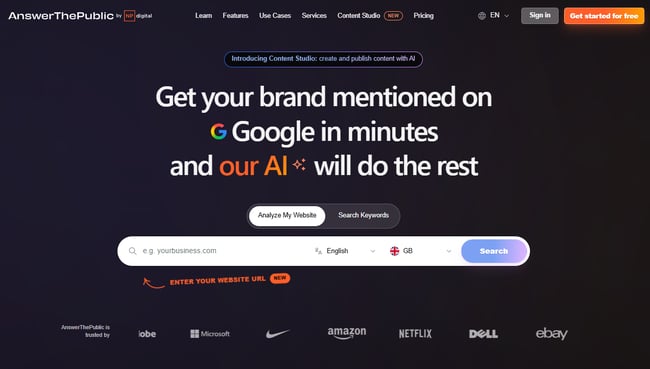
- The Semantic Era (2015–2022): Search engines began understanding intent. Content quality and "topic clusters" became the standard. Tools like Yoast and AnswerThePublic gained popularity by helping creators align with user intent.
- The AI and AEO Era (2023–Present): With the rise of Large Language Models (LLMs) like ChatGPT, Gemini, and Perplexity, search is becoming conversational. This has given birth to Answer Engine Optimization (AEO), where the goal is not just to rank on page one, but to be the cited source in an AI-generated summary.
Essential AI SEO Tools for the Modern Small Business
To navigate this new landscape, small businesses are turning to a curated list of tools that handle different aspects of the SEO and AEO workflow.
Foundational and Technical Audit Tools
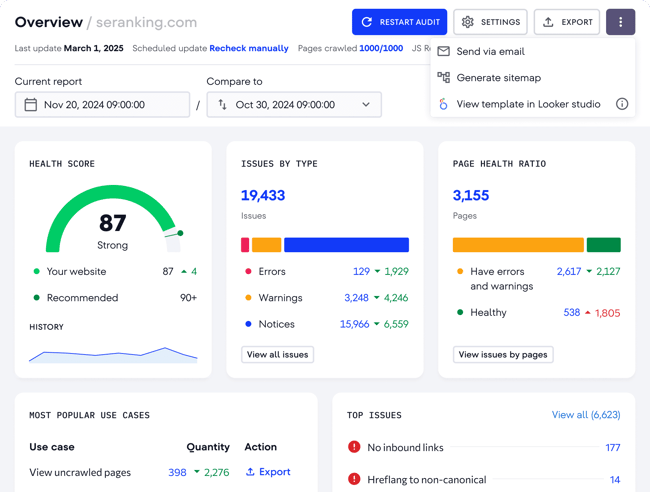
Google Search Console and Google Analytics (GA4) remains the non-negotiable foundation for any business. While GA4 tracks user behavior once they arrive on a site, GSC provides direct insight into how Google’s crawlers perceive a website. These tools have integrated AI to surface "anomalies" and "insights" in plain English, allowing non-experts to identify sudden drops in traffic or technical indexing issues.
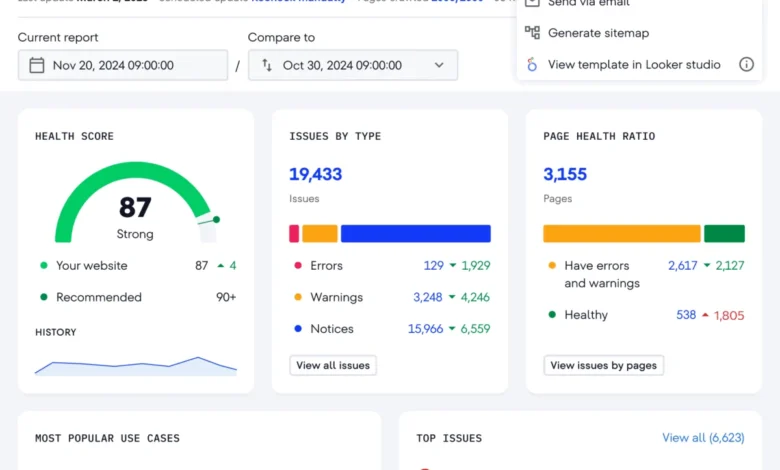
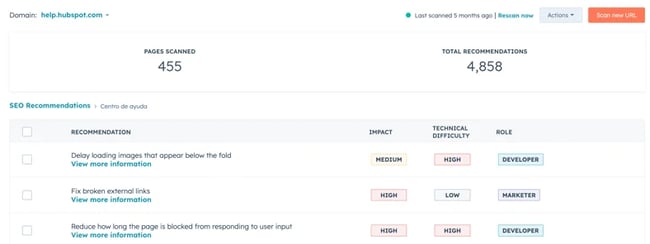
For those requiring more proactive guidance, HubSpot’s SEO Recommendations tool provides an integrated approach. Unlike standalone technical scanners like Screaming Frog, which require expert interpretation, HubSpot’s AI scans live pages and prioritizes fixes based on their potential impact on search visibility. It flags common suppressors such as broken links, missing alt text, and slow-loading pages, while providing direct instructions on how to resolve them within the CMS.
Content Strategy and Optimization
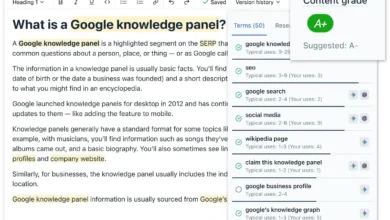
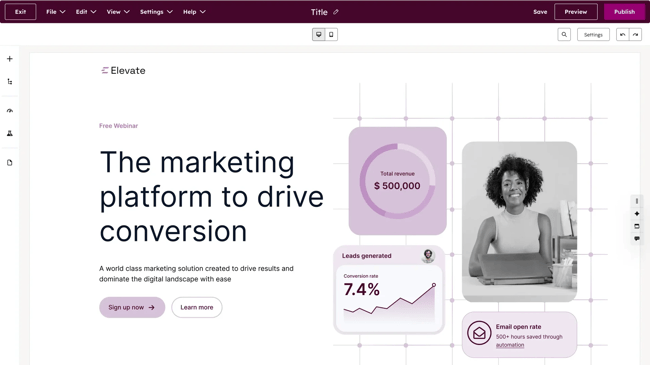
The "Topic Cluster" model has replaced the "Single Keyword" approach as the most effective way for small businesses to build authority. HubSpot’s Content Hub uses AI to help teams map out these clusters, identifying a central "pillar page" and supporting "sub-topics."
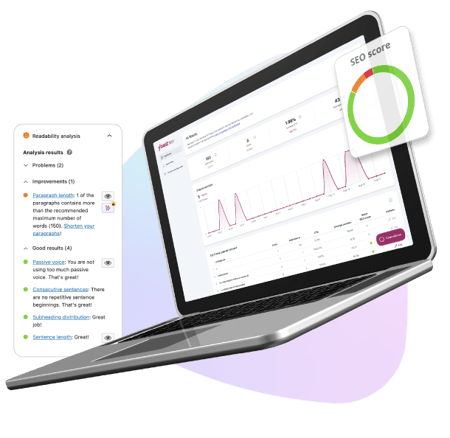
In the realm of content creation, the industry has shifted toward a "Human-in-the-Loop" model. While AI agents like HubSpot’s Breeze can generate blog drafts, FAQs, and meta descriptions in seconds, experts warn against publishing raw AI output. Search engines, particularly Google, have updated their algorithms to reward "E-E-A-T" (Experience, Expertise, Authoritativeness, and Trustworthiness)—qualities that AI cannot yet replicate. The most successful small businesses use AI as a "co-pilot" to overcome the "blank page" problem, while relying on human editors to ensure brand voice and factual accuracy.
The Rise of Answer Engine Optimization (AEO)
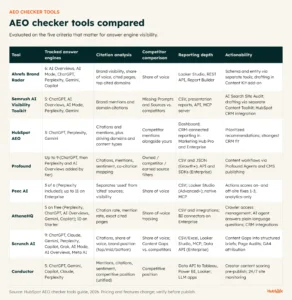
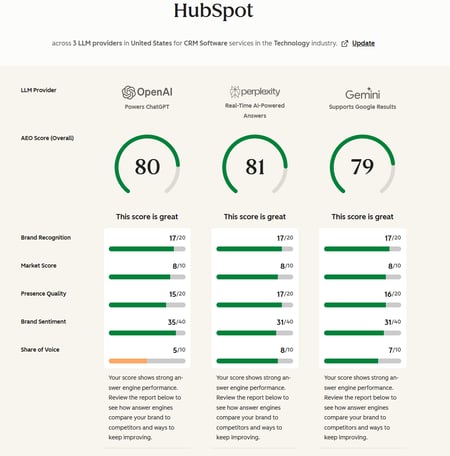
A significant shift in 2024 is the emergence of AEO-specific tracking. As more users turn to AI for answers, small businesses need to know if they are being cited in LLM responses. HubSpot’s AEO tool and its free AEO Grader have become essential for monitoring brand visibility across ChatGPT, Perplexity, and Gemini. These tools allow businesses to track how they are described by AI and identify "content gaps" that prevent them from being the preferred source of information for the AI’s training data or real-time search results.
Broader Impact and Industry Implications
The democratization of AI SEO tools has leveled the playing field, but it has also raised the bar for entry. Small businesses can now produce content at a scale previously reserved for large corporations. However, this has led to a "content explosion" that threatens to saturate search results with generic information.
The implication for small businesses is clear: AI should be used for efficiency, but "uniqueness" is the new currency. Industry analysis suggests that businesses that rely solely on AI to generate content without human oversight will likely see a decline in long-term organic performance as search engines refine their ability to detect low-effort, automated pages.
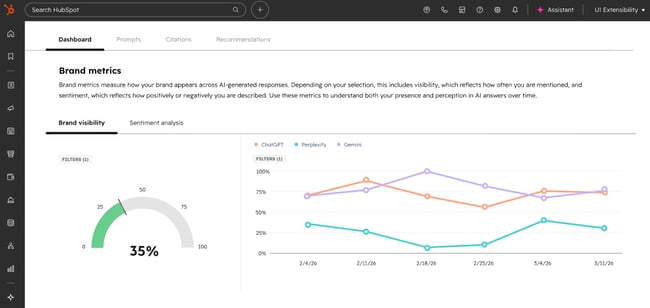
Furthermore, the integration of SEO data into CRM systems is changing how marketing success is measured. Traditional metrics like "clicks" and "impressions" are being replaced by "pipeline contribution" and "revenue attribution." For a B2B small business, knowing that a specific blog post optimized by AI led to a $10,000 contract is far more valuable than knowing it received 1,000 visits.
Conclusion: Navigating the 90-Day Test
The true test of any AI SEO tool is its consistent usage at the 60- to 90-day mark. Many small businesses fall into the trap of "trial enthusiasm," where a tool is purchased but never fully integrated into the weekly workflow. To avoid this, stakeholders should identify the three most time-consuming SEO tasks—such as keyword research, meta-tagging, or technical auditing—and select a tool that specifically automates those bottlenecks.
As the digital landscape continues to shift toward AI-mediated discovery, the right toolset will be the one that balances technical automation with the need for human-led strategy. For the small business owner, the goal is not to have the most tools, but to have a unified system that connects search visibility directly to business growth.