The Death of the Digital Billboard: Why Local Businesses Must Evolve Their Social Media Strategy to Survive

For the better part of a decade, the standard playbook for local business social media marketing remained stagnant and largely ineffective. From suburban auto dealerships and independent cafes to local healthcare clinics, the prevailing strategy involved a predictable, repetitive loop: uploading a high-gloss, stock-style photograph, appending a generic graphic overlay, and concluding with a tired, broadcast-style call to action such as “Call us today!” This methodology, which treated social media as a digital extension of a static highway billboard, has reached a point of terminal decline. Modern consumers, conditioned by hyper-personalized algorithmic feeds, are not just ignoring these posts—they are actively filtering them out with unprecedented speed.
The Shift in Consumer Behavior and the Trust Deficit
Data provided by automotive marketing technology firm Get My Auto highlights a dramatic transformation in how potential customers interact with businesses online. The primary currency of the digital age is trust, and the window of opportunity to establish that trust has narrowed significantly. In the automotive sector alone, recent analytics indicate that prospective car buyers are spending nearly two hours less on manufacturer and dealership websites compared to figures from just three years ago. This compression of the customer journey suggests that by the time a consumer reaches a business’s website, their decision-making process is largely complete. They are no longer searching for information; they are searching for validation.
When businesses rely on automated, sterile content, they fail to provide the human connection necessary to build this trust. This phenomenon is supported by broader industry trends. According to recent reports from the Pew Research Center and various social media analytics firms, while platform adoption remains at record highs, user engagement with corporate-branded content is plummeting. Consumers are increasingly favoring raw, authentic, and creator-led content over polished corporate advertisements. The fundamental misalignment between business marketing efforts and consumer expectations has created a "trust gap" that generic imagery simply cannot bridge.
The Chronology of the Social Media Stagnation
To understand the current crisis in local marketing, one must look back at the evolution of social media as a business tool. Between 2010 and 2015, the "Billboard Era" dominated. Platforms like Facebook were still organic-reach friendly, and simple image posts with promotional text could generate significant traffic. During this period, the primary objective was visibility—ensuring a brand name appeared in a user’s feed.
By 2016, the introduction of sophisticated algorithms began to prioritize engagement over simple frequency. However, many businesses remained tethered to the old model, outsourcing their social presence to third-party scheduling tools that prioritized quantity over quality.
By 2020, the pandemic accelerated a shift toward short-form, mobile-first video content. Platforms such as TikTok and Instagram Reels changed the baseline for what audiences considered "worth watching." Despite this, many local businesses continued to operate under the 2012 philosophy, treating their platforms as one-way broadcasting channels rather than interactive, community-driven media outlets. The current state, which we might term the "Media Engine Era," demands that a business function less like a retail store and more like a local newsroom or production house.
The Modern Playbook: Moving from Branding to Media
Thriving local businesses have stopped viewing themselves as brands that "post" and have started viewing themselves as media entities that "broadcast." This transition involves five core shifts in operational strategy.
-
Content: The Transition to Raw Video
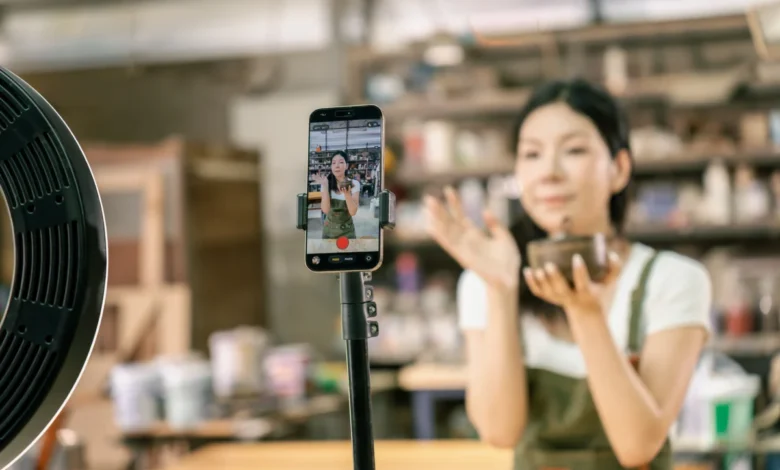
The era of polished stock photography is effectively over. Consumers now associate highly produced, generic imagery with untrustworthy advertising. In contrast, raw, smartphone-shot video provides a level of authenticity that fosters immediate rapport. Whether it is a mechanic showing a quick, helpful tip on tire maintenance or a cafe owner showcasing the morning prep process, these behind-the-scenes glimpses build intimacy. The technical quality of the video is secondary to the sincerity of the message. -
Distribution: From Passive Posting to Discovery
The "post and pray" method—where a business hopes a static image finds its way to a potential customer—is no longer viable. Modern distribution requires a strategy rooted in hyper-local discovery. This means utilizing location tags, engaging with local community groups, and leveraging platform-specific trends that are relevant to the immediate geographic area. -
CTA: Moving from Commands to Conversations
Broadcast-style commands like "Buy now!" or "Call today!" are high-friction requests that often fall on deaf ears. Modern conversion strategies utilize low-friction questions. Instead of asking for a sale, a business might ask, "Have you ever wondered how we source our coffee beans?" or "What’s the most common question you have about oil changes?" These prompts encourage engagement, which signals to algorithms that the content is valuable, thereby increasing the business’s visibility. -
The Next Step: Prioritizing 1-on-1 Communication
The goal of a post is not the "like" or the "share"—it is the Direct Message (DM). Once a conversation moves into a private channel, the business has successfully transitioned the consumer from a passive observer to an active prospect. This one-on-one space is where the actual sale is nurtured, questions are answered, and trust is cemented. -
The Scoreboard: Vanity Metrics vs. Revenue Drivers
For years, businesses obsessed over "vanity metrics"—follower counts, total likes, and reach. These metrics, however, rarely correlate with the bottom line. The new scoreboard must track revenue-driving activities: how many DMs were initiated, how many questions were answered, and how many of those interactions led to an appointment or a physical visit to the store.
Implications for Small Business Operations
The implication of this shift is that social media can no longer be treated as an advertising expense or a task relegated to an automated scheduling tool. It has become a core operational function. For a small business, this requires a reallocation of resources. It necessitates putting staff on camera, dedicating time to answer comments in real-time, and training teams to treat every digital interaction as a potential lead.
The speed of response is a critical factor in this new ecosystem. Data indicates that if a potential client leaves a public comment or sends a DM, the window for response is measured in minutes, not hours. A delay of six hours or more is frequently interpreted by the consumer as an abandonment of service, leading them to search for a competitor who is more digitally responsive.
Conclusion: The Future of Hyper-Local Engagement
The transition from a passive billboard to an active media engine is not merely a suggestion; it is a necessity for long-term survival in an increasingly digital-first economy. As algorithmic preferences continue to prioritize authentic, human-centric interaction, businesses that fail to adapt will find themselves increasingly invisible to their target demographics. By embracing raw content, prioritizing rapid-response communication, and focusing on meaningful engagement over empty metrics, local businesses can reclaim their ability to connect with their community in a way that is both sustainable and profitable. The tools to facilitate this change are already in the pockets of every business owner and employee; the challenge lies in shifting the mindset from the outdated billboard model to the interactive, conversational reality of the modern web.