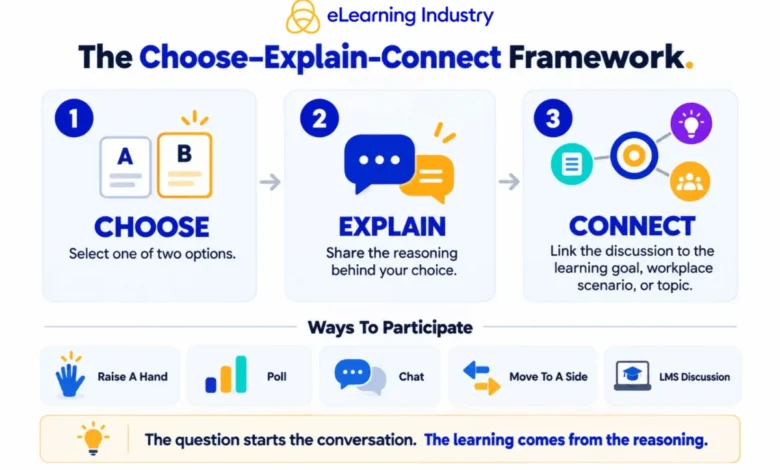
The strategic use of "would you rather" questions has evolved from a casual social parlor game into a sophisticated tool for organizational development, pedagogical engagement, and team building. As workplace dynamics shift toward remote and hybrid environments, Learning and Development (L&D) professionals and educators are increasingly turning to structured, choice-based dialogue to foster psychological safety, uncover cognitive biases, and encourage critical thinking. By presenting participants with two competing scenarios, facilitators can bypass standard, rehearsed responses and gain genuine insights into the decision-making priorities of their audience.
The Evolution of Facilitation Techniques
Historically, icebreakers were dismissed as mere time-fillers designed to reduce social friction at the start of meetings. However, contemporary research in organizational psychology suggests that controlled, high-stakes hypothetical scenarios can actually improve group cohesion. By forcing a choice between two equally valid or equally difficult options, facilitators move participants from passive listening to active engagement.
In professional environments, this technique is frequently employed to map organizational culture. For example, asking a team whether they prioritize "the speed of project completion" or "the depth of project quality" provides managers with immediate feedback on how their direct reports perceive corporate values. This shift from unstructured conversation to guided inquiry allows for more nuanced professional development, particularly in virtual settings where natural organic dialogue is often stifled by the limitations of video conferencing technology.
Categorical Framework for Professional Engagement
The effectiveness of these questions depends heavily on the facilitator’s ability to categorize them by intent. To provide structure, professionals often divide these prompts into four primary domains:
1. Operational Alignment and Workflow
These questions address the logistics of work. They serve as a diagnostic tool for managers to determine whether their team prefers autonomy or collaborative oversight.
- Would you rather work in an environment with high-frequency, low-stakes communication or low-frequency, high-stakes updates?
- Would you rather prioritize a strict, linear workflow or an iterative, agile approach to project management?
2. Cognitive and Pedagogical Development
In educational and training settings, these questions help tailor the learning experience. Understanding if a learner prefers simulation-based practice versus theoretical case studies allows instructors to optimize their curriculum.

- Would you rather acquire knowledge through a series of short, micro-learning modules or a single, intensive, long-form workshop?
- Would you rather receive feedback in real-time as you perform a task or wait for a comprehensive, post-project evaluation?
3. Ethical and Strategic Trade-offs
These questions serve to uncover the underlying values of an organization. By presenting scenarios involving resource allocation or ethical dilemmas, facilitators can gauge the risk appetite of the group.
- Would you rather pursue an innovative, high-risk solution that could revolutionize the product or a low-risk, proven solution that guarantees incremental improvement?
- Would you rather lead a project with significant budgetary resources but limited creative control or a project with a meager budget but total autonomy?
The Data-Driven Approach to Participation
Data from recent L&D industry surveys suggest that when interactive elements are integrated into remote training, information retention increases by approximately 25%. The "Would You Rather" format, when deployed via polling software, allows for real-time data visualization. When a poll reveals that 80% of a team prefers synchronous collaboration over asynchronous workflows, the leadership team gains a tangible metric to justify changes in operational policy.
Strategic Implementation Timeline
To maximize the impact of this tool, organizations should follow a structured deployment:
- Phase 1 (The Pre-Session): Select three to five questions that align with the core objective of the meeting. If the goal is team bonding, prioritize lighthearted questions. If the goal is strategic planning, use challenging, value-based questions.
- Phase 2 (The Engagement): Utilize anonymous polling software to ensure that participants feel safe expressing their true preferences without fear of judgment from supervisors.
- Phase 3 (The Synthesis): The most critical step is the "Connect" phase. The facilitator must bridge the gap between the participants’ choices and the broader goals of the project or curriculum. This is where the learning occurs—not in the selection, but in the explanation of the "why."
Broadening the Scope: Generational and Role-Based Perspectives
The efficacy of these questions varies by demographic. For younger learners or students, the focus remains on creative problem-solving and exposure to future-of-work concepts, such as AI-assisted workflows or global collaborative projects. For senior leadership, the questions must pivot toward high-level strategy, such as the tension between localizing learning content for regional offices versus maintaining a unified, global training standard.
Addressing Potential Pitfalls
Facilitators must be cognizant of the "False Choice" trap. If a question is perceived as a "gotcha" or if it touches on sensitive topics such as political affiliation, religious beliefs, or personal health, it can lead to immediate disengagement. The objective is to provoke thought, not to induce stress. A successful prompt is one that creates a "productive tension"—the feeling that both options have merit, and the choice requires a sophisticated rationale.
Future Implications for Organizational Culture
As AI and automated tools continue to dominate the workplace, the ability to engage in nuanced human discussion will become a premium skill. "Would you rather" exercises represent a low-barrier, high-reward method for maintaining this connection. Whether used to break the ice in a virtual onboarding session or to navigate complex strategic pivots in an executive boardroom, the technique remains a versatile tool for the modern professional.
Ultimately, the power of these questions lies in their ability to strip away the noise of daily operations and force individuals to articulate their priorities. By standardizing this approach to dialogue, organizations can build a more transparent culture where decision-making is not just a top-down mandate, but a collaborative, shared understanding of what the team values most. As the landscape of work continues to shift toward digital-first interactions, these structured, thoughtful conversations will be essential in keeping teams aligned, motivated, and intellectually agile.