The landscape of professional development and thought leadership is undergoing a fundamental shift as podcasting matures from a niche hobby into a primary medium for industry discourse. For Learning and Development (L&D) professionals, heads of talent, and instructional design experts, securing a spot on influential podcasts has become a critical strategic asset. However, the modern podcast ecosystem is increasingly discerning; expertise alone is no longer a sufficient currency for entry. To gain airtime, practitioners must move beyond passive participation and adopt a structured, value-driven guest strategy that aligns their professional insights with the specific needs of a show’s audience.
The Evolution of the Podcast Guest Economy
Podcasting has seen an exponential rise in consumption over the last decade. Industry reports indicate that podcast listeners are typically highly educated, affluent, and professional, making them a prime demographic for B2B engagement. For an L&D leader, a single, well-executed podcast appearance can yield more authority-building capital than a dozen generic social media posts.
However, the "guest economy" has become saturated. Hosts of top-tier professional podcasts now receive hundreds of pitches monthly. The shift has moved away from individuals seeking to "tell their story" toward guests who can facilitate a meaningful, problem-solving dialogue. The modern podcast host is less interested in a guest’s resume and more focused on whether that guest can translate complex organizational challenges into actionable takeaways for their specific listener base.
The Strategic Framework for Guesting
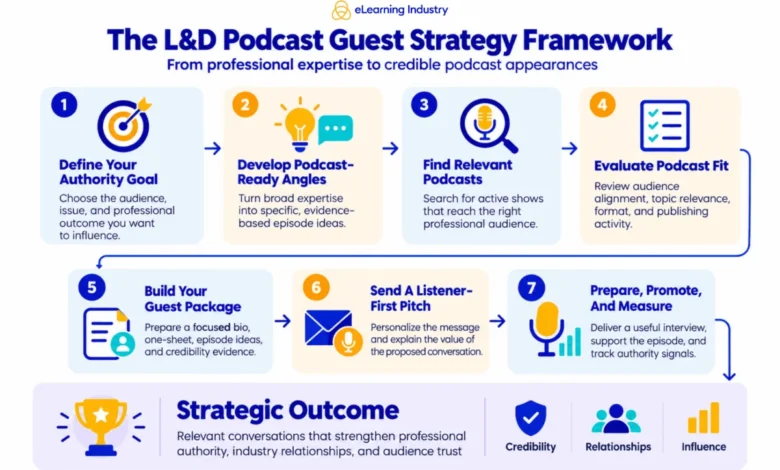
For those looking to establish a recurring presence in the industry’s top audio programs, a seven-step methodology is essential. This is not a sporadic PR effort but a deliberate, repeatable system.

1. Defining the Objective
Before drafting a single pitch, an L&D professional must identify their primary goal. Are they seeking to recruit top-tier talent, market a new learning platform, or shift the industry conversation toward a specific pedagogical theory? Each objective requires a different type of podcast. A focus on research and academic rigor demands a different audience profile than a focus on sales and adoption.
2. Identifying the "Podcast-Ready" Angle
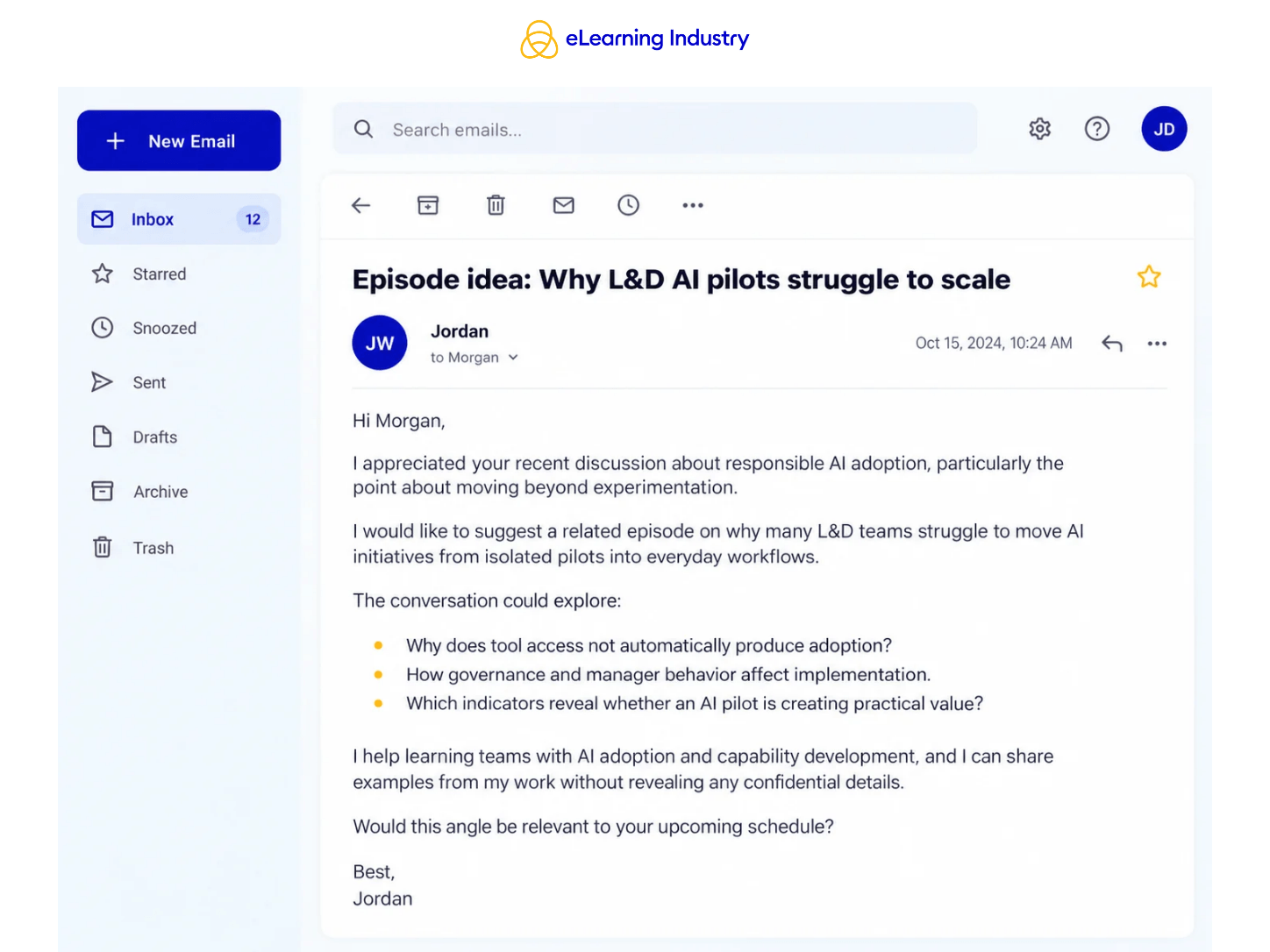
A broad topic, such as "The Future of AI in Learning," is rarely enough to secure a booking. Hosts favor angles that introduce tension or challenge the status quo. For example, rather than discussing the general benefits of AI, a compelling pitch might explore why "AI implementation in enterprise settings fails during the pilot-to-production transition." This creates a narrative arc that gives the host a hook to explore, ensuring the conversation remains focused and valuable.
3. Strategic Targeting and Qualification
The temptation is often to aim for the podcasts with the largest listener counts. However, in the B2B space, relevance often trumps reach. A niche podcast with 500 highly engaged Chief Learning Officers (CLOs) is significantly more valuable than a general business podcast with 50,000 casual listeners. Experts should use a "scorecard" approach to evaluate potential shows, looking at the host’s interview style, the depth of their technical questions, and whether their previous guests align with the intended brand identity.
Building a Credible Guest Asset
Professionalism in the booking process is a major differentiator. A "one-sheet" or media kit serves as the primary currency in the guesting world. This document should move away from traditional corporate biographies and toward a "value-proposition" summary. It should explicitly state what the expert can discuss, the specific insights they bring to the table, and the audience they are best suited to address.
When pitching, the "listener-first" approach is the industry gold standard. A successful pitch demonstrates an intimate knowledge of the podcast’s recent episodes. It proposes a specific, actionable topic that complements the host’s existing content library. The pitch should be concise, professional, and devoid of the hyperbole that characterizes mass-distributed PR emails.

The Dynamics of the Interview
Preparation for a podcast appearance is an often-overlooked skill. The most effective guests do not memorize scripts, which can lead to a robotic and disengaged tone. Instead, they prepare a framework: three core messages, each supported by an anecdotal story or a piece of proprietary research.
Furthermore, the guest must be adept at bridging. When asked a broad question, a seasoned professional knows how to guide the answer back to their core message without appearing evasive. Crucially, they must be prepared to handle "tough" questions regarding their methodology or industry trends. Transparency about the limits of one’s expertise—acknowledging what is data-backed versus what is an educated opinion—builds immense credibility with listeners.
Measuring Impact and ROI
After the episode is recorded and released, the work is far from over. The most effective professionals use their podcast appearances as "content anchors." By repurposing snippets of the conversation for LinkedIn, newsletter distribution, and internal company training, they amplify the reach of the interview.
Measuring the return on investment (ROI) is notoriously difficult in podcasting, as there is no direct "click-through" from the audio file. However, professionals can track proxy metrics:
- LinkedIn inbound requests: The number of professional connections that cite the podcast as the reason for reaching out.
- Referral traffic: Using vanity URLs or QR codes mentioned during the episode to track listeners who moved to a landing page.
- Speaking inquiries: The increase in invitations to industry conferences and panels post-appearance.
Addressing Common Pitfalls
Many professionals fail to gain traction because they treat podcasts as a platform for self-promotion. If a guest uses their time to plug their own company’s products incessantly, they will inevitably alienate the audience and the host. The most successful guesting strategies are built on a "give-first" philosophy. The goal is to solve the listener’s problem; if that is achieved, the brand recognition follows organically.
Another common mistake is the lack of follow-up. A professional should treat the host as a long-term partner. Providing high-quality, shareable graphics and promotion for the episode after it goes live is a courtesy that makes a guest more likely to be invited back.
The Broader Implications for L&D Leadership
As organizations navigate the complexities of digital transformation and shifting workforce expectations, the role of the L&D professional is changing. They are no longer just administrators of training; they are architects of organizational culture and strategic capability. Podcasts serve as the primary town square for this new breed of leader.
By participating in these forums, L&D professionals contribute to a collective intelligence that defines the industry. They help clarify standards, pressure-test new technologies, and challenge outdated pedagogical models. For the individual, this engagement is a form of career insurance. It builds a permanent, searchable record of one’s expertise, ensuring that they remain a relevant and sought-after voice as the field of learning and development continues to evolve.
Ultimately, the ability to get on a podcast is an exercise in strategic communication. It requires an understanding of the audience, a clear point of view, and the discipline to execute a long-term plan. For those who master this, the reward is a position at the forefront of the industry’s most critical conversations.