Why the 2017 HR Tech Conference Represented a Watershed Moment for Industry Alliances and Strategic Partnerships

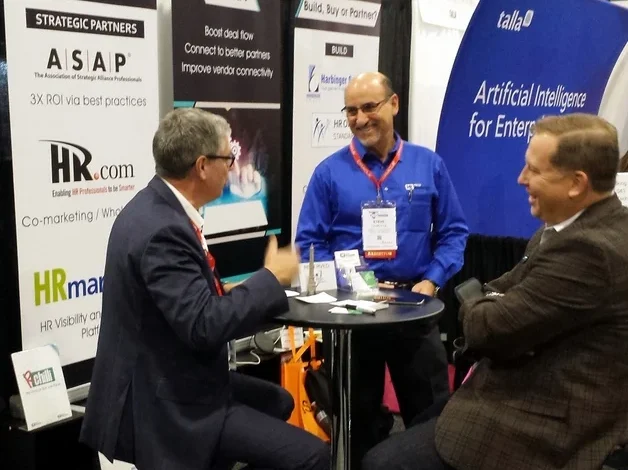
The 2017 HR Technology Conference and Exposition, long regarded as the premier gathering for human resources professionals and vendors, served as a pivotal turning point for the industry’s approach to ecosystem collaboration. Having tracked the evolution of the event for two decades—attending 18 of the last 20 iterations—it became increasingly clear that the 2017 session marked a fundamental shift from competitive isolation to a sophisticated model of strategic alliances. While the event lacked dedicated "Collaboration Zones" or formal speed-networking structures, the sheer density of innovation and the maturation of vendor case studies naturally accelerated a new era of business development, moving away from ad hoc, accidental meetings toward intentional, value-driven partnerships.
A Historical Context: From Competition to Ecosystem Integration
For over twenty years, the HR Tech Conference has acted as the primary barometer for the health and trajectory of the HR software market. In its formative years, the conference was defined by a landscape of monolithic, closed-loop systems. Vendors focused almost exclusively on proprietary feature sets, viewing external integrations as a competitive risk rather than a strategic asset.
However, by the mid-2010s, the market reached a saturation point. As organizations began demanding seamless experiences across their talent acquisition, payroll, and performance management stacks, the "all-in-one" dream proved difficult to execute for single providers. By the 2017 event, the industry began a collective pivot toward "Open API" strategies. The conversations in the halls and booths shifted from "How can we capture the user?" to "How can we connect with the best-in-class solutions our customers already use?" This shift fundamentally changed the nature of the conference, turning it into a marketplace of interoperability.

The Dynamics of Modern HR Partnerships
The 2017 conference highlighted that successful partnerships are no longer the result of serendipitous hallway encounters. Instead, they are the product of rigorous, use-case-driven strategy. Interviews conducted with key industry players during the event revealed a common thread: customer demand is the primary driver of the modern alliance.
Lumesse, represented at the event by US Country Sales Manager Laura Fuller and Global Head of Partners and Alliances Kate Heath, provided a clear window into this transition. The company emphasized that they no longer view the market as a zero-sum game. By integrating with specialized platforms—such as CEB for assessments, Broadbean and eQuest for job distribution, and Clickatell for analytics—Lumesse demonstrated that modern HR vendors act more like platform curators than isolated software providers. Heath noted that, in stark contrast to the 2015 landscape, the 2017 event was characterized by a high volume of active, intentional inquiries from firms seeking to formalize integration and referral relationships.

The Role of Standardization and Open Ecosystems
A critical component of this evolution is the role of technical standards. Jack Spain, Director of Business and Partnership Development for Leoforce, highlighted during his participation that the industry has reached a level of maturity where participation in organizations like the HR Open Standards committee is no longer optional. These standards provide the necessary framework for interconnectivity, allowing data to flow securely between disparate platforms.
The implication for the industry is profound: vendors that refuse to adopt open standards risk obsolescence. During the conference, it became evident that those companies failing to provide a clear, accessible API strategy were increasingly viewed as "legacy" by prospective partners. The consensus among exhibitors was that an open ecosystem is the only way to meet the complex, multi-layered requirements of the modern global workforce.
Strategic Implications: Quality Over Quantity
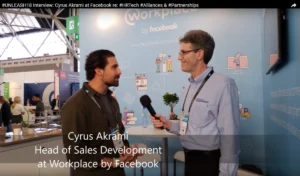
The 2017 event also brought to light a significant maturation in how companies select their partners. Carlson Colomb, VP of Partners for America at Cegid, underscored that the mandate for growth is no longer about the sheer volume of partnerships. Instead, there is a strategic focus on "quality versus quantity."
For vendors, the challenge is identifying partners that provide tangible, unique value to the end-user. White labeling, once a controversial practice, has become a standard feature of the landscape, though many firms continue to prioritize in-house development for core competencies while outsourcing peripheral features to best-of-breed partners. Mark Baker, EVP of Sales for Symphony Talent, noted that the most successful partnerships are those that extend capabilities worldwide while focusing on the strategic alignment of customer outcomes. Baker’s observation that "coopetition"—the art of competing while simultaneously cooperating—has become a standard operating procedure highlights the sophisticated level of maturity the HR tech market has achieved.

Broader Economic and Industry Impacts
The implications of this shift extend far beyond the exhibit hall. As HR technology becomes increasingly integrated, the cost of switching vendors for HR departments decreases, while the value of the overall ecosystem increases. This "network effect" allows smaller, agile startups to compete with larger incumbents by plugging into existing, massive platforms.
Furthermore, the data suggests that the 2017 HR Tech Conference acted as an accelerator for merger and acquisition activity. When two companies demonstrate a successful, API-driven partnership over the course of a year, the transition to a full acquisition is significantly lower in risk and higher in potential ROI. The 2017 show provided the face-to-face environment necessary to solidify these relationships, turning digital integration into human-to-human trust.

The Future of Industry Collaboration
As we look back on the 2017 event, it serves as a masterclass in how an industry matures. The lack of a formal "Collaboration Zone" did not hinder the progress of partnerships; in fact, it proved that when the economic and technical incentives are aligned, the industry will naturally gravitate toward collaboration.
Moving forward, the success of companies in the HR tech space will likely be dictated by their "partner friendliness." The ability to provide an open, secure, and developer-friendly environment will be the primary differentiator in a crowded market. The 2017 HR Tech Conference cemented the reality that in the modern enterprise landscape, no vendor is an island. Those who fail to integrate will fail to innovate, and ultimately, will fail to serve the evolving, interconnected needs of the modern human resources professional.

In summary, the 2017 conference was not merely a trade show; it was a transition point. It documented the death of the closed, siloed software model and the birth of a vibrant, interconnected ecosystem. For those who were paying attention, the message was clear: the future of HR technology lies not in the features of a single platform, but in the strength, reliability, and openness of the alliances that connect them.
Related posts: