The Evolution of Leadership: Brian Chesky on the Divergence Between Founding and Managing a Global Enterprise

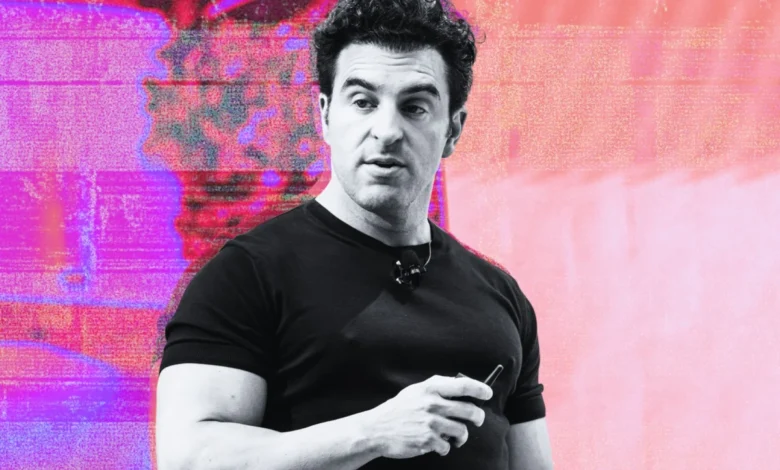
Brian Chesky has served as the chief executive officer of Airbnb since the company’s inception in 2007, a nearly two-decade tenure that has seen the platform evolve from a niche air-mattress rental service into a global travel juggernaut. With the company now supporting more than 5.5 million hosts and generating $12.24 billion in annual revenue as of 2025, Chesky’s leadership is often cited as a blueprint for modern entrepreneurship. However, in a candid appearance on the How I Built This podcast, the co-founder revealed that the transition from the intuitive, high-energy role of a founder to the structured, strategic responsibilities of a CEO was far from seamless. His reflections offer a rare, introspective look at the psychological and operational hurdles that confront leaders as they scale startups into Fortune 500 entities.
The Duality of the Executive Role
Chesky’s core thesis is that the skillset required to ignite a business is fundamentally different from the skillset required to sustain and scale one. During the discussion, he explicitly stated, "I think I was pretty much naturally a great founder and I was naturally a terrible CEO." This distinction centers on the nature of creation versus the nature of administration.
Founding, as Chesky describes it, is a lifelong practice. He posits that the creative urge—the desire to build, disassemble, and reconfigure objects—is a precursor to entrepreneurship that often manifests in childhood. By the time he launched Airbnb at the age of 26, he viewed himself as having two decades of "founder experience" rooted in early creative experimentation. This innate drive allows a founder to take an abstract idea and translate it into a tangible product. Conversely, the CEO role demands a level of detachment, delegation, and systems-thinking that can feel alien to someone accustomed to "handcrafting" every detail of their business.
A Chronology of Growth and Structural Change
The trajectory of Airbnb’s leadership can be segmented into distinct phases of growth, each requiring a shift in management philosophy:
- 2007–2010: The Garage Phase: Characterized by "founder mode," where the team was small, and decision-making was highly centralized. During this period, the primary goal was survival and the perfection of the user experience.
- 2011–2015: The Scaling Phase: As the company expanded internationally, the challenges shifted to regulatory navigation, hiring, and brand recognition. This was the period where Chesky noted his struggle to relinquish control.
- 2016–2020: The Professionalization Phase: The company moved toward a more traditional corporate hierarchy, focusing on operational efficiency and preparing for public markets.
- 2020–Present: The Resilience and Strategy Phase: Defined by the 2020 market crash and subsequent recovery, this era solidified Chesky’s current philosophy of "hands-on" leadership, balancing executive oversight with direct engagement in product design.
The Paradox of Management and Hiring
One of the most counterintuitive lessons Chesky shared pertains to the conventional wisdom of corporate management: hire experts and stay out of their way. While this advice is standard in MBA curricula and mature organizations, Chesky suggests it can be a "death sentence" for a young company.
When a startup is in its infancy, the primary danger is a lack of alignment. Bringing in experienced executives from large, legacy corporations often introduces a bureaucracy that stifles innovation. Instead, Chesky argues that CEOs should look for talent that is "a little bit ahead" of the current team—individuals who are hungry, mission-driven, and capable of operating with the same intensity as the founders.
This approach requires the CEO to remain deeply involved. Rather than distancing themselves from the hiring process, leaders must stay close to these key hires to ensure the company’s vision remains intact. This is not about micromanagement in the traditional sense, but rather about maintaining a cultural and strategic tether that prevents the company from drifting away from its original purpose.
The Emotional Hurdle: The People-Pleaser’s Dilemma
Chesky admitted that his early days as CEO were hampered by an internal conflict: the desire to be liked versus the need to be effective. As a young leader, he frequently felt intimidated by subordinates who possessed more industry experience or seniority. This led to a pattern of deferring to their judgment, even when his own intuition—the same intuition that successfully launched the company—suggested a different path.
This "people-pleasing" tendency is a common trap for first-time founders. It manifests as a reluctance to deliver hard truths, a hesitation to fire underperforming staff, and a tendency to prioritize social harmony within the office over the objective needs of the business. Chesky’s realization that his gut feelings were often correct, and that deferring to others out of a desire for validation was a strategic error, represents a major turning point in his leadership style. Today, he emphasizes that being a CEO is not about consensus, but about the quality of the dialogue. When his intuition clashes with a team member’s expertise, the resolution is not to capitulate, but to engage in a rigorous debate that tests the validity of both positions.
Broader Implications for Corporate Governance
The discourse surrounding "founder mode" versus "manager mode" has gained significant traction in Silicon Valley, and Chesky’s public pivot serves as a case study for the broader tech sector. The implications for modern enterprise are significant:
- The Shift Toward Hands-On Leadership: There is a growing movement away from the "hands-off" CEO model. Investors and board members are increasingly questioning whether traditional management layers are creating unnecessary friction in high-growth environments.
- Cultural Integrity as a Competitive Advantage: Chesky’s point that "expense management is easy" while "culture is hard" underscores the reality that operational metrics are quantifiable, but the invisible architecture of a company—its values, decision-making patterns, and collective instincts—is what truly dictates long-term survival.
- The Evolution of the CEO Profile: The modern CEO is expected to be part product architect, part cultural anthropologist, and part capital allocator. Chesky’s journey suggests that this requires constant self-audit and the courage to abandon one’s own previous habits of mind.
Data-Driven Context: Airbnb’s Financial Standing
The effectiveness of this leadership evolution is reflected in the company’s financial performance. Since its IPO in December 2020, Airbnb has demonstrated a consistent ability to pivot its business model. During the COVID-19 pandemic, when travel demand cratered, the company cut costs and streamlined its offerings, emerging with a leaner, more profitable structure. By the end of 2024, the company’s financial health was characterized by significant free cash flow and a robust balance sheet, allowing it to invest in new categories like "Airbnb Experiences" and long-term stays.
The transition from a startup that "hacks" its way to growth to a global entity that manages complex regulatory landscapes in over 220 countries requires a leader who is comfortable with the tension between stability and innovation. Chesky’s admission of his early failures provides a humanizing context to these financial results; it suggests that the company’s success was not a result of a perfect, linear path, but rather a series of hard-won lessons in executive maturity.
Conclusion: The Never-Ending Learning Curve
As Airbnb approaches its third decade, the challenges facing Brian Chesky continue to shift. The current emphasis on artificial intelligence, global travel regulations, and the sustainability of the host-guest relationship requires a different type of vigilance than the early days of finding one’s first customers.
However, the core takeaway from his recent interviews remains consistent: leadership is a dynamic, not a static, discipline. Whether a founder stays on to become a CEO or steps aside for professional management is a decision that defines the legacy of the company. For Chesky, the path has been one of continuous recalibration—moving from the gut-driven instincts of a creator to the disciplined, strategic, and sometimes uncomfortable requirements of a CEO who must lead not just by example, but by design. His story serves as a reminder that the most significant growth in any enterprise often begins with the growth of its leader.