The Lifelong Learning Journey Nurturing Career Success
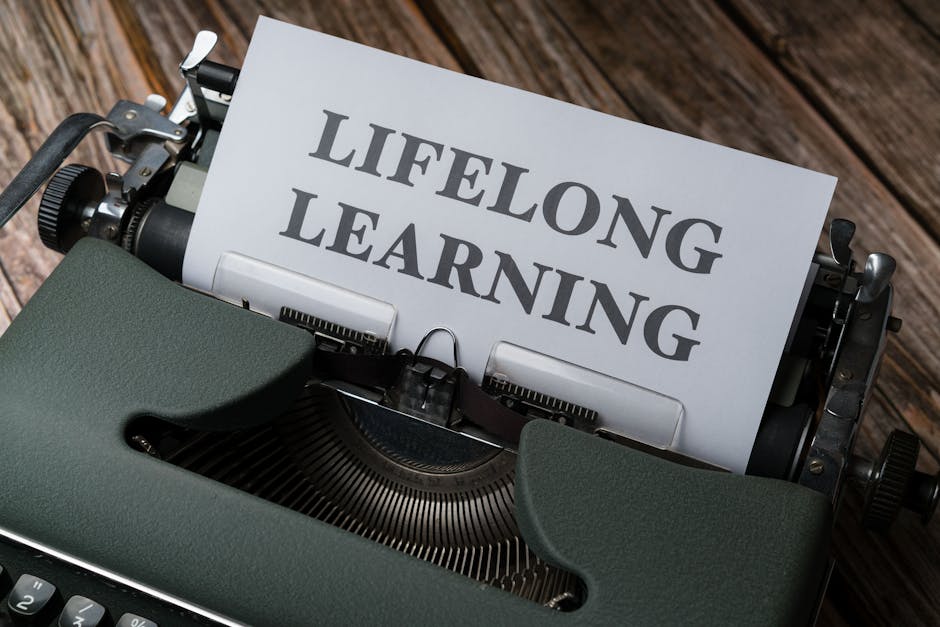
The Architecture of Ambition: Why Lifelong Learning is the Ultimate Career Insurance
In an era defined by rapid technological disruption and shifting economic paradigms, the traditional model of education—once considered a finite phase concluding with a university degree—is officially obsolete. The modern professional landscape is no longer a linear climb up a stable ladder; it is a volatile, high-speed ecosystem where the half-life of professional skills is shrinking at an unprecedented rate. To remain relevant, competitive, and indispensable, individuals must embrace the philosophy of lifelong learning. This is not merely an exercise in personal development but a strategic imperative that serves as the ultimate insurance policy against career stagnation and obsolescence.
The Obsolescence of Static Knowledge
Historically, one could acquire a skill set in their early twenties and leverage it for the duration of a thirty-year career. Today, the "skills gap" is widening as industries undergo digital transformation, automation, and the integration of artificial intelligence. According to the World Economic Forum, nearly half of all employees will need reskilling by 2025. This reality demands a shift in mindset: knowledge is no longer an asset that matures; it is a perishable good.
When professionals stop learning, they inadvertently place a ceiling on their potential. Stagnation occurs the moment an individual becomes comfortable with their existing repertoire. In contrast, the lifelong learner views their career as an iterative process. By continuously updating their cognitive toolkit, they minimize the risk of being replaced by more agile talent or displaced by emerging technologies. The ability to "unlearn" outdated practices is just as critical as the ability to acquire new ones, as it allows professionals to pivot when the market demands change.
The Cognitive Advantages of Constant Curiosity
Beyond the economic necessity, lifelong learning fosters neuroplasticity—the brain’s ability to reorganize itself by forming new neural connections. Engaging in challenging, novel tasks throughout one’s career keeps the mind sharp, improves problem-solving capabilities, and enhances creative thinking. These cognitive benefits translate directly into professional performance. A brain accustomed to tackling complex, unfamiliar subjects is better equipped to handle workplace ambiguity, manage stress, and synthesize information from disparate fields to create innovative solutions.
Furthermore, intellectual curiosity breeds resilience. The fear of being left behind is a significant source of professional anxiety. By taking ownership of one’s education, the employee shifts from a reactive state—waiting for an employer to provide training—to a proactive state of mastery. This sense of agency is a potent antidote to burnout and job dissatisfaction. When a person views their career as an ongoing journey of discovery, the inevitable hurdles become opportunities for growth rather than indicators of failure.
Developing a Strategic Learning Framework
Lifelong learning is not about aimlessly accumulating certificates or attending every seminar in sight. To be truly effective, it must be strategic. Professionals should adopt a "T-shaped" skill profile: deep expertise in one core domain (the vertical bar of the T) paired with a broad understanding of adjacent fields, soft skills, and cross-functional knowledge (the horizontal bar).
The first step in building a learning framework is self-audit. Professionals must conduct an honest assessment of their current skills relative to the trajectory of their industry. Identifying the "delta"—the gap between what is currently known and what the future requires—provides a clear roadmap. This might involve formal education, but more often, it involves micro-learning, experiential projects, mentorship, and professional networking.
The 70-20-10 model of learning remains the gold standard for long-term development. This framework suggests that 70% of learning should come from job-related experiences (challenging projects, taking on new responsibilities), 20% from interactions with others (mentoring, networking, feedback loops), and only 10% from formal education (courses, workshops, reading). By integrating learning into the flow of daily work, individuals ensure that their knowledge is practical, context-aware, and immediately applicable.
The Role of Soft Skills in a Hard-Tech World
While technical proficiency is the baseline, it is increasingly common for specialized hard skills to be outsourced or automated. Consequently, the value of uniquely human traits—critical thinking, emotional intelligence, complex communication, and adaptive leadership—has skyrocketed. Lifelong learning must include a heavy emphasis on these "power skills."
Unlike software coding or data analysis, which change as tools evolve, emotional intelligence and leadership are timeless. A professional who learns how to negotiate effectively, build diverse teams, and empathize with clients is rarely replaced. In the age of AI, these interpersonal skills serve as the critical differentiator. Lifelong learners recognize this and dedicate as much time to refining their ability to influence, persuade, and lead as they do to mastering technical tools.
Overcoming Barriers to Continued Growth
The primary obstacles to lifelong learning are time, cost, and the "Expert’s Dilemma." Many professionals feel they are too busy to learn, yet this is a paradox: the more one learns, the more efficient they become, ultimately saving time. Cost is also a decreasing barrier, as the democratization of information through massive open online courses (MOOCs), podcasts, and digital libraries has made world-class education accessible for the price of a subscription or even for free.
The Expert’s Dilemma is more psychological. Once an individual reaches a position of seniority or expertise, they often feel they no longer need to be a student. This hubris is dangerous. Adopting a "Beginner’s Mindset" is essential for long-term success. This involves setting aside one’s ego and acknowledging that there is always more to learn, even from those with less experience. It requires creating a "personal board of advisors" and seeking feedback from people who will challenge one’s assumptions rather than validate them.
Nurturing a Culture of Continuous Growth
Organizations play a vital role in this journey, but the responsibility ultimately rests with the individual. The most successful professionals build a "learning engine" into their daily lives. This might include:
- Dedicated Time Blocks: Treat learning with the same gravity as a high-stakes client meeting. Schedule deep-work sessions for skill acquisition rather than leaving it to the end of a long workday.
- Curated Information Consumption: Avoid the "noise" of endless social media feeds. Curate high-quality newsletters, research papers, and books that challenge existing thought patterns.
- Active Application: Learning without application is merely entertainment. For every new concept learned, identify one way it can be applied to an existing project or professional challenge.
- Networking for Knowledge: Surround yourself with people who are smarter than you. Join industry associations, attend conferences, and seek mentors who are two or three steps ahead of where you aspire to be.
The Long-Term ROI of the Learning Mindset
The cumulative effect of continuous learning is compounding interest. Just as financial investments grow over time, so too does intellectual capital. A professional who commits to learning for one hour a day can master a new domain every six to twelve months. Over a thirty-year career, this results in a multidisciplinary expertise that is rare and, therefore, highly compensated.
Furthermore, the world of work is moving toward a "portfolio career" model, where individuals may hold multiple roles, start businesses, or consult across different sectors throughout their lives. A commitment to lifelong learning makes this transition seamless. It builds the agility required to thrive in a gig economy, a corporate environment, or an entrepreneurial venture.
Final Reflections: The Imperative of Self-Renewal
To survive and thrive in the future, one must be prepared to be a permanent student. The myth of the finished education is a relic of the past. Today, the credentials of yesterday serve only as the foundation; the structure that keeps a career standing is built on the daily commitment to expansion, curiosity, and adaptation.
Success is no longer measured by what one knows, but by how quickly one can learn what they do not know. By treating lifelong learning as an essential professional habit rather than a sporadic project, individuals protect themselves from economic obsolescence and ensure that they remain relevant in any market. The journey of continuous self-renewal is the only path that leads to sustained professional excellence and personal fulfillment. In an unpredictable world, your commitment to learning is the only asset that truly appreciates. Invest in it wisely, consistently, and without hesitation.