Beyond the Screen: Rethinking Employee Advocacy in Modern Employer Branding


Asking employees to record their own video content is frequently marketed as an inexpensive, high-impact content strategy for recruitment teams, yet this approach often overlooks the significant cognitive and technical friction placed upon the individual contributor. While the promise of authentic, peer-to-peer storytelling remains a cornerstone of successful employer branding, the reality of execution is rarely as frictionless as social media gurus suggest. Employees are often expected to act as directors, scriptwriters, and performers while balancing their primary job responsibilities, leading to high drop-off rates and inconsistent quality. A critical examination of recent pilot programs, specifically those conducted by the Straumann Group, suggests that the "inexpensive" nature of user-generated content (UGC) is a misnomer; the cost is simply shifted from production equipment to employee time and organizational bandwidth.
The Madrid Pilot: A Case Study in Managed Advocacy
When Hannah King, formerly the head of global employer brand at the Straumann Group, discussed the evolution of her recruitment marketing strategy on the Hiring Excellence podcast, she provided a clear critique of the "do-it-yourself" model. In a three-month pilot program launched in the Madrid office, King’s team pivoted away from asking employees to film themselves. Instead, they adopted a "roving reporter" model.
The workflow was designed to minimize the burden on the contributor. A local recruiter, working in tandem with an HR business partner, identified high-potential employees with compelling narratives. Rather than sending a vague brief, the recruiter scheduled a brief, dedicated time slot, provided a set of thoughtful questions in advance, and handled the actual filming using a smartphone. By removing the technical and creative hurdles, the organization ensured that the employees could focus entirely on sharing their genuine experiences regarding the company’s values and their professional journey.
This shift in methodology served as a vital correction to the industry trend of passive employee advocacy. It demonstrated that employees are significantly more willing to participate in brand initiatives when the organization treats their time as a professional asset rather than a voluntary chore. The "roving reporter" approach successfully transformed the act of content creation from an intimidating individual task into a collaborative, supported process.
The Evolution of the Content Supply Chain
The success of the Madrid pilot necessitated a transition from an experimental phase to a scalable framework. By the time the pilot concluded, the Straumann Group had begun expanding the model to core markets worldwide, embedding the role of "content creator" into the existing responsibilities of local recruiters.
This strategy yielded two distinct organizational benefits. First, it addressed the content deficit that plagues many global HR departments, where the central employer brand team struggles to maintain visibility into diverse local offices. Second, it created a tangible professional development opportunity for recruiters. By tasking recruiters with interviewing their colleagues and documenting their stories, the organization fostered a deeper understanding of the internal talent landscape, which in turn improved the recruiters’ ability to sell the company story to prospective candidates.
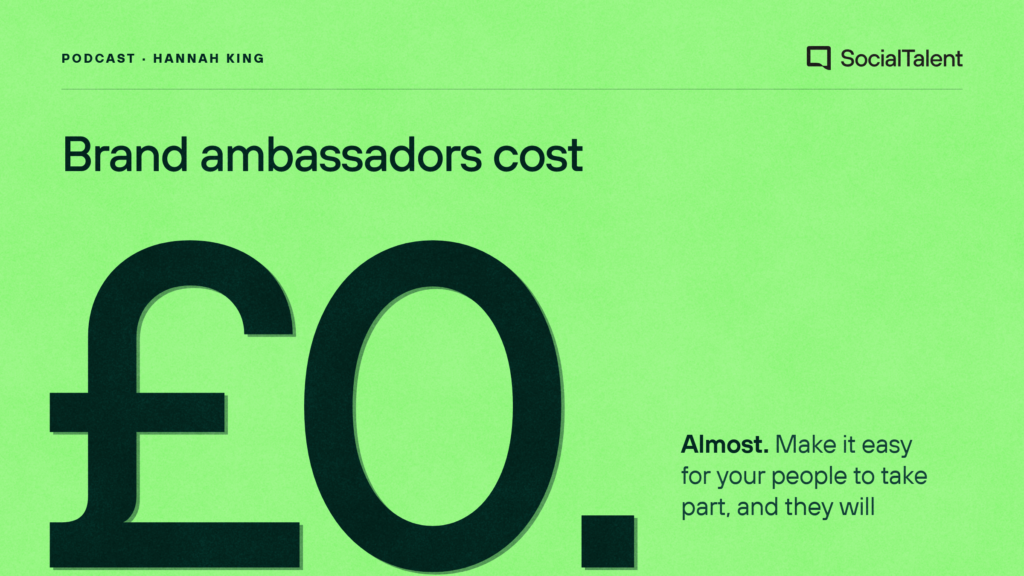
However, the transition from ad-hoc filming to a global project brought to light a common misconception: that "less polished" content is synonymous with "effortless" content. In reality, the labor intensity had not vanished; it had merely been redistributed. The recruiters’ time spent interviewing, filming, and coordinating became the new "production cost." This serves as a cautionary tale for talent acquisition (TA) leaders: the shift to authentic, mobile-shot content requires a robust operational backbone, including clear scheduling, logistical support, and a structured follow-through process.
Scaling Reach Through Strategic Collaboration
A pivotal component of the Straumann Group’s refined strategy involved the technical and social orchestration of content distribution. Simply posting a video on a company’s corporate LinkedIn page is no longer a sufficient strategy for reaching top-tier talent. Instead, the team leveraged the individual networks of the featured employees.
By tagging contributors as collaborators on professional platforms, the organization effectively doubled the organic reach of its content. This approach taps into the "halo effect" of the employee’s personal brand, placing the company’s message directly into the feeds of the contributor’s peers and professional connections.
Yet, this process demands a rigorous approach to data privacy and professional consent. An agreement to be filmed for a corporate video is not an implicit agreement to share that video on one’s personal social media profiles. The team maintained strict consent records, ensuring that every tag was authorized and that employees felt comfortable having their likeness associated with the company’s external presence. This careful handling of consent reinforces the principle that authentic content requires a transparent and respectful process, even when the aesthetic is casual.
Closing the Loop: Recognition and Retention
Perhaps the most neglected aspect of employee advocacy is the post-publication experience. Too often, organizations treat employees as a "one-and-done" resource. The Straumann Group integrated a feedback loop into their workflow: every participant received a performance update and a formal thank-you note exactly two weeks after their content went live.
This simple act of appreciation is crucial for long-term engagement. By showing employees the impact of their contribution—whether through reach metrics or anecdotal feedback—the organization validated the individual’s voice. According to internal reports from the pilot, this cycle of recognition led to a positive feedback loop, where employees began proactively requesting to be featured on the channel. This suggests that the barrier to entry was not a lack of interest, but rather a lack of support and feedback.
Furthermore, the strategy emphasized content longevity. King advocated for the "reuse, don’t redo" philosophy. A video documenting a career journey in a specific department is not merely a recruitment asset; it is an internal communication tool that helps colleagues understand the breadth of opportunities within the company. The assumption that an audience is "bored" with a piece of content is often a projection of the content creator’s own fatigue. In practice, repetition is a necessary component of marketing, and repurposing content across internal and external channels is a highly efficient way to maximize the return on the initial investment of time.

Measuring Success: Beyond Vanity Metrics
The final phase of this operational shift involves a sober assessment of performance. TA leaders must distinguish between long-term brand awareness and short-term recruitment urgency. For instance, in situations where a specific manufacturing site required immediate headcount, the organization relied on performance-driven job boards to optimize for cost-per-hire and speed.
Conversely, for awareness-led content, the metrics shifted toward engagement and talent-community sign-ups. The lesson here is clear: a viral video is not a success if it fails to solve a specific hiring problem. Leaders are encouraged to track the "conversion rate" of their advocacy program: how many initial invitations to participate actually result in a usable asset, and how much recruiter time was required to make that happen.
Implications for the Future of Talent Acquisition
The evidence from the Straumann Group’s model suggests that the future of employer branding lies in the intersection of authentic storytelling and operational efficiency. The "roving reporter" model provides a sustainable, scalable framework for organizations that want to move beyond the superficial appeal of low-production-cost content.
As the industry matures, the focus will likely shift from the sheer volume of content to the quality of the narrative and the efficacy of the distribution. The implications for HR teams are significant:
- Capacity Planning: Recognize that authentic content requires human hours. If you are asking employees to contribute, you must provide the support structure to ensure the process is efficient and rewarding.
- Data-Driven Strategy: Move beyond simple "reach" metrics. Evaluate content based on its ability to drive meaningful outcomes, such as talent pool growth or shortened hiring cycles.
- Internal Alignment: Treat employer branding as a cross-functional discipline that involves recruiters, HRBPs, and employees, rather than a siloed marketing activity.
By formalizing the advocacy process, organizations can remove the friction that currently prevents employees from sharing their stories. When the effort of participation is reduced, and the recognition of that effort is prioritized, companies can cultivate a sustainable pipeline of authentic content that resonates with candidates and strengthens the internal culture. The shift is not toward less production, but toward more intentional, human-centric collaboration.