The Best Enterprise Rank-Tracking Software and the Future of Search Visibility in the AI Era

The landscape of search engine optimization has shifted from a focus on individual keyword monitoring to a complex requirement for multi-dimensional data intelligence. In the modern enterprise environment, rank tracking no longer implies a simple check of a website’s position for a handful of terms; it encompasses the management of millions of data points across diverse geographies, devices, and search features. As Google and other major search engines integrate AI Overviews, featured snippets, and local packs into their primary interfaces, the demand for enterprise-grade software that can synthesize this information into actionable business intelligence has reached an all-time high. Large-scale organizations now require platforms that do not merely report data but feed directly into Customer Relationship Management (CRM) workflows, Business Intelligence (BI) dashboards, and executive reporting structures to drive high-level corporate strategy.
The Evolution of Search Visibility: A Historical Context
The trajectory of rank-tracking technology has moved through three distinct eras. In the early 2000s, SEO was largely a manual process characterized by simple scrapers and basic browser-based checks. By the 2010s, the rise of Software-as-a-Service (SaaS) platforms like Semrush and Moz introduced automated tracking, though the focus remained on the "ten blue links" that defined Google’s search results. Today, the industry has entered the "Generative Search Era."
This current phase is defined by the fragmentation of the Search Engine Results Page (SERP). With the introduction of the Search Generative Experience (SGE) and AI-driven answer engines, organic visibility is no longer a binary of "ranking or not ranking." Instead, it is a battle for "pixel position"—the actual vertical space a brand occupies on a screen before a user is forced to scroll. According to industry data, the presence of an AI Overview can push the first organic result down by as much as 600 pixels on mobile devices, fundamentally altering the ROI of traditional SEO efforts.

Core Requirements for Enterprise-Grade Performance
For a global corporation, the selection of a rank-tracking platform is a high-stakes procurement decision. Basic tools often fail at scale due to rate-limiting issues, data inaccuracies across regions, or a lack of security protocols. Enterprise-grade software is distinguished by several non-negotiable pillars:
1. Data Accuracy and Methodology
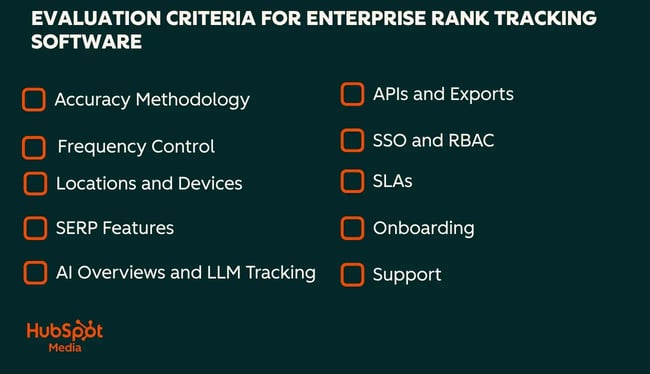
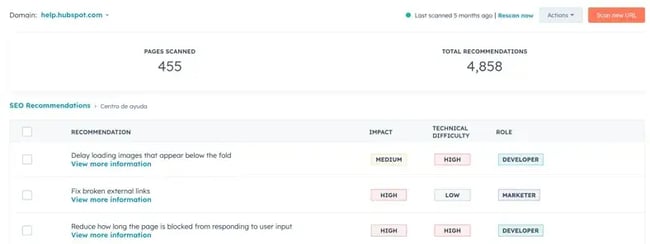
Large organizations require transparency in how data is collected. Leading vendors now utilize a sophisticated mix of residential proxies and dedicated datacenter IPs to bypass the personalization filters that can skew results. Accuracy is further refined through "coordinate-level" tracking, which allows a retail chain with 5,000 locations to see exactly how they rank for a user standing on a specific street corner versus a user five miles away.
2. AI and LLM Visibility Tracking
With the emergence of ChatGPT, Perplexity, and Google Gemini, search has expanded into "Answer Engine Optimization" (AEO). Modern enterprise tools must track not just where a link appears, but whether a brand is cited within an AI-generated response. This requires "prompt-level" tracking, where software tests various natural language queries to see how an LLM characterizes a company’s products or services.
3. Security and Governance
Unlike small-business tools, enterprise platforms must integrate with existing corporate security stacks. This includes Single Sign-On (SSO) integration (e.g., Okta or Azure AD) and Role-Based Access Control (RBAC). These features ensure that while a regional marketing manager can see local data, they cannot inadvertently alter global tracking configurations or access sensitive financial attribution data.
Market Leaders: A Comparative Analysis of Enterprise Platforms
The current market is dominated by a few key players that have successfully scaled their infrastructure to meet the demands of Fortune 500 companies.
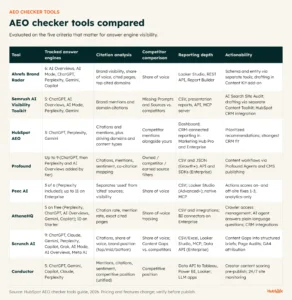
HubSpot Marketing Hub and Content Hub
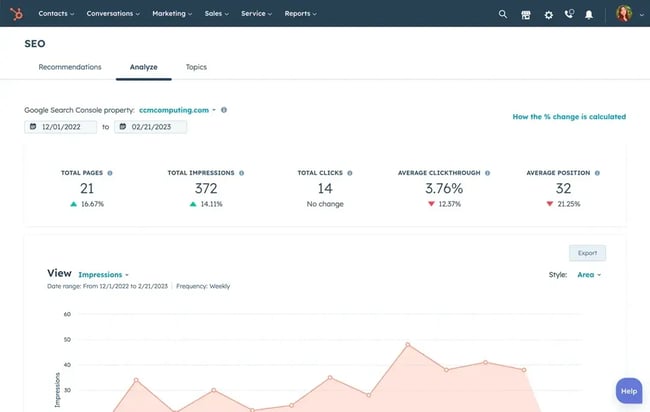
HubSpot has positioned itself as the premier choice for organizations that prioritize the "unification of data." By embedding SEO tools directly within a CRM environment, HubSpot allows teams to draw a straight line from a keyword ranking improvement to a measurable uptick in the sales pipeline.
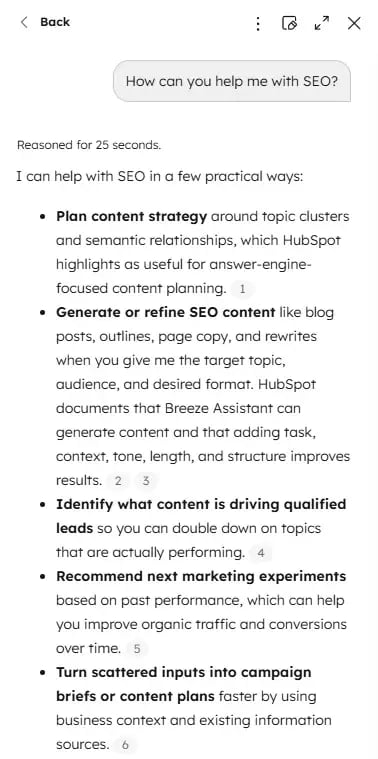
- The Integration Advantage: SEO data does not exist in a silo; it is paired with web analytics and lead attribution.
- AEO Grader: A specialized tool that benchmarks how a brand appears across AI systems like ChatGPT and Gemini, providing a "visibility score" that traditional trackers often miss.
- Breeze AI: The platform’s latest AI assistant helps junior team members execute complex optimizations that previously required senior-level expertise.
Semrush One
Semrush remains a titan in the industry, recently launching "Semrush One" to cater specifically to the enterprise market. Its strength lies in its massive historical database and its AI Visibility Toolkit.
- Key Capability: It tracks "Share of Voice" (SOV) across entire topic clusters, allowing a brand to see their market dominance relative to competitors in real-time.
- Data Freshness: Offers hourly tracking for high-stakes events like product launches or Black Friday sales.
Profound
Profound is a specialized entrant focusing exclusively on the AI ecosystem. It is designed for brand teams who are less concerned with traditional links and more concerned with how their narrative is shaped by generative AI.
- Narrative Tracking: It monitors sentiment and brand citations across ten different AI engines, providing "content optimization" suggestions to ensure a brand is the preferred answer for LLMs.
Supporting Data and Market Implications
The financial implications of search visibility are staggering. Recent studies suggest that for every one-position drop on the first page of Google, an enterprise can lose between 5% and 27% of its potential organic traffic. Furthermore, the "zero-click search" phenomenon—where users find their answer directly on the search page without clicking a link—now accounts for nearly 57% of all mobile searches.
This shift has forced a change in how Chief Marketing Officers (CMOs) evaluate SEO success. Total clicks are being replaced by "Brand Impression Value" and "AEO Citation Share." Organizations that fail to upgrade their tracking software to account for these metrics risk flying blind into a market where their competitors are already optimizing for the AI-driven future.

Strategic Implementation and Stakeholder Management
Transitioning to an enterprise rank-tracking system is a multi-month process that requires cross-functional buy-in. Industry analysts recommend a "parallel run" strategy, where the new platform is operated alongside the legacy system for at least 90 days to validate data consistency.
The Stakeholder Checklist:
- IT/Security: Must vet the platform for SOC2 compliance and SSO integration.
- Finance: Needs to assess the scalability of the pricing model (e.g., cost per 100,000 keywords).
- SEO/Content Teams: Must ensure the API can feed data into existing BI tools like Tableau or Looker.
- Legal: Must review data privacy agreements, especially regarding how the tool handles localized user data.
Future Outlook: From Tracking to Prediction
The next frontier for enterprise rank-tracking software is predictive analytics. Using historical SERP volatility and machine learning, the next generation of tools will likely predict ranking drops before they happen, citing technical regressions or aggressive competitor content moves as early warning signs.
As search engines continue to evolve into "answer engines," the role of the SEO professional is transforming into that of a "Visibility Architect." The software they choose will be the foundation of this architecture. In an era where information is filtered through complex AI layers, the ability to monitor, analyze, and influence those layers is no longer a luxury—it is a requirement for survival in the digital marketplace. Organizations that invest in robust, integrated, and AI-ready tracking platforms today will be the ones that own the digital shelf of tomorrow.