From Facebook Side Hustle to $5 Million Enterprise How the McKinney Brothers Scaled Junk Teens Through Technology and Youth Empowerment

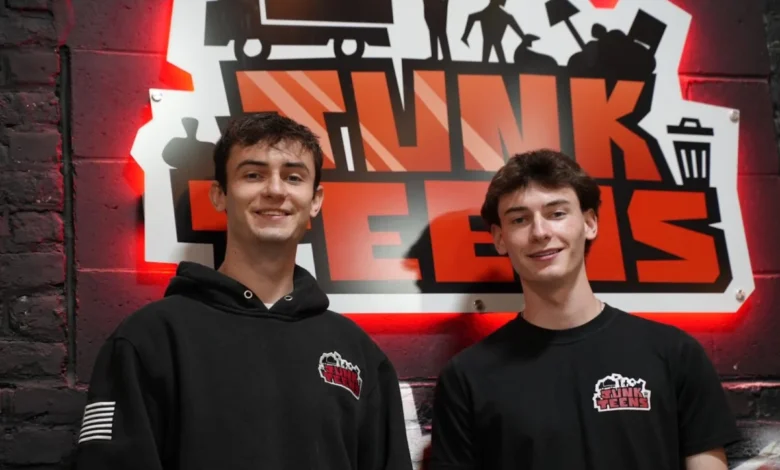
The trajectory of Junk Teens, a Greater Boston-based junk removal service founded by brothers Kirk and Jacob McKinney, represents a significant case study in the evolution of modern blue-collar entrepreneurship. What began in 2021 as a modest local endeavor has rapidly transformed into a multi-million-dollar regional powerhouse, with revenue figures climbing from $1.2 million in 2024 to a projected $5 million by the end of 2026. This growth is not merely a result of increased demand for waste management services but is the product of a deliberate strategy involving organizational delegation, the integration of advanced technology, and a unique approach to labor culture that leverages the energy of a student-led workforce.
Currently, the enterprise operates a fleet of eight specialized trucks and maintains a staff of 25 full-time employees, primarily serving the Greater Boston area, Cape Cod, and Rhode Island. Since its inception, the company has processed an estimated 7.4 million pounds of material, prioritizing a circular economy model that emphasizes donation, resale, and repurposing over traditional landfill disposal. As the McKinney brothers eye a national expansion within the next 24 months, their journey highlights the shifting landscape of service-based industries in the digital age.
The Chronology of Rapid Expansion
The origins of Junk Teens can be traced back to 2021, when Kirk McKinney, then 19, and Jacob McKinney, then 18, launched the business with a single pickup truck. The catalyst for their business model was an early discovery at a local waste facility: a pair of functioning speakers. After realizing the inherent value in discarded items, the brothers collected and refurbished approximately $1,000 worth of goods, which they subsequently sold via Facebook Marketplace. This initial success validated a dual-revenue model—charging for removal services while simultaneously profiting from the resale of salvaged inventory.

By 2024, the business had reached a critical milestone, generating $1.2 million in annual revenue. However, this growth brought significant operational challenges. At the time, the business functioned largely as a "side hustle" scaled to its absolute limit. Jacob McKinney was responsible for the entirety of logistics, including employee routing and disposal site management, often working 12-hour days. The administrative burden created a "bottleneck" that threatened to stall the company’s momentum.
In 2025, the brothers implemented a radical restructuring of their management hierarchy. They transitioned Jacob out of daily logistics by delegating his responsibilities to a newly promoted manager—a former field employee taking a gap year from university. This shift allowed the founders to focus on high-level systems, training protocols, and geographic expansion. The result was a jump to $3 million in revenue in 2025, supported by the opening of a dedicated Cape Cod location which alone generated $350,000 during the peak summer season.
Technological Integration and the Rise of Vibe Coding
One of the most distinctive aspects of Junk Teens’ success is its transition from manual record-keeping to a sophisticated tech stack. In 2024, the company’s entire operational schedule was managed via Apple Notes, with Jacob manually copying and pasting routes to drivers. Today, the company utilizes a suite of professional tools, including Jobber for customer relationship management (CRM), GoHighLevel for automated data collection, and Connecteam for employee oversight.
The most innovative technological leap, however, involves the company’s embrace of "vibe coding." This emerging trend refers to the use of generative AI and low-code/no-code platforms to build functional software without traditional computer science expertise. A teenage employee at Junk Teens developed a proprietary internal application using Base44 and ChatGPT to handle the user interface (UI) and user experience (UX) design.
This app has become the central nervous system of the company, featuring:
- Performance Leaderboards: Tracking employee revenue per hour.
- Closing Rates: Monitoring the efficiency of sales and estimates in the field.
- Real-time Analytics: Providing the founders with instant data on fleet productivity.
By leveraging AI to build custom tools, Junk Teens has bypassed the high costs associated with traditional software development, allowing a "blue-collar" business to operate with the data-driven precision of a tech startup.
Operational Data and Environmental Impact
The scale of Junk Teens’ operations provides insight into the logistical demands of the modern junk removal industry. Handling 7.4 million pounds of material requires a robust network of disposal and donation partners. The company’s commitment to sustainability is not just a marketing tool but a core operational pillar. By sorting usable goods for donation and resale, the company reduces the overhead costs associated with "tipping fees"—the weight-based charges levied by landfills.
The company’s growth metrics are equally illustrative:
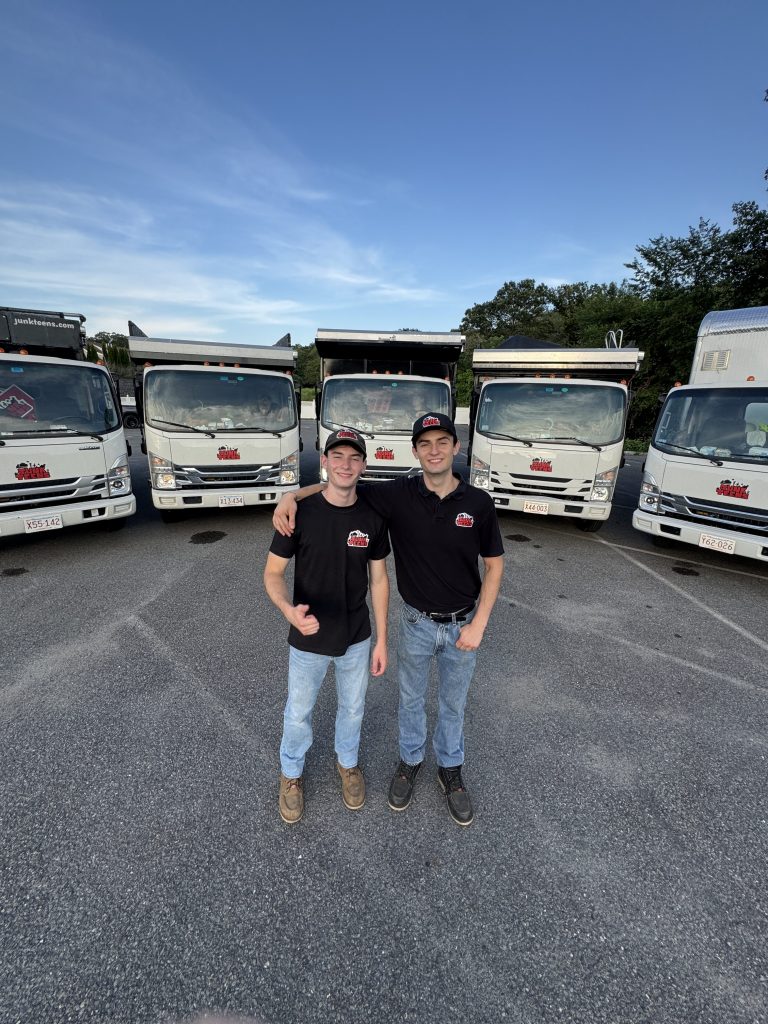
- Fleet Growth: 800% increase (from 1 truck to 8 trucks).
- Revenue Projection: 416% increase (from $1.2M in 2024 to $5M in 2026).
- Workforce Density: 25 full-time employees, with a seasonal surge capacity to handle the doubling of volume during summer months.
Furthermore, Junk Teens has systemized its marketing through a heavy presence on social media. As of early 2026, the company has amassed:
- TikTok: 213,000 followers.
- Instagram: 269,000 followers.
- YouTube: 69,000 subscribers.
Unlike traditional advertising, the company’s content is produced organically. Employees are equipped with Meta Glasses and GoPros to film their daily field operations. This footage is then edited and distributed to drive brand awareness and, more importantly, to serve as a recruitment tool for young talent.
Cultivating a Youth-Centric Labor Culture
In an era where many service industries struggle with labor shortages, Junk Teens has successfully attracted a dedicated workforce by offering competitive compensation and a vibrant culture. The average pay for a Junk Teens employee ranges from $25 to $30 per hour, a figure that includes base hourly rates, performance-based commissions, and customer tips.
This compensation model is significantly higher than the industry average for entry-level manual labor, allowing the company to recruit top-tier high school and college students. The McKinney brothers have noted that their young staff brings a level of "forward-thinking energy" and "open-mindedness" that is often missing in more traditional corporate environments.
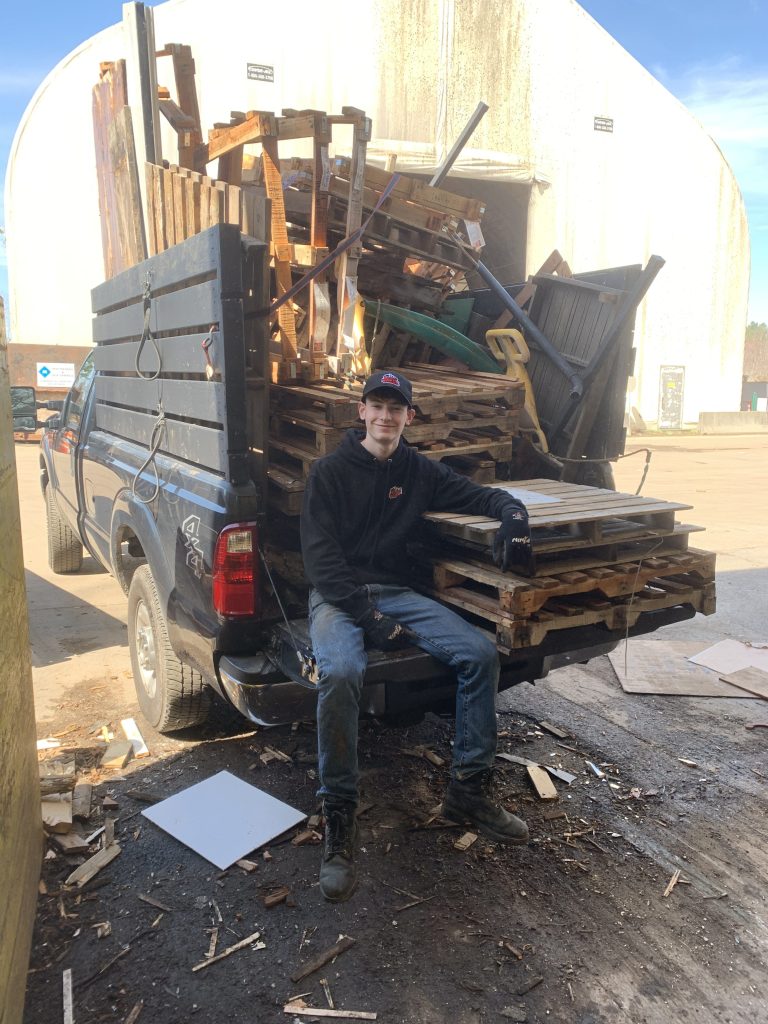
The seasonality of the business—peaking in the summer when residential moves and cleanouts are most frequent—aligns perfectly with the academic calendars of their student employees. While the company faces a natural turnover as the school year begins, the brothers have built a recruitment pipeline that treats the business as a launchpad for young professionals rather than just a temporary job. This approach has fostered a culture where employees feel they are "building the company" alongside the founders.
Community Partnerships and Social Responsibility
Beyond its commercial success, Junk Teens has integrated social responsibility into its business model. This is evidenced by several key partnerships:
- Computers 4 People: The company organized a computer drive to collect and refurbish laptops and desktops, which were then distributed to under-resourced communities.
- WellStrong: A partnership with the Cape Cod-based organization raised funds for wellness and peer-support programs focused on substance abuse recovery.
These initiatives serve a dual purpose: they provide a socially conscious outlet for the company’s salvaged inventory and strengthen the brand’s reputation within the local communities it serves. In a competitive market, these philanthropic ties differentiate Junk Teens from national franchises that may lack local roots.
Broader Implications and the Path to National Scale
The success of Junk Teens suggests a broader trend in the American economy: the professionalization of the "side hustle" through digital systems and AI. The McKinney brothers are currently refining their operational "playbook" with the goal of expanding the brand nationwide. Their focus is on creating a replicable system that empowers young entrepreneurs in other regions to launch their own student-led junk removal branches.
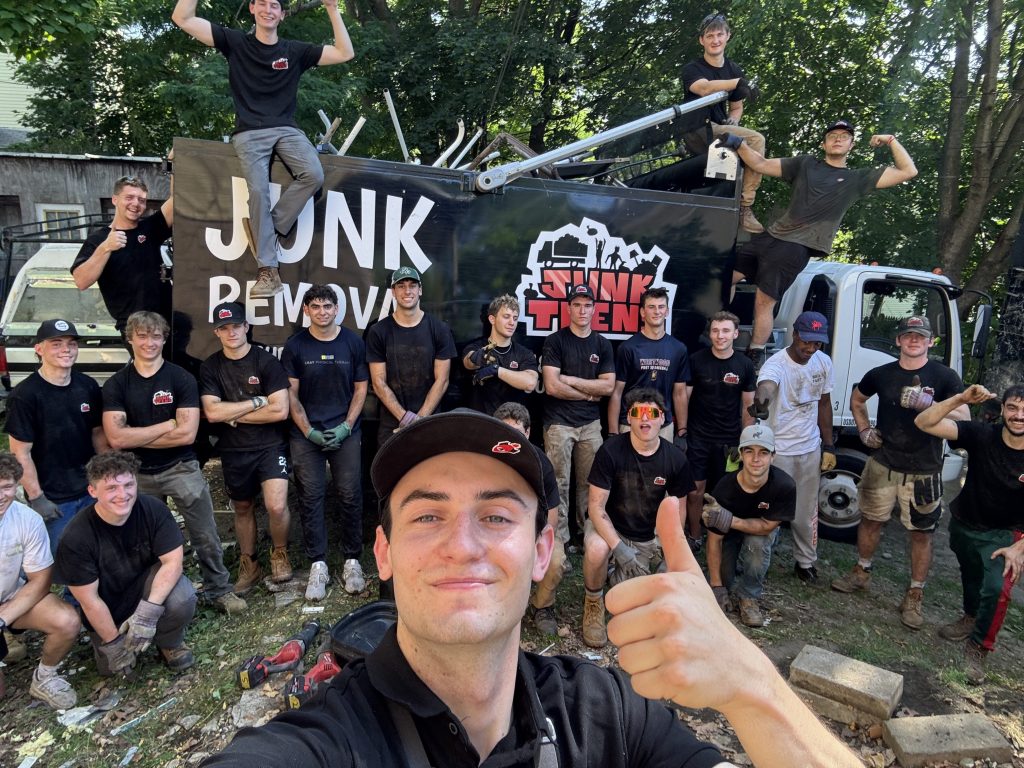
Analysis of the Junk Teens model reveals that the barriers to entry in service industries are being lowered by technology, while the value of high-quality, reliable labor remains at a premium. By combining the two, the McKinneys have created a high-margin business that defies the traditional "dirty job" stigma.
As the company prepares for its next phase of growth, the founders remain vocal about the importance of early action. Their advice to aspiring entrepreneurs is rooted in their own experience of starting with a single truck and a few found items: the roadmap to success is rarely clear at the beginning, but the integration of technology and a strong organizational culture can turn a simple service into a national enterprise. With a $5 million revenue target in sight, Junk Teens stands as a testament to the potential of Gen Z entrepreneurship in the physical economy.
Related posts: