Missionforce National Security Unifies U.S. Air Force Fleet Management Operations to Enhance Global Readiness and Modernize Logistics Infrastructure

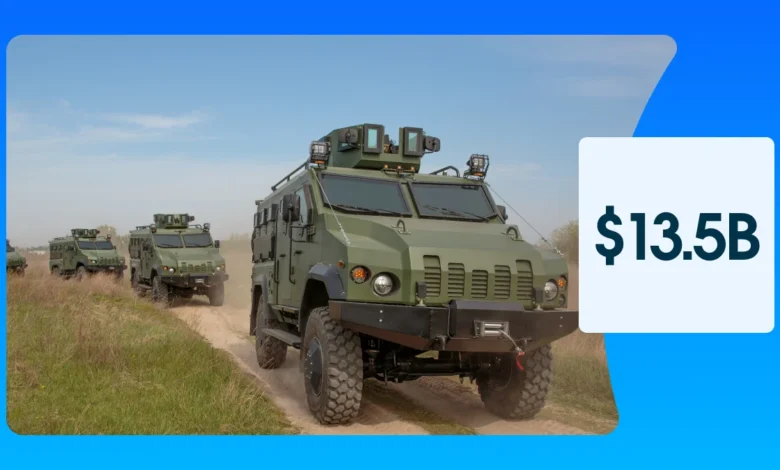
The U.S. Air Force has taken a definitive step toward total digital modernization by integrating Missionforce National Security to manage its sprawling global vehicle fleet. This transition, announced on July 8, 2026, marks the end of fragmented legacy Enterprise Resource Planning (ERP) silos for the 441st Vehicle Support Chain Operations Squadron (VSCOS). By consolidating onto a unified, interoperable platform, the Air Force aims to streamline logistics, drastically reduce vehicle downtime, and ensure that its $13.5 billion fleet remains mission-ready across nearly 400 global locations.
The deployment represents a significant milestone in the ongoing digital transformation of the Department of Defense (DoD). As the Air Force manages more than 84,000 vehicles—ranging from standard transport units to specialized tactical assets—the need for a single, real-time source of truth has never been more critical. The 441st VSCOS, a lean but vital 85-person squadron, is now utilizing Missionforce National Security to provide oversight for over 7,300 personnel who interact with the fleet daily.
The Challenge of Legacy Systems and the Shift to IL5 Security
For years, the Air Force’s vehicle management was hindered by the "sunsetting" of aging legacy systems. These platforms, often built on decades-old code, were unable to communicate with one another, leading to data discrepancies, delayed maintenance schedules, and a lack of visibility for commanders on the ground. In a high-stakes military environment, a delay in parts procurement or an overlooked maintenance alert can result in mission failure.
To solve this, the VSCOS required a platform that was not only scalable but also met the rigorous security standards of the U.S. military. Missionforce National Security, built on Salesforce Government Cloud Plus Defense, provides Impact Level 5 (IL5) authorization. This level of security is mandatory for handling Controlled Unclassified Information (CUI) and supporting mission-critical workloads that require higher levels of protection than standard civilian government operations.
The move to an IL5-authorized platform allows the Air Force to centralize sensitive data regarding vehicle locations, readiness status, and maintenance logs without compromising national security. By moving away from on-premise silos and into a secure, unified cloud environment, the Air Force has established a digital backbone capable of supporting global operations at "mission speed."
Strategic Momentum: The $5.6 Billion Context
The integration of Missionforce within the Air Force is not an isolated event but part of a broader surge in Salesforce’s momentum within the national security sector. This announcement follows a series of massive contracts that signal a shift in how the U.S. Armed Forces approach software procurement.
In early 2026, Salesforce secured a $5.6 billion Indefinite Delivery, Indefinite Quantity (IDIQ) contract with the U.S. Army. This was closely followed by a $72 million Enterprise Level Agreement (ELA) specifically for the Air Force. These multi-billion-dollar commitments underscore a strategic pivot toward "commercial-off-the-shelf" (COTS) solutions that can be customized for military use, rather than building bespoke, expensive, and often inflexible internal systems from scratch.
Industry analysts suggest that this trend is driven by the need for "interoperability"—the ability for different branches of the military to share data and coordinate logistics seamlessly. Missionforce National Security is designed specifically for this purpose, offering a multi-tenant scale that allows the Air Force, Army, and potentially the Intelligence Community to operate on compatible frameworks while maintaining necessary security boundaries.
Operational Enhancements and the Role of the 441st VSCOS
The 441st VSCOS serves as the nerve center for the Air Force’s vehicle supply chain. With the new platform, the squadron has moved from reactive management to proactive oversight. Kendall Collins, CEO of Missionforce and Government Cloud at Salesforce, characterized the squadron’s work as a "masterclass" in mission-focused efficiency.
“By consolidating onto a single, interoperable platform, the Air Force has turned fragmented logistics operations into a strategic advantage,” Collins stated. “This is delivering improved visibility for commanders, reduced service downtime, and helping ensure vehicles are ready to roll when the call comes.”
The operational benefits are already being felt across the 389 locations where the Air Force maintains a presence. Key improvements include:
- Real-Time Global Visibility: Commanders can now access a single dashboard to view the readiness status of the entire 84,000-vehicle fleet. This eliminates the need for manual reporting and reduces the risk of human error in data entry.
- Streamlined Workflows: By automating routine logistics tasks, the 85-person VSCOS team can manage a workforce of 7,300 personnel more effectively, ensuring that maintenance requests are prioritized based on mission urgency.
- Data Accuracy: The unified platform ensures that every vehicle’s history—from procurement to decommissioning—is recorded in a standardized format, providing a "clean" data foundation for future analysis.
Chronology of the Digital Transition
The journey to this unified platform was a multi-year effort involving rigorous testing and phased implementation.
- 2023–2024: The Air Force identifies the critical need to replace sunsetting legacy fleet management software. Internal audits reveal that fragmented data is leading to increased vehicle downtime.
- Late 2025: Salesforce launches Missionforce National Security, a dedicated suite of applications designed for the tactical edge of defense operations.
- January 2026: The U.S. Army signs a landmark $5.6 billion IDIQ contract with Salesforce, signaling a Department-wide shift toward the Missionforce ecosystem.
- March 2026: The Air Force signs a $72 million ELA to begin scaling Missionforce applications across its various squadrons.
- July 2026: The 441st VSCOS officially completes its migration to Missionforce National Security, transitioning management of the $13.5 billion fleet to the new IL5 cloud environment.
The AI Frontier: Predictive Maintenance and Decision Advantage
One of the most forward-looking aspects of the Missionforce integration is its preparation for Artificial Intelligence (AI). By establishing a clean, unified data foundation, the Air Force is now positioned to integrate AI-driven tools that could revolutionize vehicle maintenance.
The VSCOS is already exploring several AI use cases. One primary focus is predictive maintenance: using vehicle sensor data to predict when a component—such as an engine part or a transmission system—is likely to fail before it actually does. This shift from "scheduled" maintenance to "predictive" maintenance could save millions of dollars in repair costs and ensure that vehicles are never out of commission during critical operations.
Additionally, AI is being tested to automate manual data entry. For example, AI algorithms can validate Vehicle Identification Numbers (VINs) and cross-reference them with global parts databases to ensure that the correct components are ordered every time. This reduces the administrative burden on airmen and speeds up the supply chain.
Bill Pessin, SVP of National Security at Salesforce, emphasized that this digital superiority is essential for maintaining a competitive edge. “With a unified view, our customers can perform critical national security tasks with the visibility, coordination, and operational control needed to move at mission speed,” Pessin noted. “This helps ensure our warfighters and intelligence officers maintain decision advantage.”
Broader Implications for National Security
The success of the 441st VSCOS serves as a blueprint for other agencies within the Department of Defense and the Intelligence Community. The transition highlights a broader movement toward the "Agentic Enterprise"—an organization where humans, data, and AI agents work together on a single, trusted platform to achieve operational goals.
As geopolitical tensions require more rapid deployment and agile logistics, the ability to manage a global fleet with precision becomes a matter of national security. The move to Missionforce suggests that the future of defense lies in software that is as resilient and adaptable as the hardware it manages.
The Air Force’s $13.5 billion fleet is no longer just a collection of mechanical assets; it is now a data-driven network. By leveraging the scale of Salesforce’s Government Cloud Plus Defense, the Air Force has ensured that its logistics infrastructure is prepared for the challenges of the mid-21st century, providing a level of operational control that was previously impossible under the era of legacy ERP silos.
As Missionforce continues to scale across the U.S. Armed Forces, the focus will remain on delivering innovation to the "tactical edge"—ensuring that whether a vehicle is in a domestic hangar or a remote forward-operating base, it is supported by the full weight of the Air Force’s digital intelligence.