The Evolution of Artificial Intelligence in the Creator Economy From Existential Dread to Strategic Leverage

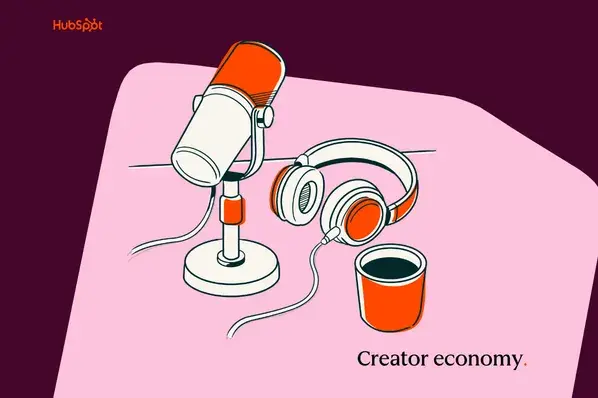
The rapid integration of artificial intelligence within the creator economy marks one of the most significant shifts in digital media history. Barely eighteen months ago, the prevailing sentiment among content creators, digital agencies, and platform stakeholders was one of defensive apprehension. Today, that atmosphere of existential dread has been largely replaced by a calculated, pragmatic pursuit of efficiency and scale. This transition from viewing AI as a competitor to treating it as a foundational utility represents a maturation of the creator industry, forcing a re-evaluation of intellectual property, professional boundaries, and the fundamental value of human creativity.
A Timeline of Rapid Adoption
To understand the current state of the industry, one must look at the trajectory of the past two years. In 2023, the discourse was dominated by intellectual property lawsuits, concerns regarding "deepfakes," and the fear of algorithmic displacement. By early 2024, the focus shifted toward generative workflows. Industry reports from the Cannes Lions International Festival of Creativity throughout the summer of 2024 confirmed this pivot; AI was no longer a peripheral topic but the primary focal point of almost every panel regarding the future of brand-creator relationships.
This timeline illustrates a compressed cycle of innovation. While traditional industry shifts—such as the transition from static image to short-form video—occurred over several years, the normalization of AI tools like ChatGPT, Claude, and Midjourney has occurred in a matter of months. This speed has left legal frameworks trailing behind, as current statutes are largely based on legacy precedents from the mid-20th century, struggling to address the nuances of modern machine-learning authorship.
The Dynamics of Human-AI Collaboration
Industry experts argue that the most successful creators are those who treat AI as an accelerator rather than an author. DonYé Taylor, a prominent marketing strategist who has managed campaigns for global entities like Nike and Amazon, likens AI to a high-level calculator. According to Taylor, the tool’s output is entirely dependent on the quality of the user’s cognitive input. This "functional-philosophy" approach suggests that the value of a creator lies in their strategic intent—their ability to frame problems and curate outcomes—rather than the manual labor of execution.
This perspective is echoed by Alicia Richardson, founder of Black Create Connect. Richardson emphasizes that audiences engage with creators based on human resonance. While AI can synthesize data and generate scripts, it lacks the lived experience and emotional intelligence that foster parasocial relationships, which are the bedrock of the creator economy.
The operational benefits are measurable. Creators such as Gigi Robinson have reported significant productivity gains by utilizing AI to process raw video footage. By feeding long-form content into AI-driven video editors, Robinson reports saving upwards of 10 hours of manual labor per week, which has correlated with a documented 20% increase in total income. These efficiencies allow creators to focus on high-level ideation, effectively scaling their operations without the immediate need for a larger human staff.
Legal Challenges and Contractual Friction
As the utilization of AI becomes standardized, the legal landscape surrounding creator agreements has become increasingly complex. Kameron Buckner, founder of Social Docket, notes that brands are now attempting to insert clauses that mandate transparency regarding a creator’s internal processes. Some contracts now explicitly require creators to hand over their AI prompts and workflow methodologies.
Buckner advises against this practice, noting that a creator’s prompt engineering is often a proprietary intellectual asset that represents their unique strategic "thinking." When a brand demands access to these processes, they are often overstepping the scope of a standard deliverable agreement. Conversely, Lindsey Gamble, vice president of creator strategy and innovation at IZEA, observes that some brands have moved toward the opposite extreme, implementing blanket bans on AI usage within their contracts. These bans often require prior written consent for any AI-assisted task, reflecting a lack of trust in the output quality and a fear of potential legal liability regarding copyright infringement.
A secondary risk involves data security. Many creators are feeding sensitive, confidential brand information—such as upcoming product roadmaps or private contract terms—into public-facing LLMs (Large Language Models). This practice has already resulted in inadvertent breaches of non-disclosure agreements (NDAs) and exclusivity clauses. Analysts suggest that the next phase of contract evolution will likely involve "AI-use clauses" written by the creators themselves, intended to protect their own likeness and creative voice from being scraped or repurposed by the very brands they partner with.
The Paradox of Platform Algorithms
A notable friction point exists between platform mandates and user experience. Annie-Mai Hodge, founder of Girl Power Marketing, describes a "frustrating paradox" where social media platforms provide creators with built-in AI tools while simultaneously de-prioritizing or penalizing content that appears to be AI-generated. This creates a state of professional anxiety, where creators are pressured to use AI to keep up with competitive posting cadences but fear that the resulting content will be flagged by algorithms as "low quality" or "inauthentic."
This pressure is felt unevenly across demographics. Research from the organization Lean In indicates that women in the workforce are 22% less likely than their male counterparts to be regular users of AI tools, and 32% more likely to express concerns regarding the perceived "dishonesty" or "cheating" associated with AI usage. This gendered disparity in technology adoption suggests that the barrier to AI entry is not just technical, but cultural.
Economic Implications and Market Polarization
The economic impact of AI in this sector is binary: it serves as both a great equalizer and a potential source of market saturation. For emerging creators, AI tools democratize production. High-end scripting, editing, and data analysis—services that previously required a professional agency—are now accessible through a modest monthly subscription. This effectively lowers the barrier to entry, allowing independent creators to compete with more established, well-funded teams.
However, this democratization carries the risk of "creative flattening." When thousands of creators utilize the same AI models and the same prompt templates, the resulting content often converges toward a generic, homogenized aesthetic. Analysts like Lindsey Gamble warn that this reliance on automation can lead to the atrophy of the "creative muscle." If creators stop the manual process of ideation and drafting, they lose the unique voice that initially attracted their audience.
Furthermore, AI is changing the landscape of salary negotiations. By using AI chatbots to analyze industry-wide compensation data, creators are becoming better equipped to challenge low-ball offers. While AI may not force a brand to pay a premium, it provides the necessary benchmarks to foster a more transparent and competitive marketplace.
Conclusion: The Irreplaceable Human Element
The consensus among industry leaders is that while the tools of production are evolving, the product remains fundamentally human. As noted at the Cannes Lions festival, the most prized commodity in the current digital landscape is authenticity. Creators who successfully bridge the gap between AI efficiency and human perspective are finding that their work gains greater clarity and impact.
The future of the creator economy will likely be defined by a clear distinction between "AI-assisted" and "AI-generated" content. The former, where human expertise remains the driver of the strategy, will likely continue to thrive, as audiences remain sensitive to content that lacks a human point of view. The latter, which relies on the automation of the entire creative process, risks becoming digital noise.
Moving forward, the successful creator will be one who treats technology as a subordinate, not a surrogate. As Hodge suggests, the goal is to make the tool work harder for the human, rather than allowing the human to be subsumed by the tool. In an era of infinite synthetic content, the most valuable asset will remain the specific, inimitable voice of the creator, bolstered—but never replaced—by the analytical capabilities of the machine.
Related posts: