Google to Enable Local Inventory Ads by Default for All Shopping Campaigns Beginning August 31

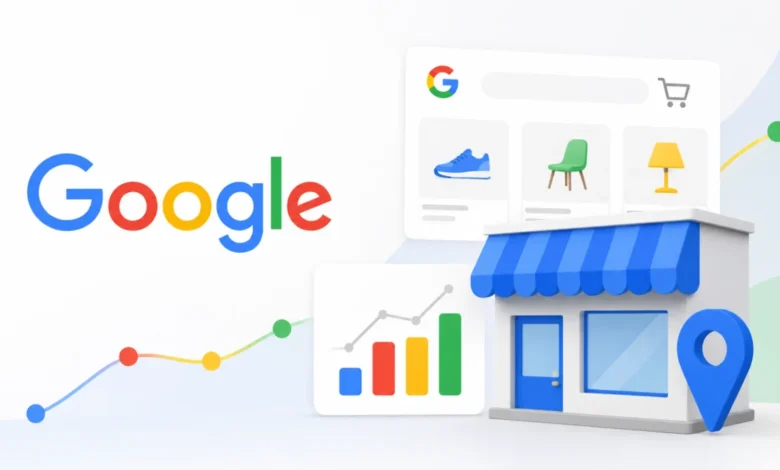
Google has officially confirmed a significant structural change to its advertising ecosystem, announcing that Local Inventory Ads (LIA) will be enabled by default for all Shopping campaigns starting August 31. This move, first communicated to select advertisers via notification and subsequently formalized on the Google Ads Developer Blog, represents a major shift in how the search giant manages retail inventory visibility. By making local product availability a standard component of Shopping campaigns, Google is further blurring the lines between digital storefronts and physical retail locations, forcing advertisers to adapt their data management and campaign strategies to an "omnichannel-first" environment.
The transition marks the end of an era where advertisers could easily toggle local inventory participation on or off at the campaign level. Historically, Local Inventory Ads were an opt-in feature, requiring manual configuration and a separate data feed to showcase products available in nearby physical stores. Under the new mandate, every Shopping campaign will automatically have the “Local products” setting activated. For the global retail landscape, this change is not merely a technical update but a strategic realignment that prioritizes hyper-local relevance in search results.
Understanding the Technical Shift and API Impact
For developers and high-level digital marketing agencies, the most immediate impact of this update involves the Google Ads API. Previously, the enable_local field within a campaign’s ShoppingSetting served as the primary gatekeeper for local inventory. To serve products from a local feed, advertisers had to explicitly set this field to true.
Starting August 31, the logic governing this field will change fundamentally. For those utilizing Google Ads API v25.1 or later, any attempt to programmatically set enable_local to false will result in a SettingError.SETTING_VALUE_NOT_COMPATIBLE_WITH_CAMPAIGN_TYPE error. This effectively locks the setting in the "on" position for all standard Shopping campaigns. For users operating on versions earlier than v25.1, the API will not return an error, but it will silently ignore any command to disable the feature, treating the value as true regardless of the developer’s intent.
This change aligns Shopping campaigns with the existing behavior of Performance Max (PMax) for Retail. In PMax, Local Inventory Ads have been integrated by default since the campaign type’s inception, reflecting Google’s broader goal of creating a unified, automated advertising experience across its various properties. While the update is comprehensive for Shopping campaigns, Google noted that the enable_local field will continue to function normally for other supported campaign types, such as Performance Max for Travel and Video campaigns.
The Evolution of Local Inventory Ads
To understand the weight of this announcement, one must look at the history of Google’s retail offerings. Local Inventory Ads were introduced to bridge the gap between online browsing and offline purchasing. They allow retailers to display real-time store-level data—such as whether an item is in stock at a specific branch, the store’s distance from the user, and options for "Buy Online, Pick Up In-Store" (BOPIS).
Over the last decade, consumer behavior has shifted dramatically toward local intent. According to internal Google data, searches for "open now near me" and "available near me" have seen exponential growth, particularly following the disruptions of the 2020 global pandemic. During that period, the ability to see local stock levels became a necessity rather than a luxury for consumers. By making LIAs the default, Google is acknowledging that the modern consumer expects to see local availability as a standard part of their shopping journey, rather than a specialized sub-feature.
Chronology of the Transition
The road to the August 31 deadline has been marked by several key milestones in Google’s automation journey:
- The Rise of Smart Shopping (2018-2021): Google began encouraging advertisers to use automated bidding and placement, setting the stage for more "black box" campaign management.
- The Launch of Performance Max (2021): PMax introduced the concept of "unified" retail ads where local and online inventory were merged by default.
- The Sunset of Smart Shopping (2022): Most Shopping campaigns were migrated to PMax, further cementing the default-on status of local inventory for a majority of advertisers.
- Initial Notifications (Late July 2024): Google began sending emails to advertisers notifying them of the upcoming change to standard Shopping campaigns.
- Official Developer Confirmation (August 2024): The Google Ads Developer Blog provided the technical specifications and the final implementation date of August 31.
Strategic Implications for Retailers
The shift toward mandatory local inventory enablement presents both opportunities and challenges for retailers. On the positive side, the integration of local inventory can significantly increase Click-Through Rates (CTR) and store visits. When a user sees that a product is available just two miles away, the friction to purchase is reduced. For retailers with robust physical footprints, this change could drive a surge in "near me" traffic that was previously untapped due to conservative campaign settings.

However, the change poses a significant hurdle for businesses with complex inventory management systems. For an LIA to work effectively, a retailer must maintain an accurate "Local Products Feed" that syncs frequently with their Point of Sale (POS) system. If Google automatically enables local ads for a retailer whose local data is inaccurate or outdated, it could lead to a poor customer experience—such as a user visiting a store only to find the item is out of stock.
Furthermore, advertisers who have historically separated their "Online-Only" and "In-Store" budgets will find their campaign structures disrupted. The inability to disable local inventory at the campaign level means that budget allocation will now be managed by Google’s algorithms rather than strict campaign silos.
How Advertisers Can Maintain Control
While the simple "off switch" is being removed, Google is not entirely stripping advertisers of control. Instead, the company is shifting inventory management away from a campaign-level toggle and toward more granular filtering methods. Advertisers who wish to prevent local products from serving in specific campaigns now have two primary alternatives:
- Inventory Filtering: Advertisers can use the
inventory_filtersetting within the campaign’sShoppingSetting. By applying specific filters based on custom labels or product categories, they can effectively exclude local-only products from specific campaign flows. - Product Group Subdivision: Within the ad group or asset group level, advertisers can subdivide their products and exclude those that are tied to local inventory feeds.
These methods require more manual effort and a deeper understanding of feed architecture than the previous checkbox approach. It places a premium on "clean" data feeds and sophisticated account management.
Broader Industry Impact and Analysis
Industry analysts view this move as part of Google’s wider strategy to compete with Amazon and other retail media networks. Amazon’s primary weakness compared to Google is its lack of a physical retail presence (outside of Whole Foods and a limited number of physical stores). By leveraging the millions of brick-and-mortar locations owned by its advertising partners, Google can offer a "search-to-shelf" experience that Amazon cannot easily replicate.
However, some in the digital marketing community have expressed concerns regarding "automation creep." As Google removes more manual controls, agencies and in-house teams often feel they are losing the ability to fine-tune campaigns for specific business goals. For example, a retailer might want to keep local inventory out of a national "Online Clearance" campaign to avoid confusing customers. Under the new rules, such a setup requires significantly more complex filtering logic.
The financial implications are also noteworthy. Local Inventory Ads often carry a different Cost-Per-Click (CPC) profile than standard Shopping ads. By enabling them by default, Google could see an increase in overall ad spend as campaigns qualify for a wider range of local-intent auctions. For Google, this is a win-win: it improves the user experience by providing local data and increases the total volume of ad inventory available.
Preparing for the August 31 Rollout
As the deadline approaches, advertisers and developers are advised to conduct a comprehensive audit of their Google Ads accounts. The following steps are recommended:
- Audit Feed Accuracy: Ensure that local inventory feeds are synchronized and that store codes match the locations linked in the Google Business Profile.
- Update API Integrations: Developers must update their code to handle the new API behavior, ensuring that their scripts do not break when attempting to modify the
enable_localfield. - Re-evaluate Campaign Structures: Marketing teams should identify campaigns where local inventory might be undesirable and implement inventory filters or product group exclusions before the automatic enablement takes place.
- Monitor Performance Metrics: In the weeks following August 31, it will be crucial to monitor the "Distance" and "Store Visit" reports in Google Ads to understand how the inclusion of local inventory is impacting overall ROI.
This update is a clear signal that Google views the future of retail as hybrid. The distinction between "e-commerce" and "physical retail" is disappearing in the eyes of the search engine, replaced by a singular "commerce" experience where the location of the product is just another attribute, like price or color. As August 31 nears, the retail industry must prepare for a landscape where being "local" is no longer an option, but a default setting.