AI visibility is a topic-level game: A study of 50,000 brands in ChatGPT


A comprehensive study conducted by Semrush and industry expert Kevin Indig has revealed a significant lack of brand dominance within the ChatGPT ecosystem, suggesting that the landscape of artificial intelligence-driven search remains largely unsettled. According to the analysis, which scrutinized over 1,000 categories and tens of thousands of brands, only 15.2% of ChatGPT topic categories possessed a clear brand owner across related buyer questions. This finding indicates that nearly 85% of market categories are currently without a dominant authority, presenting both a challenge and a massive opportunity for digital marketers and brand strategists.
The research highlights a critical disconnect between traditional search engine optimization (SEO) performance and visibility within large language models (LLMs). As ChatGPT and similar AI tools increasingly become the first point of contact for consumers seeking information, the data suggests that appearing in a single prompt does not guarantee consistent brand presence across the broader buyer journey. For brands looking to secure a foothold in the AI era, the study underscores the necessity of a "topic-level" strategy rather than a "keyword-level" approach.
Defining Topic Ownership in the Age of AI
To quantify "ownership" within a conversational interface, Semrush established a rigorous set of criteria. A brand was defined as a category owner only if it maintained the highest share of mentions within a specific topic, appeared in at least four out of five related prompts, and maintained a lead over its closest competitor by at least five percentage points.
This multi-prompt approach was designed to mirror the actual behavior of consumers, who rarely ask a single question in isolation. Instead, potential buyers typically navigate a series of related inquiries, ranging from broad definitions and use cases to specific comparisons and purchasing decisions. By testing five distinct prompts per category—definitions, comparisons, alternatives, use cases, and buying decisions—the study sought to determine which brands, if any, ChatGPT consistently associates with a particular industry or product type.
The results were telling: the vast majority of brands failed to achieve this level of consistency. Even when a brand was mentioned in response to a specific "buying decision" prompt, it frequently vanished when the AI was asked for "alternatives" or "definitions" within the same category. This lack of continuity suggests that ChatGPT’s internal mapping of brand authority is still highly fragmented.
The Popularity Paradox: High Demand Leads to Less Dominance
One of the most striking findings of the Semrush analysis was the inverse relationship between search demand and brand ownership. The study divided categories into two groups based on AI search demand. In the top half of categories—those with the highest search volume—only 11.3% had a clear brand owner. In contrast, 19% of topics in the bottom half (lower demand) had a dominant leader.
This "popularity paradox" suggests that highly competitive and frequently searched topics are more difficult for a single brand to own. In these high-stakes categories, ChatGPT likely draws from a wider, more diverse array of sources, leading to a broader distribution of brand mentions. Conversely, in niche or lower-demand categories, the pool of authoritative content may be smaller, allowing a single established brand to capture a larger share of the AI’s "attention."
For market leaders in high-demand sectors, this data serves as a warning. Traditional dominance in Google search results does not automatically translate to a monopoly on AI-generated recommendations. The fragmented nature of these categories means that "challenger" brands have a unique window of opportunity to disrupt established hierarchies by optimizing specifically for conversational AI.
The Disconnect Between Traditional SEO and AI Visibility
For years, digital marketing has been governed by metrics such as Domain Authority, backlink profiles, and keyword density. However, the Semrush study indicates that these broad SEO metrics have limited predictive value when it comes to ChatGPT topic ownership.
"Traditional SEO metrics aren’t enough to explain who owns a topic," noted Kevin Indig, founder of Growth Memo and a key collaborator on the study. "While they play their role, there’s more to it."
The data suggests that while a strong SEO foundation is helpful, ChatGPT’s selection process for brand mentions relies on different signals. The AI prioritizes semantic relevance and the synthesis of information across its training data rather than simply rewarding the site with the most backlinks. This means a brand could theoretically rank number one on a Google Search Engine Results Page (SERP) for a high-volume keyword but remain virtually invisible in a ChatGPT conversation about the same topic.
This shift necessitates a transition from traditional SEO to what industry experts are calling Generative Engine Optimization (GEO) or AI Visibility. This new discipline focuses on how information is structured and how clearly a brand’s value proposition is articulated in the datasets that train LLMs.

Mentions vs. Citations: The Battle for Mindshare
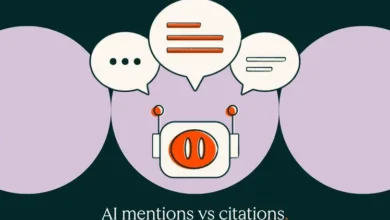
A crucial distinction made in the study was the difference between being cited as a source and being mentioned within the text of the AI’s answer. Semrush measured ownership based on brand mentions in ChatGPT’s primary response text, not by the links provided in the citation block below the answer.
The study found that being "most-cited" rarely equated to being "most-mentioned." In many instances, ChatGPT might cite a news outlet or a third-party review site as a source while explicitly naming a specific brand as the recommended solution in the text. From a branding perspective, the textual mention is far more valuable for building brand recall and authority.
"If AI can’t find you, customers won’t either," the report emphasizes. For marketers, the goal is no longer just to be a "source" that the AI links to, but to be the "subject" that the AI discusses. This requires a content strategy that emphasizes brand-specific narratives and authoritative claims that the AI can easily parse and repeat.
Stability and Volatility in AI Rankings
While achieving dominance is difficult, the study found that once a brand establishes itself as a clear category owner, that position is remarkably stable. Clear category owners maintained their first-place ranking in 90.4% of month-over-month comparisons.
However, for brands that held only a narrow lead, the environment was far more volatile. In categories described as "emerging" or "unsettled"—where no brand met the strict criteria for ownership—the top-ranked brand switched in 1,950 out of 5,470 comparisons.
The data further revealed that the margin of the lead was a strong predictor of stability. When a top brand eventually lost its first-place position, its typical lead prior to the fall was only 1.3 percentage points. In contrast, brands that successfully defended their top spot maintained an average lead of 2.9 points. This suggests that in the world of AI search, a small increase in visibility can lead to a disproportionate increase in long-term stability.
Chronology and Scope of the Study
The findings are based on an extensive analysis conducted between January and June 2026. Utilizing the Semrush AI Visibility Toolkit, researchers examined 1,094 U.S.-based categories. The scale of the data was immense, covering:
- More than 50,000 individual brands.
- 220,000 unique domains.
- 600,000 citations.
- 220,000 specific URLs.
The timeframe of the study is particularly significant, as it represents a period where AI search had moved past its experimental phase and into a more mature state of consumer adoption. By mid-2026, ChatGPT had integrated more real-time browsing capabilities and refined its citation models, making the lack of brand dominance even more surprising to industry observers.
Strategic Implications and Broader Impact
The implications of this study are profound for the future of digital commerce. If 85% of categories are currently "unowned" by any specific brand in the eyes of ChatGPT, the current era represents a "land grab" for digital authority.
For CMOs and marketing directors, the "Why We Care" section of the report is clear: prompt-level visibility is a vanity metric. If a brand appears when a user asks for a "list of the best laptops" but disappears when the user asks for "laptop comparisons for students," the brand has failed to capture the topic.
Broader implications include:
- The Rise of Topic Authority: Marketing teams must move away from isolated keyword targeting and toward building "Topic Authority." This involves creating comprehensive content clusters that address every stage of the buyer’s funnel.
- Narrative Control: Brands need to ensure that their identity is clearly defined in public-facing content. If an AI cannot easily identify what a brand does or why it is a leader, it will not mention it in its summaries.
- AIO as a New Department: The disconnect between SEO and AI visibility suggests that companies may need dedicated "AI Optimization" (AIO) teams or specialists who focus specifically on how LLMs perceive and categorize their brand.
- The Value of Niche Markets: Given that lower-demand categories have higher rates of brand ownership, smaller companies may find success by dominating niche topics before attempting to scale into more competitive, fragmented high-demand categories.
As AI continues to reshape how information is consumed, the Semrush study serves as a foundational roadmap. The battle for the "Top of Mind" has shifted to the "Top of Prompt," and for the vast majority of the world’s brands, the race is just beginning. Ownership is not yet a matter of who is the biggest, but who is the most consistently recognizable to the algorithms that now mediate the relationship between brands and consumers.