The Mirage of Skills-Based Hiring: Why Industry Claims Often Outpace Evidence


The corporate narrative surrounding human resources has undergone a distinct shift in recent years, moving away from a primary reliance on academic credentials toward a philosophy of "skills-based hiring." Prominent industry leaders, such as Dr. Naresh Kumar Puritipati, President-HR at Deepak Fertilisers and Petrochemicals Corporation (DFPCL), have been vocal proponents of this transition, framing it as a necessary evolution for modern manufacturing and corporate growth. However, a critical examination of these trends suggests that the industry’s rhetorical commitment to skills-based evaluation often lacks the empirical rigor and methodological consistency required to support such a systemic change.
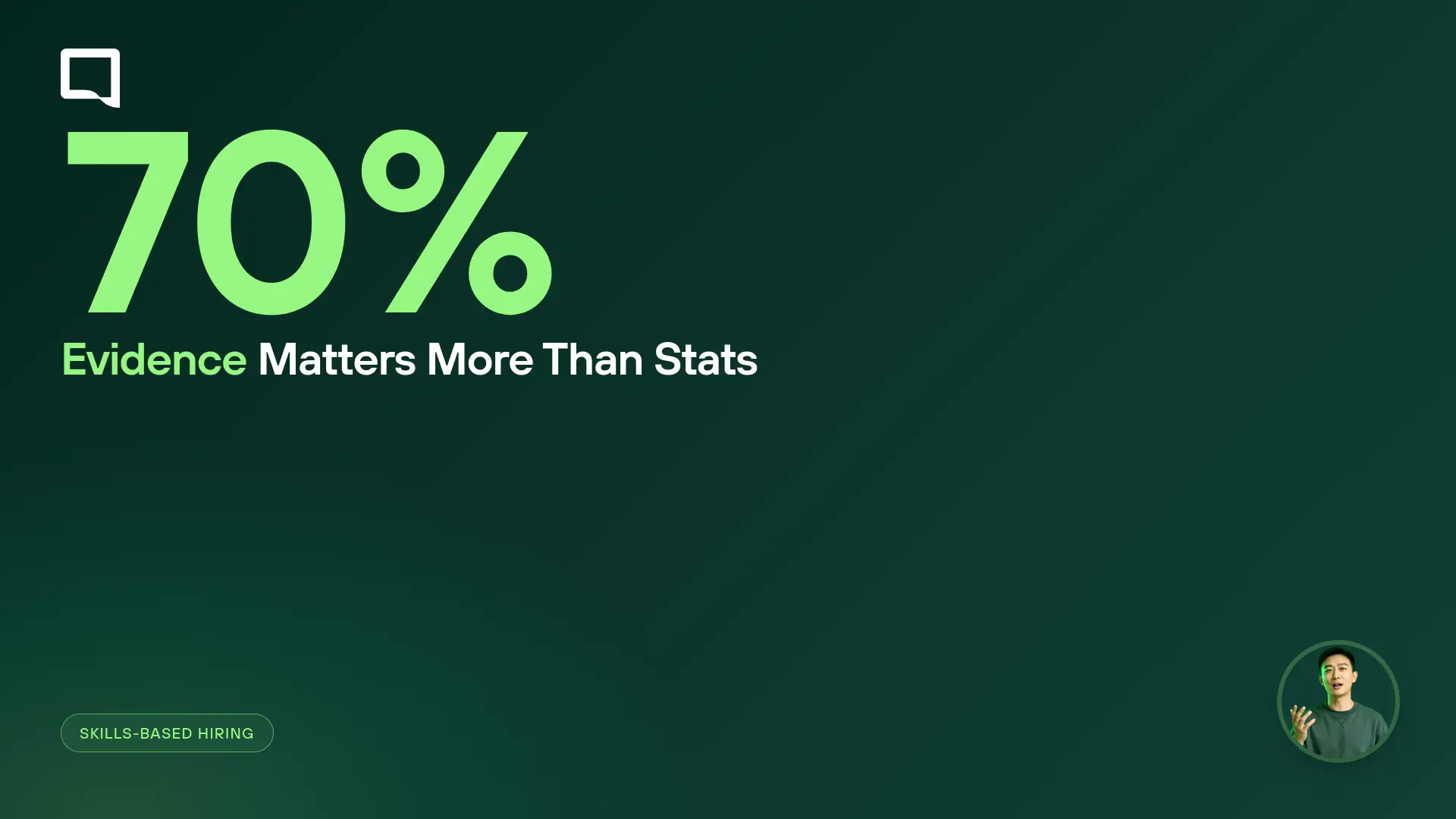
The discourse is currently dominated by statistics that appear to quantify this transition. Recent reports suggest that as many as 70 percent of employers now prioritize skills-based hiring for entry-level roles, a notable increase from 65 percent the previous year. Yet, these figures, while frequently cited in trade publications and executive briefings, often lack transparent methodologies or references to peer-reviewed, independent studies. This phenomenon raises a fundamental question: is the industry witnessing a structural revolution in recruitment, or is it merely rebranding existing processes under a more contemporary label?
A Chronology of the Skills-First Movement
The emergence of the skills-first narrative can be traced back to the mid-2010s, when organizations began grappling with the "skills gap"—the perceived discrepancy between the capabilities of graduating students and the requirements of a digitized workforce. By 2019, the conversation shifted from a discussion of "training" to a discussion of "hiring," as companies like IBM and Google publicly stated they would de-emphasize degree requirements for certain technical roles.
Following the COVID-19 pandemic, this trend accelerated. In 2021 and 2022, organizations across India and the global market began investing heavily in Learning Management Systems (LMS) and internal credentialing platforms. By 2023, the terminology had solidified into a corporate mandate. However, the implementation of this mandate has been fragmented. While firms like M3M India and Paras Health have moved toward incorporating simulations and peer-led assessments, other organizations have conflated internal employee development programs—such as self-paced LMS modules—with actual, pre-hire candidate assessment methodologies.
The Methodology Gap: Defining Skills-Based Hiring
To understand the current state of recruitment, one must differentiate between "skills-based hiring" as a branding exercise and as a functional process. According to industry experts, true skills-based hiring requires the implementation of standardized, evidence-generating methods. This includes, but is not limited to, blind coding challenges, situational judgment tests, work-sample simulations, and structured, rubric-based interviewing.
Conversely, some organizations have adopted the label while primarily relying on legacy screening processes. The distinction is critical. When an executive cites an expansion of a "skilled resource base" via an internal LMS, they are describing talent development—the nurturing of existing human capital. While vital for organizational health, this is not a hiring methodology. It does not address the challenge of validating a candidate’s capabilities prior to their entry into the firm.
The discrepancy is not merely semantic; it is structural. If a company claims to practice skills-based hiring but cannot produce a rubric or a score-based evidence trail for its recent cohorts, the claim is functionally void. The industry is currently characterized by a high degree of confidence in its progress, yet this confidence often outpaces the supporting documentation.
Data Transparency and the Burden of Proof
The reliance on unsourced statistics is a persistent issue in HR reporting. The 70 percent adoption figure, while widely circulated, serves as an example of data that is presented as a consensus rather than a claim. When such figures are introduced into the business case for a new hiring strategy, they carry the risk of leading executives toward misaligned resource allocation.
Furthermore, the gap between familiarity and capability remains a significant, under-addressed metric. Recent data suggests that while 94 percent of surveyed professionals claim familiarity with AI tools, only 20 percent have demonstrated the ability to deploy them in practical, automated applications. This 74-percentage-point delta is a microcosm of the failure mode in modern hiring: if a recruitment process evaluates a candidate based on "familiarity" or self-reported comfort with a tool, it fails to capture actual competence. It measures exposure, not output.
The Future of Credentials and Academic Signaling
Despite the trend toward skills-based evaluation, industry leaders are increasingly cautious about the total abandonment of formal degrees. The consensus among CHROs is that while a degree is no longer the definitive proxy for capability, it remains a signaling mechanism for foundational knowledge and regulatory compliance.
In sectors such as healthcare and high-stakes manufacturing, formal education is often an immutable requirement. The challenge for these firms is to maintain the utility of degrees while layering on top of them a granular, evidence-based assessment of specific competencies. As stated by industry practitioners, the goal is not to eliminate the degree, but to stop treating it as a "finished qualification" that remains static throughout an individual’s career. The degree is now viewed as a starting point—a prerequisite that must be supplemented by continuous, measurable skill acquisition.

Strategic Implications for Talent Acquisition
For organizations looking to transition toward a genuine skills-based model, the path forward requires a departure from broad, anecdotal claims. The first step involves the creation of role-specific competency maps. These maps define exactly which skills are required for a role and, more importantly, what "proficiency" looks like in practice.
Second, organizations must shift from open-ended, personality-based interviews to structured, competency-based assessments. This transition is not cost-neutral; it requires significant investment in the training of interviewers and the development of scoring rubrics. Without a documented reason why Candidate A was selected over Candidate B, the term "skills-based" remains a descriptor rather than a system.
Conclusion: Toward an Evidence-Based Future
The industry is at a crossroads where the rhetoric of modernization has outrun the reality of implementation. The move toward skills-based hiring is a rational response to a rapidly changing labor market, but it cannot be achieved through surveys and proclamations alone.
If the objective is to build a more resilient and capable workforce, HR leadership must prioritize the "how" over the "what." This means moving beyond the headline-grabbing adoption percentages and focusing on the internal infrastructure of recruitment. Whether it is through standardized simulations, rigorous scorecards, or transparent assessment audits, the gap between the claim of skills-based hiring and the practice of it will only be closed by evidence. In an environment where data is expected to drive every other aspect of the business, it is time for recruitment practices to meet the same standard of rigorous, verifiable, and evidence-based analysis.