Modern corporate training is undergoing a significant paradigm shift as organizations move away from the traditional "one-size-fits-all" model toward highly customized, data-driven educational frameworks. Adaptive learning—a sophisticated instructional strategy that modifies the learning experience in real-time based on an individual’s performance, knowledge gaps, and behavioral signals—is at the forefront of this evolution. As businesses grapple with diverse, global workforces and the rapid obsolescence of technical skills, this methodology offers a path to scale personalization without ballooning the administrative burden on Learning and Development (L&D) departments.
The growing demand for this technology is not merely speculative. Recent data from the 2026 industry landscape reports indicate that approximately 65% of L&D procurement leaders now identify personalization as the single most critical application of artificial intelligence in training. However, there remains a persistent "implementation gap": while the appetite for these solutions is high, only 7.5% of organizations have fully integrated AI-driven adaptive environments into their daily operations. Another 45% of firms are currently in the planning stages, suggesting that the industry is poised for a significant wave of adoption over the next 24 to 36 months.
Defining the Adaptive Framework
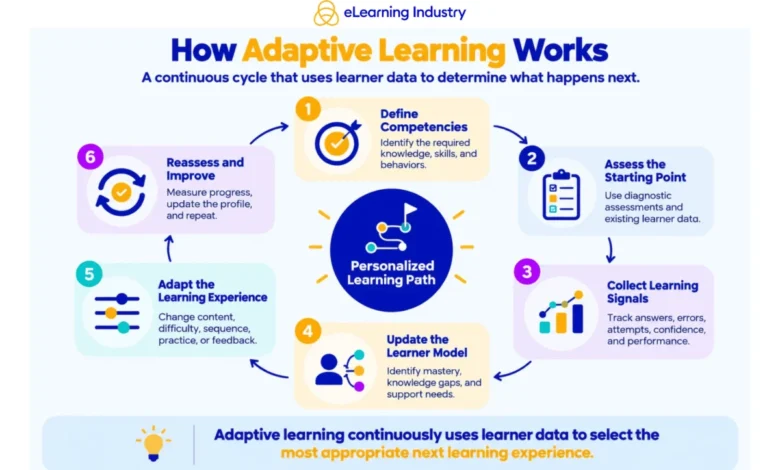
At its core, adaptive learning is an iterative process. Unlike traditional e-learning, which forces all employees to navigate a static curriculum in a linear fashion, an adaptive system functions as a dynamic feedback loop. It evaluates a learner’s baseline knowledge through diagnostic testing or previous performance data, then continuously adjusts content difficulty, sequence, and instructional support as the learner progresses.
The mechanism relies on several key components: content modularity, diagnostic assessment, a learner model, and an algorithmic engine. When a learner demonstrates mastery in a specific domain—such as a veteran salesperson navigating a complex product module—the system accelerates their path, bypassing redundant foundational material. Conversely, a junior hire encountering the same curriculum might receive additional scaffolded explanations, interactive simulations, and formative assessments to bridge their specific knowledge gaps. Crucially, this process does not always require generative AI; rule-based branching logic, when well-designed, can achieve high levels of effectiveness. However, advanced AI integration allows for more nuanced pattern recognition, enabling the platform to predict potential failure points before they occur.
Chronology and Evolution of Learning Technologies
The trajectory of adaptive learning can be traced back to early computer-assisted instruction in the 1970s and 80s, which utilized rudimentary branching. Throughout the 2000s, the rise of Learning Management Systems (LMS) standardized corporate training, but often at the cost of engagement. By the early 2020s, the convergence of big data analytics and cloud-based processing power allowed for the transition from simple "pre-test/post-test" models to the sophisticated, continuous-monitoring systems observed today.
In 2026, the focus shifted from merely "providing access" to "measuring competency." This evolution has been catalyzed by the need for rapid upskilling in high-stakes industries such as cybersecurity, healthcare, and software engineering. Organizations are no longer measuring success solely by course completion rates; they are shifting toward performance-based metrics like "time to proficiency" and "error reduction frequency."
The Strategic Value Proposition
For the enterprise, the benefits of implementing adaptive learning are measurable and multi-faceted. First, it directly addresses the issue of "instructional fatigue." Employees who are forced to review information they already understand become disengaged, leading to lower retention rates and decreased morale. By optimizing the learning path, companies can reduce training time by as much as 30% to 50% without compromising the quality of knowledge acquisition.

Second, adaptive learning provides granular visibility into organizational skill gaps. Traditional reporting often obscures individual struggles behind aggregate scores. Adaptive platforms, however, generate heat maps of knowledge, allowing L&D managers to identify systemic issues—such as a widespread misunderstanding of a new compliance protocol—that would otherwise remain hidden until a workplace error occurs.
Third, the scalability factor cannot be overstated. In an era where organizations struggle to provide personalized mentorship to thousands of employees simultaneously, adaptive systems serve as "digital coaches." While these systems do not replace human instruction—specifically for soft skills, leadership development, or complex strategic coaching—they handle the heavy lifting of knowledge dissemination, freeing up human instructors to focus on high-value interactions.
Navigating Limitations and Implementation Risks
Despite the clear benefits, experts warn against treating adaptive learning as a "plug-and-play" solution. A common pitfall is the belief that sophisticated software can compensate for poorly designed instructional content. If the foundational curriculum is disjointed or the learning objectives are ill-defined, an adaptive algorithm will merely accelerate the delivery of ineffective material.
Furthermore, there is a legitimate concern regarding data privacy and the ethics of algorithmic decision-making. As these systems track minute behaviors—such as time spent on a specific question or confidence levels—organizations must ensure that this data is used for professional development rather than punitive performance tracking. The transparency of the "black box" algorithms used by some vendors also remains a concern for HR leaders who must explain to employees why a particular learning path was recommended.
A Structured Approach to Deployment
To successfully implement an adaptive learning initiative, organizations should follow a six-stage lifecycle:
- Performance Audit: Identify a specific business problem (e.g., high turnover in customer support due to inadequate product knowledge) rather than attempting a blanket overhaul of all training.
- Competency Mapping: Clearly define what "mastery" looks like. Without clear success criteria, the system has no goal toward which it can optimize.
- Modularization: Break down existing curricula into granular, objective-based units. This is the most labor-intensive phase but is essential for algorithmic flexibility.
- Pilot Deployment: Launch the program within a controlled group—such as a single department or regional office—to gather data and calibrate the system’s sensitivity.
- Human-in-the-Loop Integration: Define the role of the human instructor. The platform should flag students who are struggling significantly, triggering a human intervention rather than allowing the algorithm to continue spinning in a loop of failed attempts.
- Continuous Evaluation: Use performance data to refine the system. If learners are consistently "testing out" of modules, the assessment might be too easy; if they are consistently failing, the instructional content may require revision.
Future Implications and Outlook
The future of adaptive learning is intrinsically linked to the broader "AI-first" workplace. As we move toward 2030, we expect to see these systems integrate more deeply with workflow tools. Instead of training being a separate event, learning will increasingly occur "in the flow of work," where an adaptive engine recognizes a user’s struggle with a specific software tool and provides a 30-second, personalized micro-lesson exactly when and where it is needed.
For L&D professionals, the shift requires a transformation of their own skill sets. The Instructional Designer of the future must be part data scientist, part content architect, and part behavioral analyst. The goal remains constant—to empower the workforce—but the tools at our disposal are becoming more precise, efficient, and capable of fostering a culture of lifelong learning that adapts as quickly as the global market itself. Organizations that view this technology as a strategic asset, rather than a mere IT upgrade, will be the ones that effectively future-proof their human capital.