20 Essential Leadership Development Training Topics for the Modern Business Landscape


The transition from a high-performing individual contributor to an effective leader is rarely a seamless evolution. While technical prowess often earns an employee a promotion, the competencies required to manage, inspire, and steer a team are fundamentally different from those required for individual output. Statistics indicate that the gap between these roles is significant; roughly 38% of newly appointed leaders fail within their first 18 months in the role, often due to a lack of targeted development and a reliance on outdated management paradigms. As organizations grapple with the complexities of hybrid work, rapid digital transformation, and the integration of artificial intelligence, the necessity for structured, evidence-based leadership training has never been more critical.
The Evolution of Leadership Development
Historically, leadership training was viewed through the lens of executive succession—a "born leader" model that prioritized innate charisma over structured skill acquisition. This rigid framework has largely been abandoned in favor of a development-first approach. Contemporary organizational psychology posits that leadership is a set of learned behaviors, not a fixed personality trait.
According to recent data from the State of L&D reports, leadership development consistently ranks as the most requested soft-skills training among employees. When companies invest in these programs, they are not merely upgrading individual capabilities; they are bolstering organizational stability. Effective training programs have been shown to correlate directly with higher retention rates, improved team morale, and a more resilient corporate culture. By democratizing access to leadership development, firms can uncover "diamonds in the rough"—employees who possess high potential but may have been overlooked by traditional, top-down promotion strategies.
Core Soft Skills: The Foundation of Influence
Effective leadership is anchored in human-centric skills that foster trust and collaboration. As the workplace becomes increasingly digitized, these "soft" skills serve as the critical differentiator between a manager who dictates and a leader who empowers.
- Accountability and Transparency: Leaders must bridge the gap between authority and vulnerability. By modeling accountability, managers establish a culture where mistakes are treated as learning opportunities rather than failures, directly boosting team morale.
- Authenticity: Modern employees demonstrate higher engagement when they perceive their leaders as genuine. Authenticity training focuses on aligning professional actions with personal values, fostering a deeper psychological contract between the leader and the team.
- Confidence and Humility: The most effective leaders possess a balanced temperament. Confidence provides the decisiveness necessary for strategic growth, while humility ensures that the leader remains open to feedback and inclusive of diverse viewpoints.
- Emotional Intelligence (EQ): EQ remains the cornerstone of modern management. It involves the ability to read interpersonal dynamics, navigate cultural sensitivities, and regulate one’s own reactions during high-stress periods.
- Ethics and Responsibility: In an era of heightened corporate scrutiny, leaders must be trained to navigate ethical dilemmas, prioritizing long-term integrity over short-term gains.
- Inspiring Others: Beyond simple task management, leaders must act as visionaries. Training in motivational psychology helps leaders articulate a shared purpose that aligns individual contributions with broader organizational goals.
Building High-Performing Teams
Individual brilliance is insufficient for organizational success; it must be harnessed through collective effort. Leaders today must master the art of team orchestration.
- Conflict Management: Rather than suppressing dissent, effective leaders facilitate healthy conflict, transforming interpersonal friction into creative output.
- Strategic Delegation: Delegation is not merely task-shifting; it is an empowerment tool. Training in this area teaches leaders how to assess team strengths and assign responsibilities that encourage professional growth.
- Diversity and Inclusion (D&I): An inclusive environment is statistically linked to better innovation. Leaders must be equipped to recognize and mitigate unconscious bias, ensuring that all team members have equitable opportunities for advancement.
Strategic Outlook and Change Management
The volatility of global markets requires leaders who can think beyond the current quarter. Strategic thinking training provides the framework for long-term planning, while change management ensures the organization remains resilient during transitions.
- Decision-Making: Leaders are often defined by their choices during ambiguity. Frameworks that emphasize data-driven analysis combined with critical judgment are essential.
- Problem-Solving: Proactive problem-solving shifts the leader from a "firefighter" role to a strategic architect who addresses systemic roadblocks before they become crises.
- Agility and Resilience: The ability to pivot during market shifts—and to maintain team morale throughout those shifts—is a defining trait of modern leadership. This involves training in stress management and adaptive strategy.
Communication: The Conduit for Success
Communication failures are among the top three contributors to toxic workplace cultures. To counteract this, leadership training must focus on high-impact communication.
- Active Listening: This is a diagnostic tool. By truly listening, leaders can identify underlying issues before they escalate, fostering an environment of psychological safety.
- Public Speaking and Presentation: Leaders must be able to project authority and influence across various formats, whether in virtual meetings or large-scale internal town halls.
The Growth Mindset and Mentorship
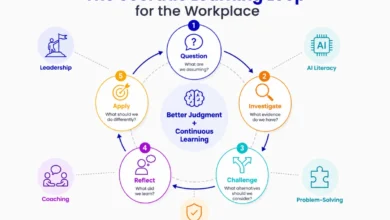
Leadership is a continuous cycle of learning. By promoting a growth mindset, leaders can extend their development to their direct reports.
- Coaching and Mentorship: Transitioning from "boss" to "coach" involves asking guided questions rather than providing all the answers. This empowers employees to take ownership of their development.
- Feedback Loops: Training in the art of constructive feedback ensures that reflection becomes a routine practice, helping both the leader and the team identify and act on areas for improvement.
The Digital Frontier: AI and Technology
The most significant shift in contemporary leadership development is the integration of digital literacy. As artificial intelligence reshapes workflows, leaders are responsible for guiding their teams through these transitions.
- AI Proficiency: Leaders do not need to be engineers, but they must understand the capabilities and limitations of AI tools to optimize productivity and innovation within their departments.
- Digital Literacy and Enablement: This involves the strategic selection and implementation of technologies. Leaders must ensure that digital tools serve the human element of work, rather than complicating it. According to industry surveys, 65% of HR managers identify digital literacy as a primary requirement for future leadership, yet a significant gap exists in current training programs.
Implementing Effective Training Delivery
Knowledge acquisition is only the first step. To ensure that training results in lasting behavioral change, organizations must adopt a multifaceted delivery strategy.
1. Gap Analysis: Utilizing specialized training software allows organizations to map individual skill gaps against organizational objectives. This personalized approach ensures that training is relevant and cost-effective.
2. Blended Learning: A combination of formal, structured courses and informal, peer-to-peer learning—such as mentorship programs—reinforces key concepts. Practical application is essential; as industry experts note, leadership is learned through doing.
3. AI-Driven Personalization: Adaptive learning platforms can now customize content based on a leader’s individual performance data and learning style, providing real-time feedback that accelerates the learning curve.
4. Continuous Exposure: Training should not be a one-time event. Whether through workshops, simulation-based training, or ongoing executive coaching, leaders require consistent exposure to new concepts to maintain their effectiveness in a changing environment.
The Bottom Line: Impact Through Capability
The consensus among leadership development experts is clear: the most effective training programs focus on building broad capabilities rather than teaching discrete, isolated skills. While the digital landscape will continue to evolve, the human element—the ability to inspire, connect, and guide—remains the most valuable asset in any organization.
By blending the "classic" soft skills of empathy and integrity with the modern necessities of digital literacy and strategic agility, organizations can cultivate a leadership pipeline that is both stable and innovative. Investing in these 20 topics is not just a defensive measure against turnover or mismanagement; it is an offensive strategy designed to drive growth, foster an inclusive culture, and secure a competitive advantage in an increasingly complex business world. As the reliance on technology grows, the leaders who can effectively humanize the workplace while leveraging technological efficiency will be the ones to define the future of business.