For the better part of three decades, the corporate journey toward data-driven decision-making has been defined by a rigid, often cumbersome architecture. Managers seeking insight were forced into a binary role: either they possessed the technical proficiency to navigate complex SQL databases and intricate visualization dashboards, or they were relegated to the "waiting room," queuing behind a backlog of professional data analysts. This structural bottleneck meant that business intelligence was rarely "real-time," as the translation from a human business question to a machine-readable query often took days or even weeks.
Today, that paradigm is undergoing a fundamental transformation. The emergence of natural language query (NLQ) and conversational analytics represents the most significant shift in business intelligence since the transition from static spreadsheets to interactive dashboards. By allowing users to interact with enterprise data using plain, conversational English, these tools effectively remove the "syntax tax" that previously hindered non-technical staff. However, as this barrier dissolves, a new, more nuanced challenge has emerged: the risk of "confident illiteracy," where the ease of access to information outpaces the human capacity to interpret it accurately.
The Evolution of the Analytics Interface
To understand the current shift, one must look at the chronology of analytics. In the 1990s and early 2000s, data was the domain of IT departments, accessed primarily through static, periodic reporting. The mid-2000s saw the rise of the "Self-Service BI" movement, popularized by tools like Tableau and Qlik, which promised to democratize data by putting visualization tools into the hands of business users. While this allowed for more aesthetic reporting, it did not solve the fundamental technical barrier; users still had to understand data modeling, join logic, and dimension filtering.
By 2020, the integration of Large Language Models (LLMs) into analytics platforms began to change the landscape. By 2026, the technology had matured to the point where "conversational analytics"—the ability to have a back-and-forth dialogue with a database—became a standard expectation for enterprise software. According to industry analysis, this transition represents a move from "Data Retrieval" (finding a pre-built chart) to "Data Inquiry" (generating a specific answer to a unique problem).
Supporting Data and the Market Shift
The appetite for this change is not merely anecdotal; it is quantified by extensive market research. Salesforce’s 2026 data and analytics report highlights a startling consensus among leadership: 93% of business executives stated that their decision-making speed and quality would improve significantly if they could bypass technical intermediaries.
Yet, the same report reveals a troubling friction point. Approximately 63% of data and analytics leaders acknowledge that the translation process—the act of a human analyst converting a business problem into a technical query—is the single most common source of error in the reporting lifecycle. Misinterpretation of business intent during the translation phase leads to skewed reports, missed KPIs, and, ultimately, poor strategic choices.
Despite the enthusiasm for conversational tools, a significant "literacy gap" persists. DataCamp’s 2026 research indicates that while 88% of enterprise leaders emphasize the importance of data literacy, only 42% of organizations have implemented foundational training programs at scale. This creates a dangerous scenario: a workforce equipped with high-powered, plain-language tools but lacking the critical thinking skills to validate the output they receive.
The Dangers of Fluent Misinformation
The primary danger of conversational analytics is the "illusion of correctness." When an AI-powered system provides a direct, grammatically perfect, and authoritative-sounding answer to a user’s query, the user is cognitively primed to accept that answer as objective truth.
Consider the "Sales vs. Revenue" trap. A manager asks, "What were our sales for the last quarter?" The system, programmed to return "bookings" data, delivers a figure. The manager, assuming "sales" means "net recognized revenue," makes a staffing decision based on that number. The system was technically correct in its retrieval but contextually misleading. Because the answer was delivered in a fluent, conversational tone, the manager is less likely to question the methodology than they would be if they were looking at a complex, manually built report that required an analyst to explain the data lineage.
This phenomenon has led to a shift in how experts define "data literacy." It is no longer about learning the mechanics of software; it is about developing "interpretive skepticism."
Redefining the Role of L&D
For Learning and Development (L&D) leaders, the rise of conversational analytics necessitates an immediate pivot. Historically, data training programs were heavy on technical "how-to" modules—how to create a pivot table, how to write a VLOOKUP, or how to navigate a specific software interface. These skills are rapidly becoming obsolete as AI handles the mechanical heavy lifting.
Future-proof data literacy must now focus on three key pillars:
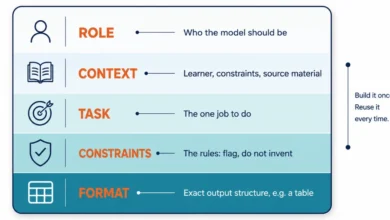
- Precision Framing: Teaching staff how to construct questions that are logically rigorous. This involves training employees to define their variables before they ask the system, ensuring that the AI understands the difference between "bookings," "net revenue," and "invoiced amount."
- Contextual Validation: Educating users on the limitations of datasets. Staff must be taught to ask, "Is this sample representative?" and "Are there outliers that are skewing this average?"
- Calibrated Skepticism: Fostering a culture where the immediate answer is treated as a hypothesis rather than a final verdict. Employees should be trained to perform "gut-check" verification against known business trends before acting on data-driven insights.
Implications for the Future of Work
The broader implication is that the "technical barrier" has not been removed; it has been displaced. The barrier to entry was previously technical (can you use the software?); it is now cognitive (do you understand the data?).
Organizations that fail to recognize this distinction are likely to experience a surge in "confident errors." As the barrier to accessing data drops, the volume of queries will increase exponentially. Without a corresponding investment in the human ability to interrogate those results, firms may find themselves acting on an unprecedented volume of flawed information.
Industry analysts suggest that the next wave of corporate competitiveness will be defined by "Data Stewardship" rather than "Data Access." Companies like VividMinds and other innovators in the conversational space are beginning to bake guardrails into their products, such as "explainability features" that show the user how a specific answer was calculated. However, technology alone cannot replace the critical thinking required to judge the quality of the premise behind the question.
The Bottom Line
As we enter this new era, the role of the data analyst is also shifting. They are moving away from being "query jockeys" and toward being "data architects and educators." Their value will no longer be measured by how many dashboards they can build, but by how well they can curate data models that are resilient enough to handle ambiguous natural language queries without providing misleading results.
The democratization of data through conversation is a profound net positive. It allows the frontline worker to make evidence-based decisions without waiting for bureaucratic approval. Yet, this power carries a weight of responsibility. The tool is now the interface, but the thinking remains a uniquely human endeavor. For organizations aiming to thrive in this landscape, the priority is clear: stop teaching the syntax of the machine, and start teaching the art of the question. Only then can they ensure that when their data learns to talk, it is actually saying something worth hearing.