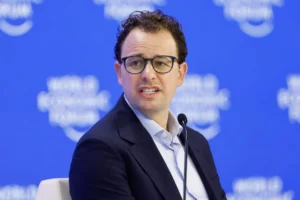
Automattic appoints Jeremy Klaperman as interim CFO following recent leadership upheaval


Automattic, the parent company behind the ubiquitous web publishing platform WordPress, has named Jeremy Klaperman as its interim Chief Financial Officer. Klaperman, who previously served as the CFO of the company’s high-profile WordPress VIP enterprise division, steps into the role during a period of intense organizational volatility. His appointment comes in the immediate wake of a dramatic boardroom challenge that saw CEO Matt Mullenweg briefly ousted, only to reclaim his position days later, triggering a wave of high-level departures that have left the company in a state of rapid restructuring.
The leadership vacuum created by the events of early September forced a cascade of personnel changes. Following his reinstatement, Mullenweg moved quickly to stabilize the company’s financial and legal operations. Klaperman is a known quantity within the Automattic ecosystem, having previously stepped in as interim CFO during a sabbatical taken by his predecessor, Mark Davies. According to internal communications shared on the company’s Slack channels, Mullenweg emphasized that while Klaperman provides necessary continuity, the board will continue a rigorous search for permanent leadership, evaluating both internal candidates and external executives to fill the role long-term.
A Timeline of the Automattic Crisis
To understand the weight of the current transition, one must examine the rapid sequence of events that unfolded in September 2026. The instability began in early September when the company’s board of directors initiated a vote to remove Mullenweg from his post as CEO. The move, which shocked the tech industry given Mullenweg’s foundational status within the WordPress ecosystem, was initially successful, placing him on a mandatory leave of absence.
During his 33-hour absence, Mark Davies, then the CFO, was elevated to the role of interim CEO. It was during this fleeting window of transition that reports emerged regarding "reciprocal severance deals." These agreements, signed between the interim leadership and the legal team, including then-Chief Legal Officer Andy Missan, were designed to secure executive exits in the event of a power struggle.
By September 12, the situation had inverted entirely. Mullenweg successfully maneuvered back into the CEO role, a shift that resulted in the immediate departure of the board members who had orchestrated the coup, as well as the exit of Davies and Missan. The company was left with a depleted C-suite and a board in need of immediate replenishment.
Strategic Shifts in Legal and Financial Oversight
The appointment of Klaperman is not the only significant personnel development occurring at the company’s San Francisco headquarters. Alongside the financial leadership transition, Mullenweg confirmed that a candidate has verbally accepted the role of Chief Legal Officer, stepping in to replace Andy Missan. This replacement is critical for Automattic, as the company manages a vast portfolio of intellectual property, open-source licensing complexities, and international regulatory requirements.
The departure of both the CFO and the CLO simultaneously—two of the most sensitive roles in any corporation—underscores the depth of the rift that occurred between the board and the executive team. Analysts observing the situation note that the speed with which Mullenweg has sought replacements suggests a desire to project stability to shareholders, enterprise clients, and the broader WordPress contributor community.

Financial Health and Corporate Governance
Despite the internal turmoil, Mullenweg has sought to reassure employees and stakeholders regarding the firm’s fiscal integrity. In a company-wide Slack message, he stated clearly: "I have 100% confidence in our cash and financial position." He added that while there is significant work ahead to stabilize the corporate structure, the company’s operational trajectory remains firmly under his control.
Automattic operates as a unique hybrid entity—a for-profit corporation that is the primary contributor to an open-source project used by roughly 43% of the web. This dual identity makes the stability of its financial management particularly important. WordPress VIP, the division formerly headed by the new interim CFO Klaperman, serves major enterprise clients including global media outlets and Fortune 500 companies. Ensuring that this unit remains well-managed is essential for the company’s revenue, as enterprise service contracts often carry the highest margins.
As the company looks toward its next board meeting on September 23, the focus remains on the appointment of new board members. While specific names have not yet been disclosed, the company has confirmed that Stephen Wolfram, the founder of Wolfram|Alpha and a longtime special advisor to the company, will remain in his position, providing a degree of institutional memory and external credibility to the board’s deliberations.
Implications for the WordPress Ecosystem
The broader implications of these events are significant. Automattic’s governance structure has long been a subject of interest due to its concentrated power. The attempted ouster highlighted potential friction points between a visionary founder and a board focused on traditional corporate governance metrics.
Market analysts suggest that the company’s ability to execute its product roadmap—which includes heavy investment in artificial intelligence and enterprise-grade hosting—depends entirely on how quickly the new board can coalesce and how effectively the new executive team integrates. The departure of individuals who signed "reciprocal severance deals" during the crisis suggests that the company is moving toward a culture of tighter loyalty to the CEO’s vision, potentially reducing future friction but also potentially narrowing the scope of dissent within the company’s upper echelons.
Looking Ahead: The Road to Stability
For now, the technical and business operations of Automattic appear to be functioning without interruption. WordPress updates continue to be pushed, and the WordPress VIP enterprise division continues to service its clients. However, the internal culture at Automattic, which is known for its remote-first and highly autonomous nature, will likely be subject to significant shifts as the new leadership team settles in.
The "stay tuned" directive issued by Mullenweg regarding future board announcements indicates that the structural overhaul is not yet complete. The company is currently in a transition phase, moving from a period of existential challenge back to its core operational objectives. The success of the next few months will hinge on three factors:
- Board Composition: The ability to recruit board members who can provide both oversight and strategic guidance without reigniting the internal friction that led to the September crisis.
- Executive Retention: Maintaining the morale and focus of the mid-level management and engineering teams who have had to navigate a week of extreme uncertainty.
- External Confidence: Assuring the thousands of enterprise customers who rely on Automattic’s infrastructure that the company’s management team is secure and that its long-term financial health is not in jeopardy.
As September 23 approaches, the tech world will be watching closely to see if the company can finalize its leadership team and move past the most significant governance crisis in its history. For Jeremy Klaperman, the task is clear: provide the financial clarity required to satisfy both the board and the market, while helping steer the company through its most challenging chapter to date. The rapid appointment of a familiar internal face like Klaperman is a tactical move designed to minimize "downtime" in financial decision-making, a luxury the company could not afford given the recent exit of its previous financial leadership. With the legal, financial, and board-level components of the company in flux, the coming weeks will define the future trajectory of one of the internet’s most influential organizations.
Related posts: