The $40,000 Semester on a Vermont Farm: How Elite High Schoolers Are Trading Screens for Manure and Ivy League Ambitions

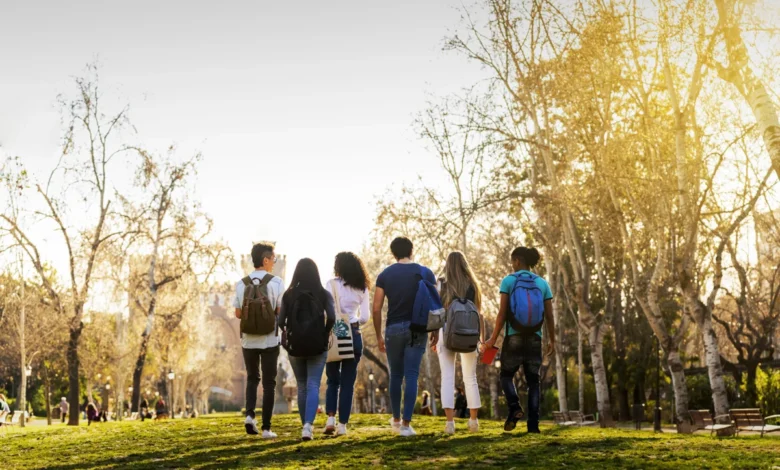
For high school students across the United States, a typical academic semester involves crowded hallways, glowing smartphone screens, standardized testing preparation, and the relentless pressure of the modern college admissions race. However, for a select group of teenagers who make their way to Vershire, Vermont, each year, the traditional high school experience is temporarily replaced by a radically different environment: a 418-acre working farm where algebra equations are balanced with weeding vegetable gardens, and Advanced Placement calculus is paired with tending to livestock.
At the Mountain School, operated by the prestigious Milton Academy, students pay a steep tuition of roughly $40,000 for a single semester to immerse themselves in manual labor, communal living, and an off-the-grid lifestyle. While the promise of a digital detox and a reconnection with nature attracts many families, the underlying motivations often extend far beyond agrarian idealism. In an era where Ivy League admissions rates hover in the single digits, students and their parents view this rustic detour as a high-stakes strategy to stand out in an increasingly homogenized applicant pool.
The appeal of this unique educational model highlights a fascinating paradox in contemporary elite education: affluent families are willing to pay top-dollar prices to teach their children basic domestic labor, hoping that a semester of chopping wood, herding sheep, and cleaning composting toilets will ultimately translate into corporate boardrooms and elite university acceptance letters.
A Day in the Life: Hard Labor and High-End Academics
The daily routine at the Mountain School bears little resemblance to standard secondary education. Students awaken early to tackle a rigorous roster of physical chores before their academic classes even begin. Responsibilities across the sprawling campus include washing mountains of dishes, scrubbing classrooms, preparing harvested vegetables in the communal kitchen, and maintaining complex irrigation systems. Out in the fields, teenagers harvest corn, care for dairy cows, herd sheep, and chop firewood to heat campus buildings through harsh Vermont winters.
Despite the intensity of the manual labor, the academic standards remain uncompromisingly high. The curriculum blends traditional college-preparatory coursework—such as AP Calculus, physics, and literature—with interdisciplinary environmental science and hands-on vocational projects often referred to by staff as "creative handiwork." Approximately 30% of the student body receives financial aid, allowing a more socioeconomically diverse group of participants to experience the program, though the student demographic remains largely composed of high-achieving teenagers from well-resourced backgrounds.
For many participants, the transition from urban or suburban comfort to farm life is jarring. Alex Myers, the director of the Mountain School, noted in interviews that some incoming students arrive entirely unequipped with basic domestic skills. He has frequently observed teenagers attempting to sweep floors without allowing the broom bristles to touch the ground—a testament to backgrounds where domestic chores are typically outsourced to professional cleaning staff.
Yet, students quickly adapt. Max Sherman, a student participant, shared with reporters that he genuinely enjoys dish duty, while humorous campus notices highlight the less glamorous realities of communal life, such as weeks spent managing the school’s composting toilets. Other students recount humbling lessons in accountability; Estela, a student from Buenos Aires aiming for admission to a top-tier U.S. university, recalled a harsh lesson in responsibility after arriving hours late to feed the school’s piglets, leaving the hungry animals waiting. "I’m going to be a lot more careful to not make that mistake again," she remarked, acknowledging the profound developmental impact of real-world consequences.
The Evolution of the Semester-Away Educational Model
The Mountain School did not invent alternative education, but it played a pioneering role in establishing the modern "semester-away" model for high school juniors. Founded in the 1980s, the institution was designed to offer young adults a transitional space between childhood and higher education—one that emphasized self-reliance, environmental stewardship, and community responsibility.
Over the past four decades, the success of the Mountain School has inspired a wave of similar experiential education programs across the globe, each carrying substantial tuition price tags that mirror elite private boarding schools. Among them is the Island School in the Bahamas, where students focus on marine biology, oceanography, and tropical sustainability through intensive scuba diving and field research. Another prominent counterpart is the Alzar School in Cascade, Idaho, which splits its academic terms between the Rocky Mountains and Chilean Patagonia, incorporating whitewater kayaking and international expedition leadership into standard high school curricula.
These programs share a common philosophy: that adolescent development is severely stunted by hyper-connected, sedentary, indoor lifestyles. By placing teenagers in high-responsibility environments where their daily actions directly impact the survival and well-being of a community or ecosystem, these schools aim to foster resilience, emotional maturity, and leadership capacity in ways that traditional classrooms cannot replicate.
The College Admissions Calculus: Standing Out in a Sea of Sameness
While the rhetoric surrounding semester-away schools heavily emphasizes personal growth, environmental consciousness, and character building, the underlying economics and motivations of participating families are deeply intertwined with the hyper-competitive college admissions landscape.
In an academic environment where thousands of applicants graduate with identical grade point averages, unweighted 4.0 GPAs, perfect SAT scores, and identical rosters of traditional extracurricular activities, elite universities are constantly searching for differentiators. Admissions officers are increasingly skeptical of resume padding—the manufactured participation in dozens of clubs solely for the sake of college applications.
Programs like the Mountain School offer a compelling narrative that cuts through the noise. According to school leadership, spending a semester mending fences, managing a farm, and living communally sends a powerful, unambiguous signal to admissions committees at institutions like Harvard, Yale, Princeton, and UC Berkeley. It demonstrates that a student is willing to step radically outside their comfort zone, embrace discomfort, perform manual labor without complaint, and engage in genuine self-reflection.
Thomas Whitney, an alumnus of the Mountain School whose own daughter recently attended, noted that the experience serves as an accelerated course in adulthood. For his daughter Estela, the program offered a calculated strategic advantage. "I have good enough grades to get into a good college, but I want something that’ll make me stand out," she openly admitted.
The school’s admissions office actively leverages this track record. Promotional materials and social media highlights frequently feature the impressive college placement outcomes of its alumni, showcasing acceptances to the nation’s most selective universities. Leland Whitehouse, the Mountain School’s admissions director and a proud alumnus himself, emphasizes that the institution’s institutional credibility with university admissions departments remains exceptionally strong.
From Farm Chores to Corporate Boardrooms: The Broader Implications
The journey from shoveling manure in rural Vermont to securing a high-powered corporate career might appear circuitous, but educational analysts and institutional directors note a direct through-line. Milton Academy, the elite Massachusetts-based independent preparatory school that owns the Mountain School, has long served as a primary pipeline to America’s financial and political ruling classes.
Interestingly, the grit, independence, and resilience cultivated on a working farm translate seamlessly into the aggressive corporate environments that many Mountain School graduates eventually enter. School director Alex Myers points out that alumni are notably overrepresented in high-stakes financial sectors, citing a particularly strong presence among recruitment pipelines at elite Wall Street institutions such as Goldman Sachs.
This phenomenon underscores a broader cultural shift among the ultra-wealthy and upper-middle classes. Rather than protecting children from physical labor and discomfort, sophisticated parents increasingly recognize that manufactured adversity builds psychological resilience. In an automated world increasingly dominated by artificial intelligence and digital abstraction, the ability to work with one’s hands, solve physical problems collaboratively, and manage real-world responsibilities has become a luxury commodity.
Ultimately, the $40,000 semester at the Mountain School represents much more than a nostalgic retreat to simpler times or a clever trick for college applications. It is a calculated, high-end intervention in modern youth development—one that trades pixels for pasture, and isolation for community, while maintaining a sharp focus on the ultimate prize of elite institutional success. Whether these teenagers are learning to clean composting toilets or mastering AP calculus beneath the Green Mountain sky, they are participating in a carefully curated rite of passage designed to yield dividends long after the Vermont mud has been washed from their boots.