The Great Decoupling: How Three Decades of Shifting Labor Dynamics and AI Are Reshaping the Modern Workforce


The modern employment landscape is undergoing a profound structural transformation, characterized by a steady erosion of institutional trust, an increasing reliance on self-directed career management, and the rapid integration of artificial intelligence into corporate operations. For nearly thirty years, workplace trends have oscillated through various iterations—ranging from digital transformation and diversity initiatives to remote work models. However, beneath these cyclical themes lies a deeper, more permanent shift: the steady decoupling of workers from traditional employers.
This evolution has fundamentally altered the psychological and economic contract between organizations and their employees, creating an environment where stability is increasingly rare and workforce optimization often takes precedence over human capital investment.
Chronology of Labor: The Shift Toward an Ownership Economy
The roots of the modern employment relationship trace back to policy and economic shifts that began in the late 1970s and 1980s. During this period, the traditional corporate social contract—which often promised lifetime employment and defined-benefit pensions in exchange for corporate loyalty—began to unravel.
Throughout the 1990s and 2000s, legislative and economic pressures accelerated the transition toward what policymakers termed an "ownership economy." This model shifted structural risks away from corporations and onto individual workers. Traditional pension plans were largely replaced by defined-contribution accounts such as 401(k)s, while corporate health care and family leave structures increasingly incorporated higher cost-sharing burdens for employees. Concurrently, globalization initiatives and trade agreements such as NAFTA facilitated the outsourcing of stable manufacturing and administrative jobs, fundamentally altering the longevity of firms. Data from the S&P 500 illustrates this volatility: while corporations in the 1970s and 1980s maintained an average tenure of 12 to 13 years on the index, contemporary firms average just 4 to 5 years before facing disruption from global competition and technological shifts.

Declining Institutional Trust and the Erosion of Job Security
As corporate priorities shifted toward agility and shareholder value, institutional trust experienced a corresponding decline. Longitudinal studies conducted by organizations such as Pew Research and the Edelman Trust Barometer indicate a multi-decade downward trend in trust between workers and corporate leadership.
Data from PwC’s annual workforce surveys highlights a widening gap, revealing that overall employee trust in employers hovers near 67 percent, with front-line workers—who comprise nearly 72 percent of the global labor force—reporting significantly lower confidence. Trust in executive leadership specifically has faced severe contractions, dropping from approximately 25 percent in 2019 to under 20 percent in subsequent years. While the initial phases of the COVID-19 pandemic saw a temporary spike in worker reliance on corporate leadership, subsequent waves of corporate downsizing, often announced via automated digital notifications rather than direct engagement, have severely damaged employee sentiment.
Concurrently, the frequency of job displacement has risen. Economic research indicates that the average American worker experiences approximately 2.5 layoffs over the course of a career, a figure that has more than doubled over the past thirty years. This persistent job insecurity has driven a significant portion of the workforce toward alternative employment models, with over 65 percent of workers currently maintaining side-hustles or supplemental freelance ventures as a hedge against economic volatility.
Wage Stagnation and Purchasing Power Disparities
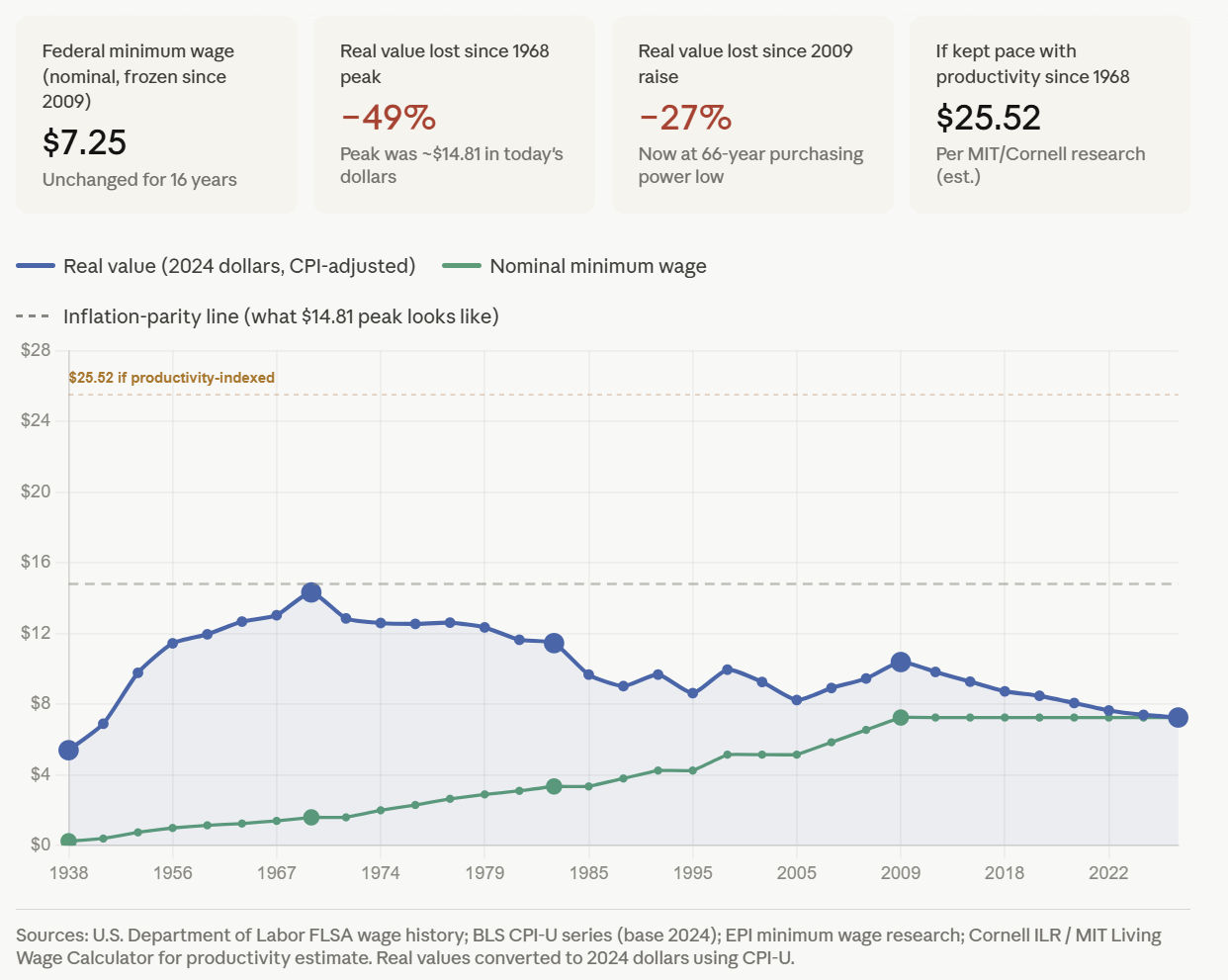
The economic reality for the American worker over the past six decades reflects a persistent divergence between wage growth and inflation. Historical economic data indicates that while wages comfortably outpaced inflation during the 1960s and early 1970s, subsequent inflationary shocks marked the beginning of a prolonged stagnation period.
Different segments of the workforce have experienced this divergence in distinct ways. Workers with high school diplomas or lower wage brackets fell behind rapidly during the economic restructuring of the 1980s. Meanwhile, college-educated workers began experiencing wage plateaus relative to inflation in the late 1990s, and even advanced-degree holders have faced diminishing real-wage growth following the economic disruptions of 2020. Furthermore, the federal minimum wage has remained frozen at $7.25 per hour since July 2009—marking the longest period in United States history without a statutory adjustment and resulting in a loss of nearly half its historical purchasing power.
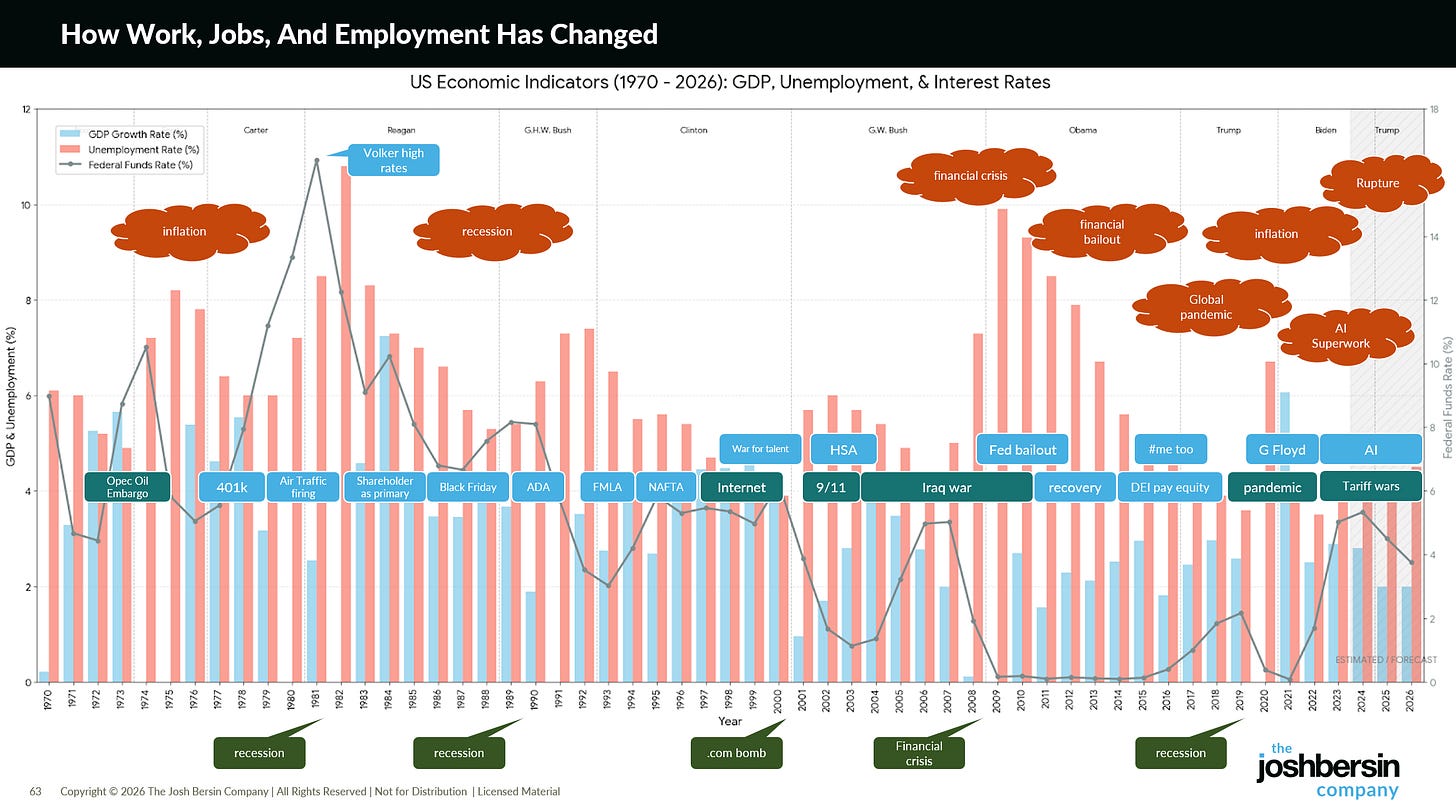
This persistent gap between compensation and the cost of living has contributed to historically low measures of consumer economic sentiment, even during periods of broader GDP expansion.
The Role of Artificial Intelligence and Modern Workforce Management
As artificial intelligence systems transition from experimental technologies to core operational tools, concerns regarding workforce displacement have intensified. Executive leadership frequently positions AI adoption as a primary driver of operational productivity. However, this messaging has amplified anxiety among administrative, analytical, and professional tiers of the workforce.
Human resources and organizational behavior experts note that modern corporate accounting standards continue to treat labor strictly as a variable expense rather than a long-term capital investment. When organizations face margin pressures, reductions in headcount frequently yield immediate, short-term increases in stock valuation, reinforcing the perception among financial markets that workforce reduction is an effective efficiency lever. Consequently, many organizations engage in cycles of aggressive hiring followed by abrupt downsizing, which institutional researchers argue erodes organizational knowledge, damages internal culture, and deepens systemic distrust.
Implications and Strategic Adaptations for Organizations
The structural divergence between employers and employees presents distinct challenges for enterprise leadership, policymakers, and educational institutions. Analysts suggest that addressing the underlying frictions of the modern labor market requires a multi-faceted approach focused on foundational capabilities rather than temporary economic fixes.
1. Educational Literacy and Workforce Readiness
With the proliferation of automated systems and advanced language models in the workplace, basic literacy and cognitive adaptability have become critical competencies. Labor market studies indicate that a substantial percentage of the adult population struggles with advanced reading proficiency required for synthesizing complex texts, multi-step policy instructions, and dense digital documentation. Experts emphasize that sustainable workforce resilience depends heavily on primary and secondary educational reforms that cultivate critical thinking, historical context, and complex problem-solving skills, rather than narrow technical training alone.
2. Long-Term Human Capital Strategy
While many technology-sector startups and high-growth enterprises operate on rapid headcount churn models, enduring multi-industry corporations—spanning energy, hospitality, and manufacturing—demonstrate that long-term enterprise value is closely tied to workforce stability. Organizations that prioritize internal mobility, continuous reskilling programs, and measured workforce planning tend to mitigate the hidden costs of constant recruitment and institutional brain drain.
3. Redefining Corporate Responsibility
As the employment relationship continues to evolve past traditional boundaries, sustainable organizational success increasingly relies on treating human capital as an appreciating asset. Leadership strategies that actively involve existing employees in technological integration and operational reinvention are better positioned to navigate the economic and technological transitions of the post-AI era.