Scenario-Based Learning: How To Create Decision-Driven Training With Branching

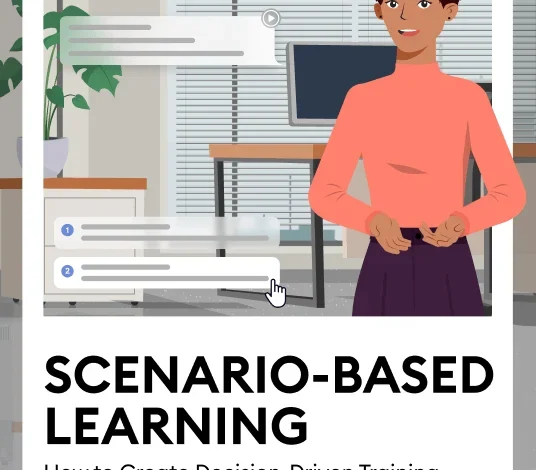
The modern corporate training landscape is undergoing a significant paradigm shift, moving away from passive information consumption toward active, decision-based experiential learning. On September 9, 2026, iSpring Solutions officially launched a new educational resource titled "Scenario-Based Learning: How To Create Decision-Driven Training With Branching," aimed at instructional designers and L&D (Learning and Development) professionals seeking to bridge the gap between theoretical knowledge and practical application.
This release comes at a critical juncture in the professional development sector. As artificial intelligence and automation continue to reshape job roles, the demand for "human-centric" soft skills—such as critical thinking, nuanced communication, and rapid problem-solving—has reached an all-time high. The new eBook serves as a practical manual for creating simulations that mimic the complexity of the modern workplace, allowing employees to experience the consequences of their actions in a risk-free environment.
The Evolution of Instructional Design
Traditional e-learning modules have long been criticized for their reliance on linear presentation—often limited to reading slides followed by simple multiple-choice quizzes. While efficient for compliance training, this model frequently fails to foster the deep cognitive engagement required for complex decision-making.
Research indicates that adults learn most effectively when they are presented with "ill-structured problems"—tasks that lack a single, obvious solution and require the learner to synthesize information to reach a conclusion. Scenario-based learning (SBL) addresses this by placing the learner in a role where they must navigate a series of interconnected events. By integrating branching, where a learner’s choice leads to a unique, consequential path, designers can create a non-linear narrative that forces users to take ownership of their professional judgment.
A Chronology of the Shift Toward Experiential Training
The trajectory of this training methodology has been marked by several key developments over the last decade:
![Scenario-Based Learning: How To Create Decision-Driven Training With Branching [eBook Launch]](https://cdn.elearningindustry.com/wp-content/uploads/2026/09/shutterstock_2637057583.jpg)
- 2016–2018: The Rise of Gamification. Early attempts to improve engagement saw the introduction of leaderboards and badges. While successful in increasing participation, these tools often did not improve the quality of decision-making.
- 2019–2021: The Remote Transition. With the global shift to hybrid and remote work, organizations struggled to replicate the "mentorship on the fly" that happens in physical offices. Digital simulations became a primary tool to replace in-person shadowing.
- 2022–2025: The Demand for Soft Skills. As AI became proficient at technical and rote tasks, corporate focus shifted heavily toward high-level interpersonal and strategic judgment, necessitating more sophisticated training tools.
- 2026: The Maturity of Branching Logic. The current industry standard has moved toward "manageable branching," where the complexity of the training is balanced against the development time, moving away from overly convoluted decision trees that previously hindered production.
Data-Driven Insights: Why Branching Matters
The efficacy of branching scenarios is supported by established pedagogical theories, most notably the "experiential learning cycle" proposed by David Kolb. According to this model, learners must engage in concrete experience, reflective observation, abstract conceptualization, and active experimentation.
Supporting data from recent industry surveys suggests that when training incorporates interactive scenarios, knowledge retention rates increase by as much as 60% compared to traditional video-based training. Furthermore, learners who participate in branching simulations report a higher degree of "self-efficacy"—the belief in one’s ability to succeed in a specific situation—because they have already "practiced" the decision-making process in a safe, simulated environment.
iSpring Solutions’ recent publication addresses a common bottleneck in this field: the high cost of production. Many organizations abandon scenario-based projects because they perceive them as requiring expert programming skills or massive development timelines. The eBook refutes this, providing a framework for creating high-impact scenarios that remain lean and scalable, ensuring that even smaller L&D teams can implement them without significant overhead.
Addressing the Complexity Gap
One of the central challenges identified by L&D professionals is the temptation to over-engineer simulations. A common pitfall in early branching design was the "spaghetti model," where developers created hundreds of permutations that were impossible to track or update. The new guide advocates for a "focused branching" approach, where the narrative path is intentionally limited to a few key decision points that teach the most critical lessons.
By narrowing the scope of the scenario, developers can ensure that the training is:
- Authentic: It reflects actual dilemmas faced by employees in their specific roles.
- Manageable: It avoids unnecessary technical complexity that adds no pedagogical value.
- Actionable: It provides immediate feedback, allowing the learner to understand why a particular decision led to a specific outcome.
Official Perspectives and Industry Implications
While iSpring Solutions has not released a specific statement regarding the launch, the timing of the release aligns with their broader corporate strategy of empowering non-technical users to create high-end training content. By providing a structured methodology for scenario design, they are effectively lowering the barrier to entry for high-quality corporate education.
![Scenario-Based Learning: How To Create Decision-Driven Training With Branching [eBook Launch]](https://cdn.elearningindustry.com/wp-content/uploads/2026/09/shutterstock_2637057583-768x431.jpg)
The implications of this move are significant for the broader e-learning market. As organizations tighten their training budgets in response to economic fluctuations, the ability to produce high-impact, cost-effective training is becoming a competitive advantage. Companies that transition from "read-and-click" training to "decision-driven" training are likely to see improvements in employee performance metrics, including reduced error rates in high-stakes roles and faster onboarding times for new hires.
Broader Impact on Workforce Development
The shift toward decision-driven training is not merely a trend in instructional design; it is a fundamental adaptation to the changing nature of work. As AI systems continue to provide workers with more data, the value of the human worker will reside increasingly in their ability to interpret that data and make sound, ethical, and strategic decisions.
Training platforms that prioritize branching scenarios help cultivate this capability by creating a "laboratory for mistakes." When a learner makes a wrong choice in a simulation, the cost is minimal. In the workplace, however, that same mistake could be catastrophic. By providing a safe space to fail, organizations are essentially building the "muscle memory" required for high-pressure decision-making.
The release of this eBook arrives at a time when the "skills gap" is a primary concern for HR departments globally. The ability to articulate, design, and deploy scenario-based training is quickly becoming a core competency for the next generation of L&D leaders. By democratizing the knowledge required to build these tools, iSpring Solutions is providing a roadmap for organizations to modernize their training infrastructure.
Conclusion
The release of "Scenario-Based Learning: How To Create Decision-Driven Training With Branching" represents a move toward more pragmatic, results-oriented training methodologies. By focusing on the intersection of authentic storytelling and structured decision-making, the guide offers a clear path for professionals to improve the efficacy of their learning programs.
As the workforce continues to evolve, the ability to practice critical judgment in a digital, low-risk environment will likely become a staple of corporate life. Whether for leadership development, compliance training, or customer service simulations, the principles outlined in this new resource provide the foundation necessary to move beyond simple information delivery and toward the cultivation of true professional expertise. For those in the L&D field, the focus is clear: the future of training is not just about what employees know, but how effectively they can apply that knowledge when faced with the ambiguity of the real world.