Three Things Every Job-Hunter Has To Prove

The modern recruitment landscape is currently defined by a stark dichotomy between the cold efficiency of algorithmic screening and the subjective, intuition-based decision-making of human management. While the initial stages of the corporate hiring pipeline have become increasingly automated through Applicant Tracking Systems (ATS), industry experts and career strategists suggest that the final hiring decision remains a deeply human endeavor rooted in trust and problem-solving rather than a mere tally of technical credentials. This shift in perspective highlights a critical misunderstanding among many job seekers who approach the market as if they are appealing to a machine, failing to recognize that the primary motivation for any hiring manager is the alleviation of "business pain."
The Automation Paradox and the Rise of the ATS
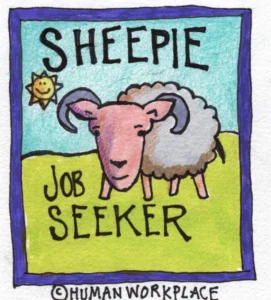
In the current labor market, the vast majority of Fortune 500 companies—approximately 99%—utilize some form of Applicant Tracking System to manage the influx of digital applications. These systems are designed to filter candidates based on specific keywords, years of experience, and educational requirements. According to data from various talent acquisition platforms, nearly 75% of resumes are discarded by these automated filters before they ever reach a human recruiter. This high level of automation has created a "Sheepie" culture among job seekers, characterized by an over-reliance on matching job descriptions word-for-word and a tendency to present oneself as a flexible, albeit personality-free, resource.
However, recruitment analysts point out that while the ATS serves as the "gatekeeper," it is not the "decision-maker." The automation phase is merely a bureaucratic necessity intended to reduce a massive pool of applicants to a manageable number for human review. Once a candidate moves past the digital screening, the formal qualifications listed in the original job advertisement often recede into the background. At this stage, the hiring manager’s "gut feeling"—a sophisticated psychological response to a candidate’s perceived competence and reliability—becomes the dominant factor in the selection process.
The Chronology of a Hiring Crisis: A Case Study in Business Pain
To understand the mechanics of human-centric hiring, one must examine the typical lifecycle of a job opening. Hiring is rarely a proactive luxury; it is almost always a reactive necessity. A common scenario involves the departure of a long-term, essential employee—referred to in industry circles as the "Sally" effect.
- The Vacancy Phase: An essential staff member retires or resigns. In an effort to maintain lean operations or reduce overhead, management often attempts to distribute the workload among remaining staff rather than hiring an immediate replacement.
- The Degradation Phase: Over a period of several months, the experiment in "doing more with less" begins to fail. Productivity drops, error rates increase, and the remaining team faces burnout. This creates what is known as "Business Pain."
- The Recognition Phase: The manager realizes that the cost of the vacancy far outweighs the cost of a new salary. The vacancy is no longer a line item on a budget but a structural threat to the department’s functionality.
- The Recruitment Phase: A job ad is drafted. Often, the requirements listed are arbitrary or "made up on the spot" to provide HR with a screening rubric. The manager is not looking for a list of certifications; they are looking for a solution to the chaos caused by the initial vacancy.
This chronology illustrates that the "essential qualifications" are frequently secondary to the manager’s primary objective: finding an individual who understands the specific challenges of the role and can "jump in" to stabilize the environment.
Supporting Data: The High Cost of the "Wrong" Hire
The insistence on finding a problem-solver rather than a "grovelly" applicant is supported by economic data regarding turnover. According to the Society for Human Resource Management (SHRM), the average cost to hire an employee is approximately $4,700, but the cost of a "bad hire" can be up to three to four times the position’s annual salary. These costs include recruitment advertising, background checks, training time, and, most significantly, the lost productivity and negative impact on team morale.

Consequently, managers are incentivized to seek candidates who exhibit high levels of self-esteem and professional autonomy. A candidate who presents themselves as a "servant" to the process—offering to "be anything the manager wants"—actually signals a lack of specialized expertise. In contrast, candidates who ask "tough questions" about the department’s specific challenges and demonstrate a consultative approach are perceived as lower-risk investments. They are seen as professionals who have "choices" in the market, which ironically makes them more attractive to employers.
Expert Perspectives and Official Responses
Talent acquisition experts argue that the traditional job interview is often misunderstood as a performance of supplication. "The purpose of the interview is not to beg for a job, but to conduct a mutual assessment of fit," states a senior recruiter from a leading global consultancy. "Managers respect candidates who respect themselves. When a job seeker is willing to ‘crawl over broken glass’ for any position, it suggests they don’t know their own value, which leads the manager to wonder if they will actually be able to solve the company’s problems."
Furthermore, behavioral psychologists specializing in workplace dynamics suggest that the "trust factor" is the most significant variable in the hiring pipeline. Much like a homeowner hiring a plumber for a burst pipe, a manager is looking for a specialist who can take command of a situation. A plumber who says, "I’ll do whatever you want, just pay me anything," inspires less confidence than one who says, "I see the leak, here is how I will fix it, and here is my rate."
Analysis of Implications: The Shift Toward Consultative Job Seeking
The implications of this shift from "credential-matching" to "pain-solving" are profound for the future of work. It suggests that the most successful job seekers of the future will be those who view themselves as independent service providers rather than subservient applicants. This requires a fundamental change in how resumes are written and how interviews are conducted.
- Resumes as Portfolios of Solutions: Instead of listing duties, successful resumes are increasingly focusing on "Challenge-Action-Result" (CAR) statements that highlight how the individual addressed specific business pains in previous roles.
- The Interview as a Discovery Session: The most effective candidates are moving away from passive answering and toward active questioning. By identifying the "broken pipe" in the manager’s department, the candidate positions themselves as the necessary tool for the repair.
- The Importance of Walking Away: A key component of this professional evolution is the willingness to reject opportunities that are not a good fit. Data suggests that candidates who are selective about their roles tend to have higher long-term retention rates and faster career progression.
Broader Impact on the Labor Market
As AI continues to permeate the initial layers of the recruitment process, the "human" portion of the hiring pipeline will likely become even more focused on soft skills, emotional intelligence, and strategic thinking. The "Sheepie" approach is becoming a liability in a market that increasingly values "human-centric" capabilities that machines cannot replicate.
The corporate world is beginning to realize that while technology can sort data, it cannot judge character or predict how an individual will handle a high-pressure department crisis. For the job seeker, this means that the "scary, out on the edge" moments of asserting one’s value and asking difficult questions are actually the most productive parts of the search.
In conclusion, the modern hiring process is a tale of two systems: an automated front end designed for exclusion and a human back end designed for problem-solving. Success in this environment requires navigating the first with technical precision and the second with human confidence. As the workforce continues to evolve, the ability to identify and address "Business Pain" will remain the most valuable currency a job seeker can possess, far outweighing the arbitrary checklists of the digital age. The faster job seekers learn to act as partners rather than subordinates, the more effectively they will navigate a market that is, at its heart, still run by people.