The Strategic Shift: Why Enterprise Marketing Teams Are Evaluating Marketo Alternatives in 2026

For over a decade, Adobe Marketo Engage has functioned as the bedrock of enterprise-level demand generation. Its reputation for managing complex, multi-touch B2B buyer journeys made it the default choice for global marketing operations teams. However, as of 2026, the landscape of marketing technology (MarTech) is undergoing a significant correction. Driven by mounting pressure to improve operational efficiency and a demand for unified data, a growing cohort of Chief Marketing Officers and RevOps leaders are questioning whether the traditional "best-of-breed" stack—centered around Marketo—is still the most effective path for revenue growth.
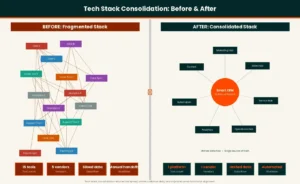
Industry data confirms this trend. Recent market studies indicate that nearly 50% of marketing organizations are now prioritizing the consolidation of their technology stacks. The primary catalyst for this shift is not necessarily a lack of feature depth in legacy platforms, but rather the rising burden of Total Cost of Ownership (TCO) and the technical debt inherent in managing fragmented systems.

The Evolution of the Marketing Automation Market
The history of marketing automation is characterized by a transition from basic email blast tools to sophisticated, CRM-integrated engines. Marketo emerged during a period when data silos were accepted as a necessary trade-off for specialized functionality. Companies built their stacks by stitching together disparate tools for CRM, email, lead scoring, and analytics, often relying on middleware to bridge the gaps.
By 2026, the industry has reached an inflection point. The complexity that was once a competitive advantage for enterprise tools has become a liability. Modern marketing teams are now tasked with proving revenue attribution with unprecedented precision. When data must travel from a marketing automation platform (MAP) through a synchronization layer and into a CRM, the potential for latency, mapping errors, and record duplication increases exponentially. For a revenue-focused organization, these delays represent not just a technical nuisance, but a direct threat to pipeline velocity.

Drivers of the Migration Wave
The decision to migrate from a long-standing system like Marketo is rarely made in isolation. It is typically the culmination of four distinct operational pressures:
-
Escalating Total Cost of Ownership: While the base licensing fee for an enterprise platform is a significant line item, the real cost is hidden. It includes the salary of dedicated Marketo-certified administrators, the cost of external consultancy retainers to manage complex deployments, and the subscription fees for necessary add-on tools. When these variables are aggregated, the annual TCO often reaches two to three times the initial sticker price.
-
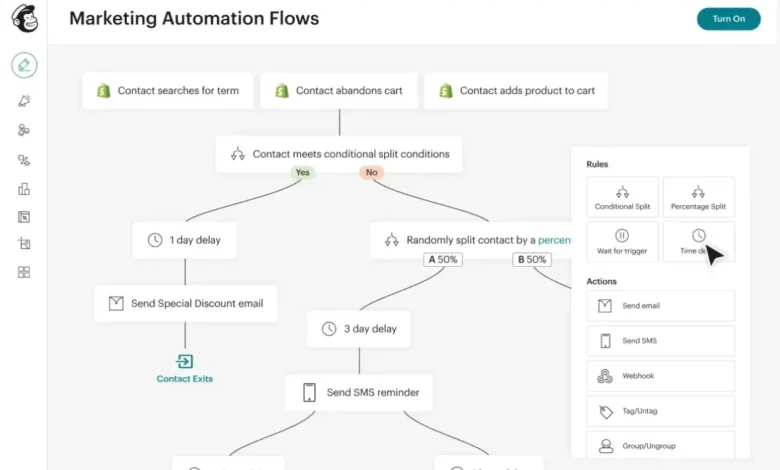
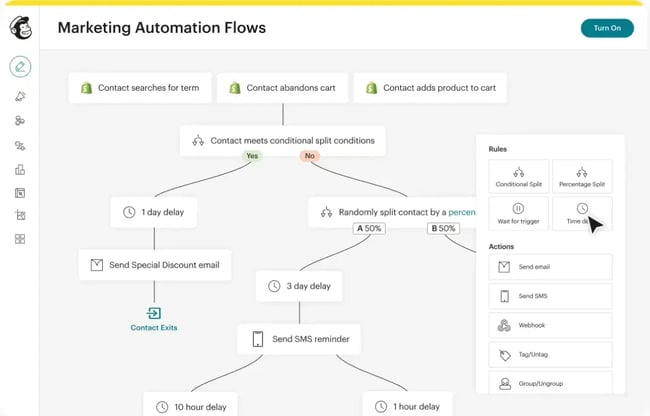
The Talent Gap and Admin Dependency: Marketo’s power is its greatest weakness; it requires a level of technical fluency that keeps many marketers dependent on IT or specialized consultants. This reliance creates a bottleneck. If a campaign requires a minor change in logic or a new segment, the marketing team often finds itself in a queue. In contrast, the market is shifting toward platforms that offer "citizen developer" capabilities—visual, drag-and-drop interfaces that empower marketers to execute complex automation without writing code.
-
The Data Unification Mandate: The divide between the marketing stack and the sales CRM is the most significant source of friction in the modern enterprise. Even with sophisticated integration, a sync is not the same as a unified data model. Organizations are finding that maintaining two separate systems of record leads to inconsistent customer profiles, which ultimately degrades the quality of the sales handoff.
-
Time-to-Value Expectations: In a high-growth environment, six-month implementation timelines are no longer sustainable. Business leaders now prioritize platforms that offer rapid onboarding, where teams can move from procurement to execution in weeks rather than quarters.
Key Alternatives and Competitive Analysis
The current market offers a spectrum of alternatives, ranging from unified platforms to niche enterprise solutions.
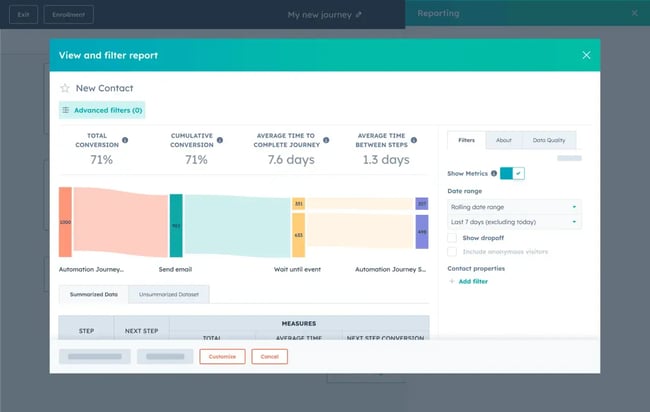
HubSpot Marketing Hub and Smart CRM represent the most significant challenge to the traditional Marketo model. By providing a unified architecture where marketing, sales, and service data share a single record, HubSpot eliminates the need for a sync layer entirely. For teams struggling with fragmented data, this architecture offers a structural solution rather than a procedural patch. Furthermore, the incorporation of AI-driven lead scoring and predictive analytics directly into the platform allows for a more agile approach to demand generation.
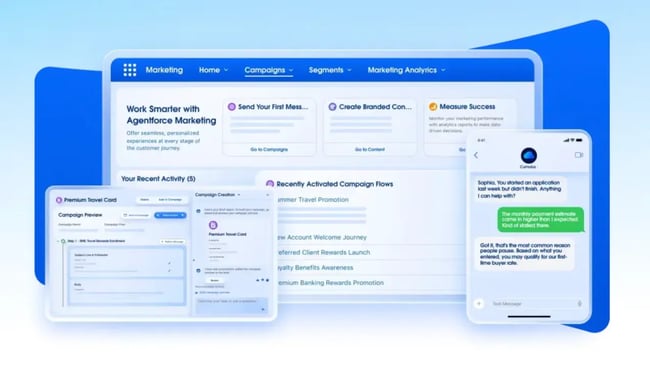
Salesforce Marketing Cloud (Pardot) remains a primary contender, particularly for organizations already deeply embedded in the Salesforce ecosystem. Its native integration provides a seamless experience for sales teams working within Salesforce. However, the limitation of this ecosystem is its relative friction when interacting with non-Salesforce components. For organizations considering a broader transformation, the "locked-in" nature of the Salesforce stack can be a strategic risk.
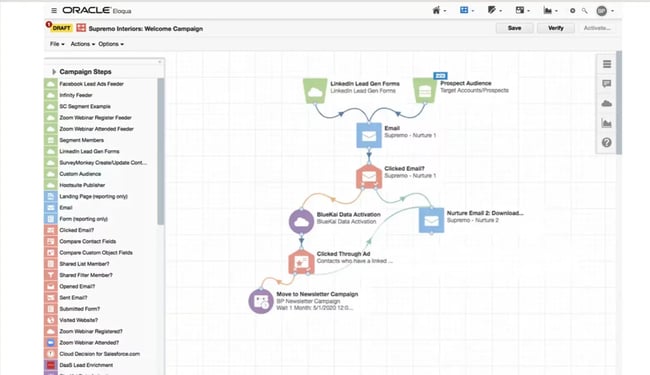
Oracle Eloqua continues to hold a strong position for the most complex global enterprises. Its robust data management and deduplication tools are tailored for large-scale operations with millions of contacts and high-volume, multi-touch requirements. However, like Marketo, it is an enterprise-heavy tool that necessitates a substantial operational budget and significant IT support, meaning it solves for scale rather than simplicity.
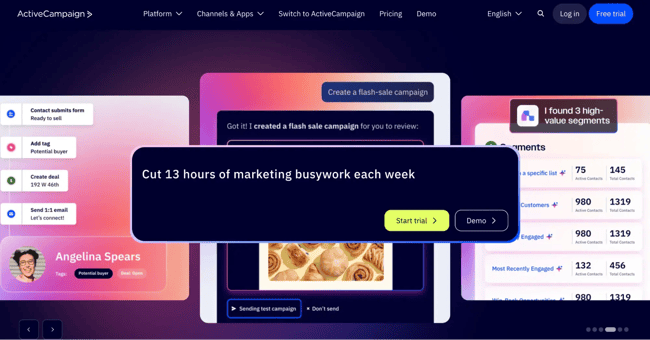
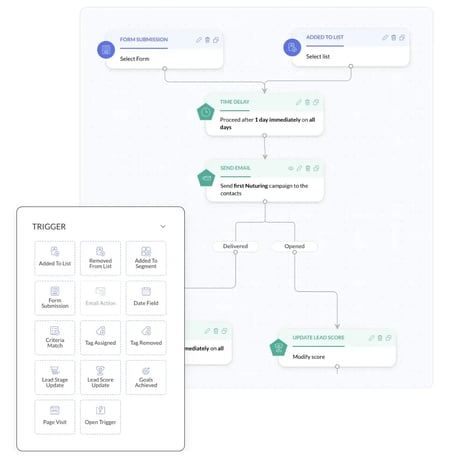
Secondary tier players, such as ActiveCampaign and Zoho, are increasingly filling the needs of the mid-market. While they may lack the enterprise-grade complexity of Marketo, they offer high-utility automation and CRM functionality that is accessible to smaller, more agile teams. The trade-off is often in the depth of multi-touch attribution and complex ABM (Account-Based Marketing) capabilities.
Strategic Considerations for Migration
A successful migration requires a departure from the "lift and shift" mentality. Industry experts suggest a phased approach to ensure business continuity:
Phase 1: The Audit. Before touching any data, teams must conduct a thorough inventory. Research shows that a vast majority of active programs in legacy MAPs have not been updated or utilized in over a year. The goal is to migrate only what is currently driving revenue.
Phase 2: Data Hygiene. Moving bad data to a new system simply creates a new, faster way to encounter the same problems. Cleaning, deduplicating, and normalizing data during the transition is a non-negotiable step.
Phase 3: Integration Mapping. Every tool that connects to the current MAP—from ad platforms and webinar providers to data enrichment services—must be accounted for. Evaluating the native integration capabilities of the new platform is essential to avoid the cost of building custom APIs.
Phase 4: Parallel Validation. Running the new system in parallel with the old one for a 30-day "burn-in" period allows teams to validate that lead routing and scoring logic are producing consistent results before the final decommissioning.
The Financial and Operational Implications
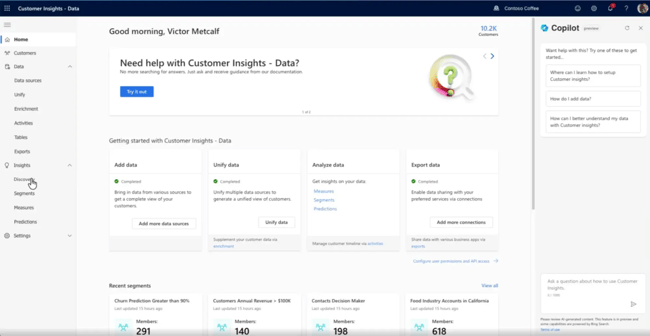
When evaluating these alternatives, financial officers are increasingly looking beyond the "per-seat" pricing. They are requesting "fully-loaded" cost projections. This includes not just the subscription fee, but the cost of the internal resources needed to manage the platform, the costs associated with potential downtime during migration, and the training investment required to bring staff up to speed.
For many firms, the shift is less about finding a "cheaper" tool and more about finding a "more efficient" one. The opportunity cost of having a high-performing marketing team spend 30% of their time managing a platform, rather than running campaigns, is a hidden drain on the bottom line that many executives are no longer willing to tolerate.
Looking Ahead
As we move further into 2026, the definition of a "standard" marketing stack is clearly in flux. The rise of AI-powered automation and the demand for real-time revenue intelligence are pushing companies toward platforms that prioritize connectivity and ease of use. While Marketo will continue to serve a specific segment of the market—namely those with the most complex, bespoke requirements—the broader trend is undeniable.
Marketing operations leaders are increasingly favoring systems that act as an extension of their team rather than a barrier to it. The decision to switch is no longer viewed as a technical upgrade, but as a strategic pivot. By prioritizing data integrity, reducing operational overhead, and choosing platforms that scale with their business goals, modern marketing organizations are positioning themselves to be more responsive, more data-driven, and ultimately, more aligned with the needs of the modern, digitally-native buyer.