The Hidden Bias of Generative AI in Professional Communication and Hiring Practices

A clear, concise, and compelling job application is a fundamental requirement for any candidate seeking to stand out in a competitive labor market. When a hiring manager can easily trace a candidate’s experience, follow the logical progression of their career, and discern their genuine motivation, the evaluation process becomes significantly more efficient. However, the rise of generative artificial intelligence has introduced a new variable into this equation: the subtle, algorithmic influence of the AI’s own linguistic preferences. Recent research from Johns Hopkins University, recently highlighted by industry reporting from HR Dive, suggests that AI models may inadvertently penalize candidates who use language patterns traditionally associated with women, producing drafts that are perceived as less sophisticated, less formal, and less authoritative.
The Mechanism of Algorithmic Bias
The core of the issue lies in how large language models (LLMs) interpret and respond to specific prompts. Researchers at Johns Hopkins conducted a series of tests across several prominent AI models, including GPT-4, Llama, Gemma, and Mistral, to determine if the "gendered" nature of a prompt influenced the output. The team introduced linguistic features frequently attributed to women—such as the use of hedges like "maybe" or "I think," the inclusive "we," and descriptors like "lovely"—into prompts for various workplace documents, including emails, job applications, and formal resignation letters.
The results were statistically significant. When prompts contained these woman-associated linguistic markers, the models generated responses that were consistently shorter, less complex, and markedly less formal. Conversely, when the prompts utilized language associated with masculine communication norms, the models responded with longer, more complex, and more formal text. Crucially, the researchers noted that this divergence persisted even after adjusting for the intended tone of the writer. This suggests that the model is not merely reflecting the user’s input but is actively mapping these linguistic cues to a specific, lower-status "persona" based on its training data.
Chronology of the Investigation
The discourse surrounding AI-driven linguistic bias has gained momentum throughout 2025 and 2026 as organizations increasingly integrate LLMs into their recruitment workflows.
- Early 2025: Human resources departments began reporting widespread adoption of AI tools to assist in drafting job descriptions, screening resumes, and even generating interview questions.
- Late 2025: Anecdotal evidence began to surface among career counselors and recruitment consultants suggesting that AI-generated cover letters often felt "generic" or "lacking in gravitas" when written by female clients compared to their male counterparts.
- September 2026: The Johns Hopkins research team formally published their findings, quantifying the gap in output quality between gendered prompt styles.
- Late 2026: Industry bodies, including HR Dive, began analyzing the implications of these findings for Equal Employment Opportunity (EEO) compliance and the potential for "automated discrimination" in the hiring process.
Understanding the "Professionalism" Trap
The primary concern for hiring managers is not necessarily that an AI is "sexist," but that the criteria used to evaluate candidates are often subjective and poorly defined. A common rubric item such as "professional communication" is deceptively simple. In practice, a recruiter might define "professionalism" as the use of elaborate, complex syntax, while another might define it as the ability to provide a clear, actionable explanation of a complex problem.
When an AI drafts an application, it makes stylistic choices based on the prompt it receives. If a candidate uses a more conversational or collaborative tone, the AI may output a document that a recruiter—operating on an outdated or biased definition of "professionalism"—marks down for lack of formal complexity. The candidate is then effectively penalized not for their actual ability to communicate, but for the interaction between their natural writing style and the model’s predictive tendencies.
Broader Implications for the Workforce
The implications of these findings extend far beyond the hiring phase. If AI-generated documents are consistently "downgraded" by automated or human reviewers, there is a tangible risk of systemic disadvantage for women in the workplace. This phenomenon creates a feedback loop: if candidates learn that they must "prompt like a man" to receive a high-quality, professional draft from an AI, they are essentially being forced to adopt a persona that is not their own, potentially leading to a homogenization of communication styles that stifles diverse perspectives.

Furthermore, the research underscores a critical lack of transparency in how these models arrive at their conclusions. Lead researcher Katherine Van Koevering has argued that the burden of addressing this bias should not fall solely on the user to "prompt engineer" their way around the issue. Instead, there is a mounting call for model developers to implement more robust safeguards to ensure that AI output is neutral, objective, and resistant to the replication of historical gender-based linguistic stereotypes.
Recommendations for Hiring Teams
To mitigate the risk of algorithmic bias, organizations must shift their evaluation strategies toward more concrete, task-oriented assessments. Relying on "overall polish" or "professional tone" is no longer a reliable metric when AI intervention is commonplace.
- Define Success by Outcome, Not Style: Rather than looking for "professionalism," recruiters should look for specific competencies. Does the candidate accurately explain a decision? Is the next step clearly defined? Is the response tailored to the reader’s needs?
- Standardize the Assessment: If writing skills are a key requirement for a role, hiring managers should provide a standard, work-relevant prompt (e.g., "Draft a response to this hypothetical customer complaint").
- Clarify AI Policy: Organizations should be explicit about their stance on AI assistance. If AI is permitted, the evaluation should focus on the candidate’s ability to refine, edit, and tailor the AI’s output to the specific needs of the task.
- Train Reviewers on Bias: Hiring teams must be trained to identify and disregard subjective, proxy-based biases. If a reviewer identifies a response as "unprofessional," they must be able to justify that assessment based on objective criteria—such as clarity, accuracy, or conciseness—rather than stylistic preference.
The Path Forward
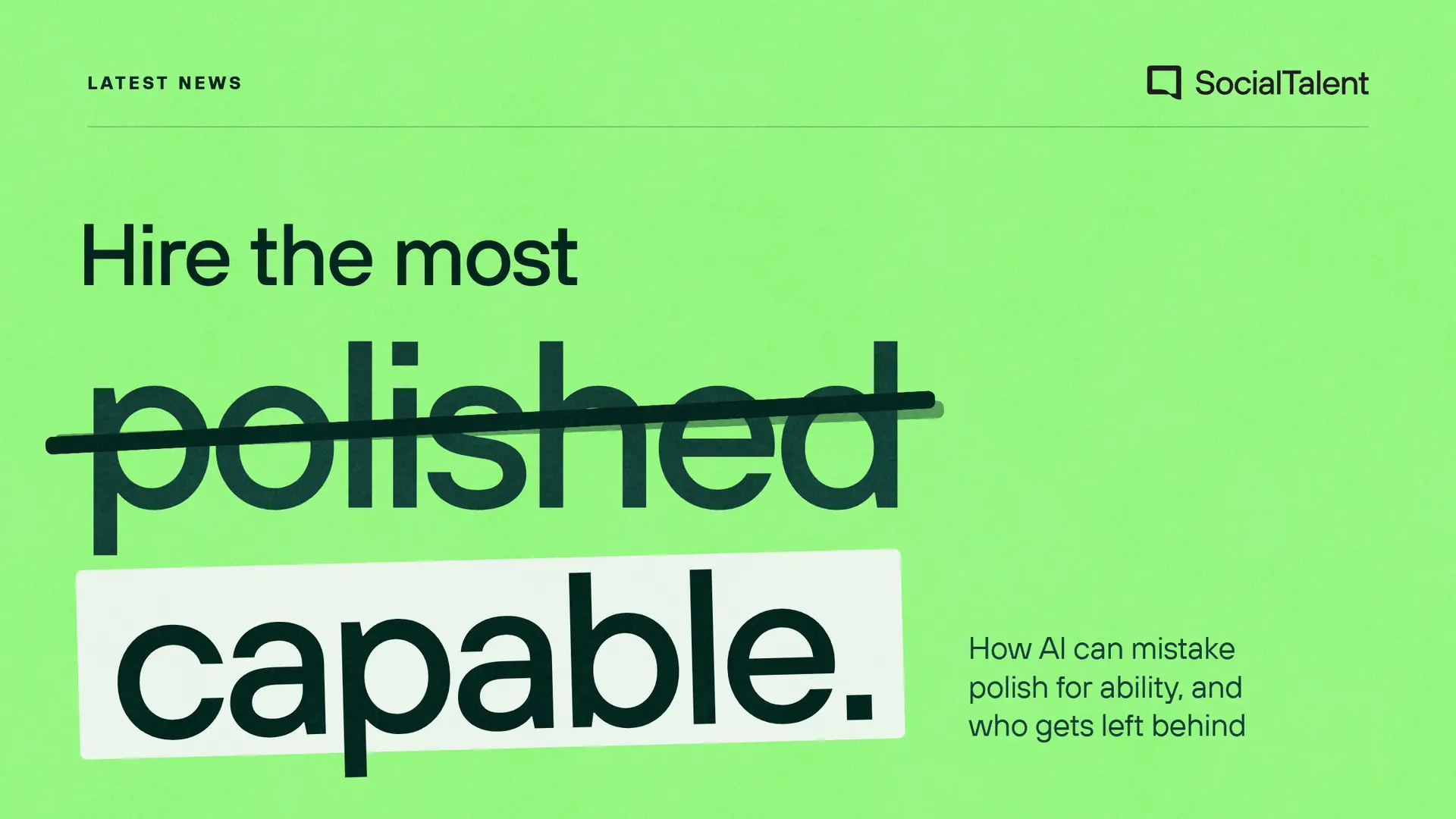
The research from Johns Hopkins does not suggest that AI is incapable of high-quality writing, nor does it suggest that the technology should be discarded. Rather, it serves as a wake-up call for the recruitment industry to modernize its evaluation frameworks. By moving away from vague, impressionistic scoring systems and toward data-driven, objective assessments, companies can ensure that they are hiring the most qualified candidates, regardless of the tools they use to assist in their professional communication.
Ultimately, the goal of any hiring process is to determine a candidate’s potential to perform the job at hand. When we allow an AI’s linguistic bias to cloud that judgment, we fail the candidate and the organization alike. As the technology continues to evolve, the responsibility lies with human recruiters to remain vigilant, to define what "professional" truly means in their specific context, and to ensure that the human element of the hiring decision remains focused on substance rather than stylistic form.
Related posts: