Serve Robotics Pivots to Infrastructure by Launching Physical AI Services to Empower the Autonomous Ecosystem

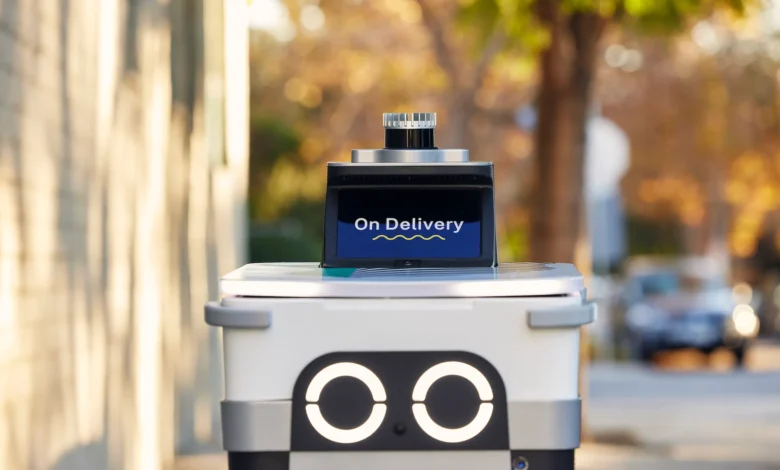
Serve Robotics, the publicly traded developer of autonomous sidewalk delivery robots, is embarking on a strategic transformation that aims to reposition the company from a niche delivery operator to a foundational technology supplier for the broader robotics industry. The company, which emerged from Uber’s 2021 acquisition of Postmates, officially announced the launch of "Physical AI Services" on Thursday, concurrent with the release of its third-quarter financial results. This new business line is designed to commercialize the proprietary software and connectivity infrastructure that Serve has refined through years of navigating complex, human-dense urban environments.
The move marks a departure from a singular focus on last-mile delivery. By opening its tech stack to third-party developers, Serve Robotics is attempting to capture a larger share of the burgeoning robotics market, which encompasses everything from agricultural automation to warehouse logistics.
A Chronology of Evolution: From Postmates Spin-out to Public Entity
The trajectory of Serve Robotics is deeply intertwined with the maturation of the autonomous delivery sector. The company’s origins trace back to the internal robotics division at Postmates, which was then acquired by Uber in late 2020. Recognizing the potential of the sidewalk robot fleet, Uber spun out the unit into an independent entity in 2021, backed by venture capital and strategic investment from the ride-hailing giant itself.
Over the next three years, Serve Robotics aggressively scaled its sidewalk operations. The company’s robots, characterized by their distinct, friendly aesthetic, became a familiar sight in major U.S. cities. In April 2024, the company hit a significant milestone by going public, raising $40 million to fuel its expansion. This transition into the public markets provided the capital necessary to diversify its R&D efforts, leading to the acquisition of Diligent Robotics, a firm specialized in hospital assistant robots.
By late 2024, Serve’s operational focus shifted from being solely tethered to Uber Eats to a broader partnership model, including integrations with DoorDash and Wonder. This shift reflected an industry-wide realization: the value of autonomous systems lies not just in the hardware, but in the sophisticated software that allows these machines to navigate unpredictable, real-world spaces.
The Physical AI Services Offering
The newly launched Physical AI Services line consists of three primary components, each targeting a specific pain point in current robotics development:
- Serve Link: A high-performance connectivity solution that bridges the gap between robots in the field and AI systems hosted in centralized data centers. By leveraging high-bandwidth, low-latency connections—facilitated in part by a collaboration with T-Mobile—Serve enables robots to offload heavy computational tasks. This allows developers to utilize more powerful, complex AI models without the thermal or weight constraints of putting massive compute power directly onto the robot.
- Data Curator Tool: This software suite assists robotics companies in identifying and extracting "edge cases" from the massive amounts of data collected during daily operations. Edge cases—situations where a robot encounters an unusual obstacle or scenario—are the most critical data points for training robust machine learning models.
- Foundation-Model Data Catalog: Drawing from years of operation in real-world, pedestrian-heavy environments, Serve is providing a curated dataset. This library of "real-world intelligence" is intended to help other developers train their foundation models to better understand the nuances of human behavior, safety protocols, and environment navigation.
The AWS Moment: A Strategic Rationale
CEO and co-founder Ali Kashani has characterized this pivot as an "AWS moment" for the robotics industry. Drawing a parallel to how Amazon transformed its internal IT infrastructure into Amazon Web Services, Serve Robotics is betting that the underlying tools required to keep a robot operational—connectivity, data management, and training sets—are universal challenges.
"We are solving the problem of robots in human spaces," Kashani stated. "When the technology is so nascent, you have to build the end-to-end application because that is the only way you know what to build. But then, over time, as the technology gets more advanced, more people are going to want to build similar things. You want to open your technology so others build with you and on your platform."
This strategy suggests that while Serve will continue to operate its own fleet, the long-term margin potential may lie in the software-as-a-service (SaaS) model. By becoming the "picks and shovels" provider for the robotics gold rush, Serve insulates itself from the capital-intensive nature of building and maintaining thousands of hardware units.
Market Context and Industry Implications
The robotics industry is currently grappling with a "real-world" problem. While generative AI has made massive strides in text and image generation, autonomous hardware often struggles when moving from controlled environments (like laboratories or factory floors) to unstructured ones (like city sidewalks or hospitals).
By providing connectivity and data tools, Serve is positioning itself to help startups like Bedrock Robotics—which focuses on autonomous construction equipment—overcome these hurdles. The collaboration with T-Mobile is particularly telling; as 5G and edge computing become more pervasive, the ability for a robot to "think" in the cloud rather than solely on its own CPU becomes a competitive advantage.
From an investor perspective, this pivot is a hedge against the volatility of the delivery market. The unit economics of sidewalk delivery are sensitive to labor costs, regulatory shifts, and urban density. By selling the technology stack, Serve gains a more predictable revenue stream that is less dependent on the fluctuations of food delivery demand.
Competitive Landscape and Future Outlook
Serve is not the only company exploring this transition, but its specific focus on "uncontrolled environments" gives it a niche advantage. Many robotics competitors focus on structured environments where paths are mapped and variables are limited. Serve’s advantage is its history of operating among human pedestrians, which involves managing unpredictable movement, traffic, and changing weather conditions.
However, the company faces significant challenges. Standardizing robotics software is notoriously difficult due to the wide variety of hardware configurations—from wheeled delivery bots to legged warehouse assistants. For Serve Link and its associated tools to succeed, they must be interoperable with a wide range of existing robotic operating systems (ROS) and hardware interfaces.
Furthermore, the data catalog must be meticulously curated to avoid privacy issues. As the company aggregates data from its sidewalk robots, it must navigate the evolving landscape of data privacy regulations, ensuring that the "foundation models" it sells do not inadvertently compromise the privacy of the individuals who encounter the robots.
Analytical Conclusion
The shift toward Physical AI Services represents a maturation point for Serve Robotics. The company is effectively transitioning from a "robotics company" to a "robotics intelligence company." This strategy acknowledges that the hardware is increasingly becoming a commodity, while the software that governs autonomy, connectivity, and decision-making is where the true value resides.
If successful, Serve Robotics could establish itself as the central nervous system for a wide range of autonomous devices. By empowering other companies to bypass the "hard years" of initial infrastructure development, Serve is not just scaling its own revenue—it is arguably accelerating the timeline for the widespread adoption of autonomous robots in the public sphere.
Investors and industry observers will be watching the next four quarters closely to see how quickly the company can onboard customers outside of its own delivery ecosystem. If Serve Link and the data curation suite gain traction with major industrial or commercial players, the company will have successfully executed one of the most difficult pivots in the tech sector: moving from a service-based operation to a scalable, platform-based technology supplier.