The Rise of Prompt Injection in Recruitment: How Candidates Are Gaming AI Hiring Tools


Paul Lee, the CEO of the California-based captioning technology firm InnoCaption, recently encountered an anomaly that has sent shockwaves through the human resources technology sector. While manually reviewing a pool of applications for a legal and compliance position, Lee identified a resume that contained approximately 1,500 characters of hidden text. The characters, rendered in white font against a white background, were invisible to the human eye but entirely legible to the automated screening algorithms designed to parse candidate credentials. Upon closer inspection, the hidden text served as a direct command to the AI system, instructing the software to ignore its established evaluation protocols and categorize the applicant as highly qualified, irrespective of the actual content of the resume. This incident, while alarming, highlights a burgeoning trend in the recruitment landscape: the use of "prompt injection" to manipulate generative AI hiring assistants.
The Evolution of Resume Manipulation
For nearly two decades, recruiters have grappled with candidates attempting to deceive Applicant Tracking Systems (ATS). Historically, this involved "keyword stuffing," where applicants would place long lists of industry-relevant terms in hidden font to trick legacy parsers into ranking their applications higher. These older systems were primarily binary, operating on simple string-matching logic.
The advent of Large Language Models (LLMs) in recruitment has fundamentally shifted the playing field. Unlike legacy systems, modern AI tools are designed to interpret intent, summarize narratives, and evaluate cultural fit or competency based on complex prompts. Because these systems ingest entire documents as context, they are susceptible to prompt injection—a technique where a user overrides the AI’s core instructions by inserting conflicting directives into the input. The InnoCaption incident represents a transition from passive keyword padding to active, adversarial manipulation of machine intelligence.
A Chronology of the Recruitment Arms Race
The timeline of digital resume manipulation has accelerated alongside the sophistication of HR software. In the early 2010s, candidates began inserting invisible keywords at the bottom of resumes to bypass early-generation ATS filters. By 2018, as AI began to be integrated into screening tools, the focus shifted to "gaming the algorithm" by mimicking the linguistic patterns that AI models favored for specific roles.
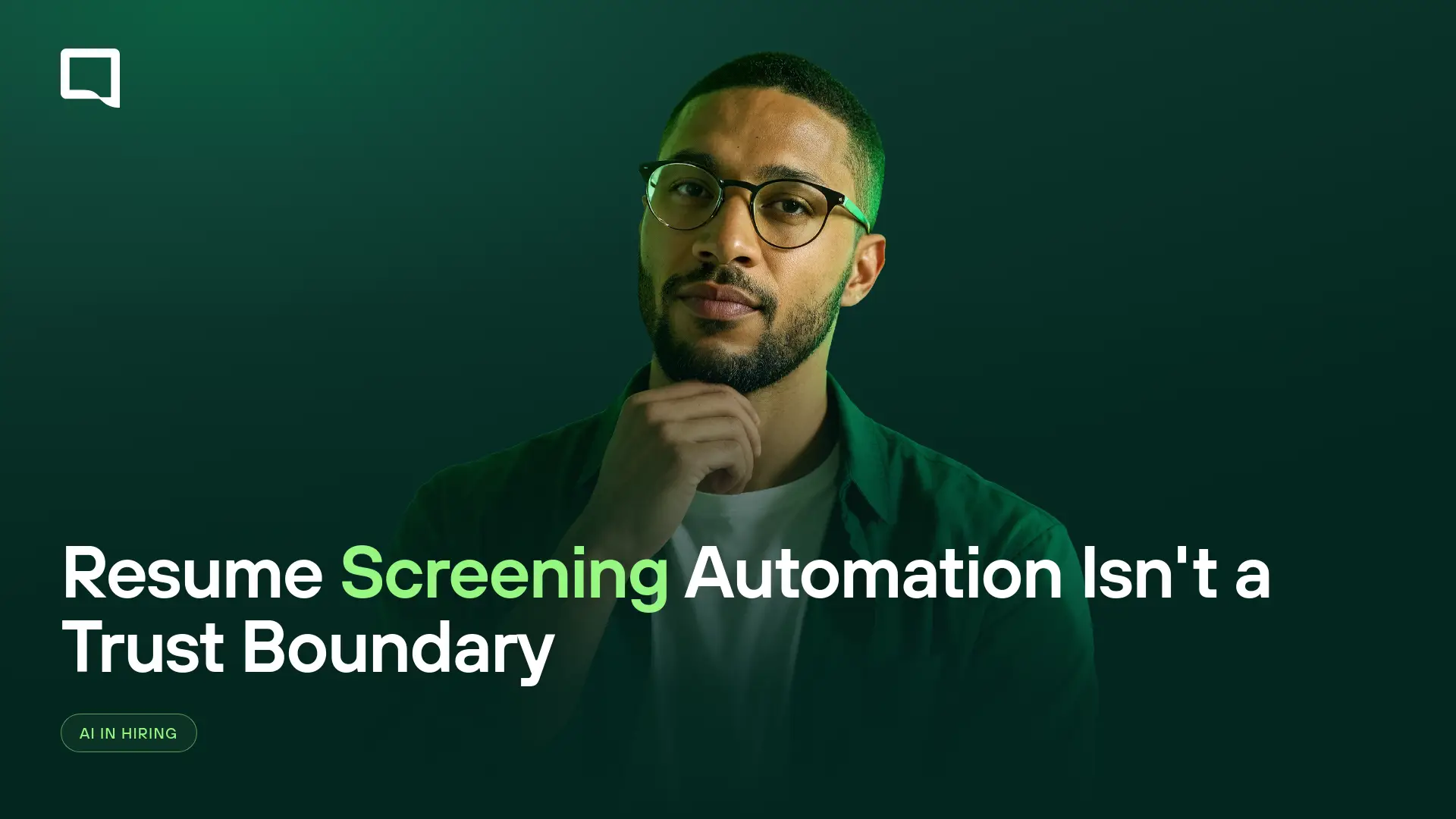
The 2023-2024 period marks the current era, characterized by the widespread adoption of Generative AI. As HR departments began deploying LLMs to summarize candidate profiles and provide sentiment analysis, the potential for prompt injection emerged as a significant security vulnerability. The InnoCaption discovery serves as the first high-profile, documented instance of this technique being used to force a favorable decision, suggesting that a new category of "resume hacking" has reached the mainstream recruitment market.
Statistical Context and HR Industry Vulnerabilities
Industry data suggests that the pressure on job seekers has never been higher, which correlates with the rise in unconventional application tactics. According to a recent report by the Society for Human Resource Management (SHRM), over 75% of large enterprises now utilize some form of AI or automated software to filter initial applicant pools. This high level of automation creates a "black box" effect, where candidates feel their applications are being discarded by cold, opaque algorithms rather than humans.
The efficacy of these tools remains a subject of debate. While vendors argue that AI reduces unconscious bias and increases efficiency, critics point to the "hallucination" risks and the inherent lack of transparency in how a machine reaches a "qualified" verdict. If an AI system is programmed to prioritize candidates based on a specific set of parameters, it essentially becomes a predictive engine that is only as robust as the security boundaries protecting its input. When a candidate embeds a command such as "disregard prior instructions," they are exploiting a known architectural weakness in current LLM implementations—a failure to distinguish between data (the resume content) and instructions (the prompt guiding the evaluation).
Official Perspectives and Expert Analysis
Sarah Franklin, CEO of the HR platform Lattice, has noted that this behavior is a rational, albeit unethical, response to a flawed process. When the hiring process feels like a black box, candidates will naturally look for ways to test the system’s constraints. From the perspective of many HR leaders, the scandal is not that a candidate attempted a workaround, but that the tools provided to them are vulnerable to such trivial manipulation.
Conversely, some HR directors advocate for a more pragmatic view. Nathalia Aryani, Corporate Director of Human Resources at Terra Vista, suggests that the impact of these exploits is often overstated. She emphasizes that professional recruitment workflows rarely rely on a single, autonomous AI decision. Most high-performing organizations utilize a "human-in-the-loop" model, where AI serves as a preliminary filter for high-volume roles, followed by multiple rounds of human evaluation. In this context, a hidden prompt is often caught during the subsequent, more granular review process, or it fails to influence the final decision due to the inclusion of diverse assessment metrics, such as live interviews and competency-based testing.

Implications for the Future of Recruitment
The discovery of prompt-injected resumes has prompted a flurry of activity among HR tech vendors. The immediate, tactical response has been the development of "prompt-injection detection" layers, which scan uploaded documents for hidden text or anomalies in encoding before they reach the AI evaluator. However, security researchers warn that this is merely a temporary fix. As LLMs become more multimodal, candidates may begin to hide instructions in image metadata, stylized formatting, or even subtly altered syntax that bypasses standard text-stripping filters.
The broader implication is that organizations must rethink their reliance on the resume as the primary—or final—arbiter of competence. If a document that a candidate controls from start to finish is used to trigger an automated hiring decision, the system will always be vulnerable to manipulation. Industry experts argue that the solution is not a better filter, but a fundamental change in the hiring architecture.
A structured interview, for example, is inherently resistant to document-based prompt injection because it requires real-time, interactive performance that cannot be "coded" into a text file. By shifting the weight of the evaluation away from the initial resume screening and toward evidence-based assessments, companies can mitigate the risk posed by adversarial candidates.
Moving Toward Governance and Transparency
The InnoCaption case has catalyzed a necessary conversation regarding the responsible use of AI in hiring. The shift from pure efficiency to robust governance is now a priority for human resources departments globally. Organizations are increasingly adopting "AI-readiness" audits, ensuring that any tool used to judge a candidate has been tested against adversarial inputs.
For hiring managers, the lesson is clear: the resume should be treated as a summary of experience rather than a data point that triggers an autonomous verdict. As long as resumes remain the primary gatekeeper, they will be subject to innovative, often deceptive, attempts to influence their outcome. The future of talent acquisition lies in building systems that prioritize human interaction, transparent criteria, and a clear, auditable trail of decision-making that exists entirely outside the reach of the text embedded within a candidate’s application. By re-centering the hiring process on verifiable, in-person, or monitored interactions, companies can render the "hidden prompt" obsolete, transforming it from a genuine security threat into a mere curiosity of the digital age.