The Evolution of Search: A Comprehensive Framework for Optimizing Your Brand for the AI Era

The digital marketing landscape is undergoing a profound transformation as traditional search engine result pages (SERPs) yield ground to generative AI answer engines. According to recent data from Wix Studio, monthly unique visitors to major answer engines surged from 634 million in Q1 2025 to 904 million in Q1 2026, representing a 40% year-over-year increase. This rapid adoption signifies that AI-driven search is no longer a peripheral experiment; it is becoming a primary interface for information retrieval. For businesses and marketers, this shift necessitates a transition from traditional search engine optimization (SEO) to the more nuanced discipline of answer engine optimization (AEO).
The Symbiotic Relationship Between SEO and AEO
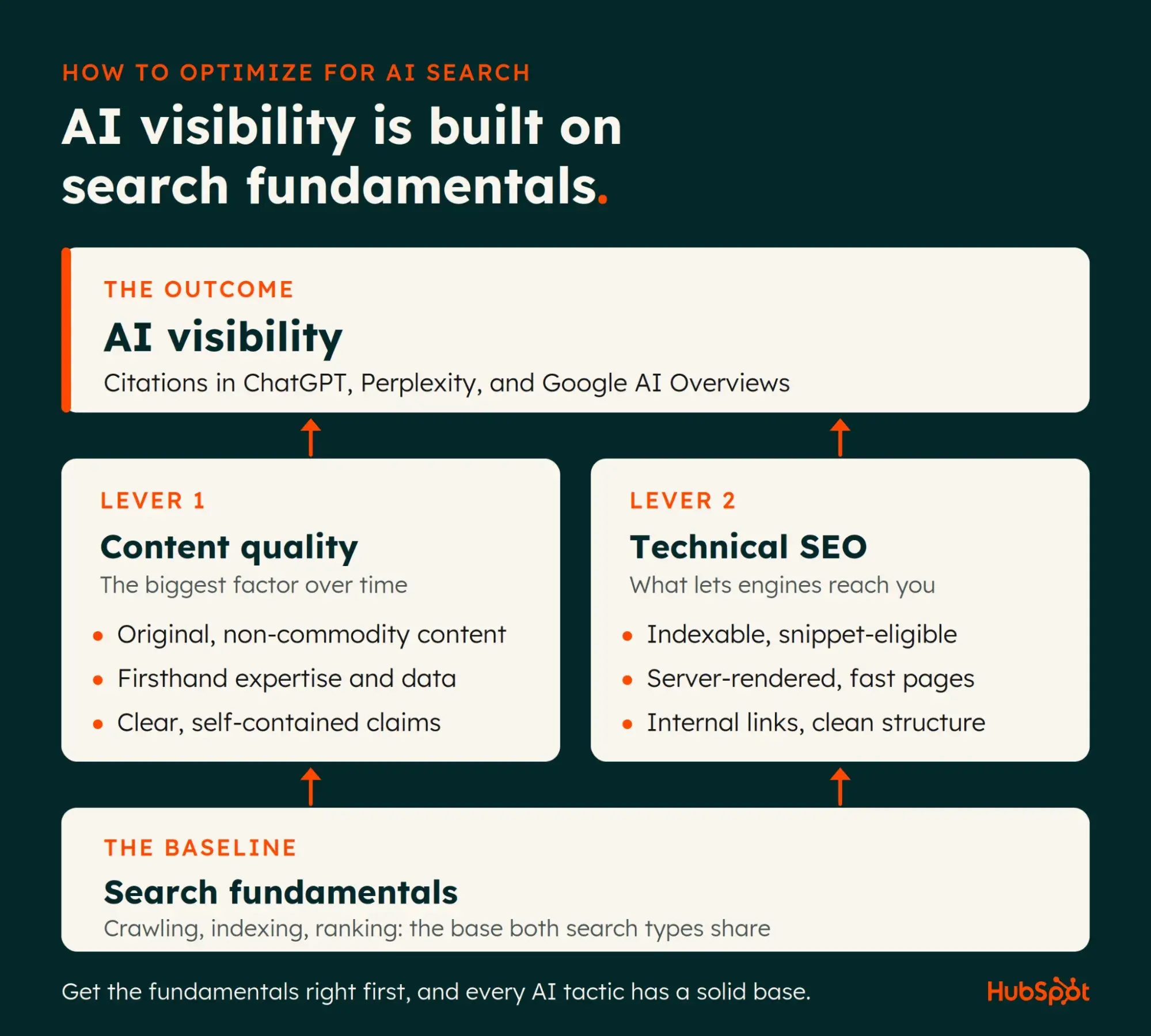
Contrary to popular belief, AI search has not rendered traditional SEO obsolete. Rather, the two methodologies are inextricably linked. Answer engines, including Google’s AI Overviews and platforms like ChatGPT and Perplexity, rely on the same underlying infrastructure as traditional search. Before an AI can synthesize an answer, it must crawl, index, and evaluate the relevance of a webpage.
Google has confirmed that its AI Overviews operate on a specialized iteration of its Gemini model, integrated directly into existing search systems. Similarly, ChatGPT’s search functionality leverages established search providers to pull live web data. Consequently, a website that fails to adhere to the technical fundamentals of crawlability and indexability remains invisible to both the traditional "blue link" results and the AI-generated summaries. Optimization for AI, therefore, is an additive process that builds upon, rather than replaces, historical SEO best practices.
Data-Driven Insights and Content Quality
The core of modern visibility lies in "people-first" content. Generative AI models are designed to synthesize common knowledge, but they struggle to replicate original, firsthand expertise. Analysis from SE Ranking, which evaluated over 216,000 pages, highlights a clear correlation between expert-backed content and citation frequency. Pages that integrated subject-matter expertise averaged 4.1 citations in ChatGPT, compared to just 2.4 for generic content. Furthermore, content dense with original data points saw an even higher citation rate, averaging 5.4.
This implies a significant shift in content strategy: marketers must pivot away from "commodity" content—articles that simply repackage existing internet data—toward content that provides unique perspectives, primary research, or proprietary data. When a brand acts as an original source, it provides the "ground truth" that LLMs require to construct accurate, verifiable answers.
Technical Foundations: Ensuring AI Accessibility
For a page to be cited, it must be technically accessible. A recurring failure point for many organizations is the reliance on client-side JavaScript for critical content. While modern search crawlers are increasingly adept at rendering JavaScript, many AI-specific crawlers lack the capability to execute complex scripts. If a website’s primary value proposition is hidden behind a script that fails to render, the AI effectively encounters a blank page.
Performance metrics also play a decisive role. SE Ranking’s research indicates that pages with a First Contentful Paint (FCP) of under 0.4 seconds achieved an average of 6.7 citations—a performance gap nearly three times greater than pages requiring over 1.13 seconds to load. Speed is not merely a user experience metric; it is an accessibility signal that allows AI models to process information efficiently.

Structured Data and the Ethics of Visibility
Structured data acts as a machine-readable roadmap for AI engines, reducing the ambiguity of page content. However, there is a clear distinction between optimization and manipulation. Google’s guidelines are explicit: schema markup must accurately reflect the visible content on the page. Attempting to use structured data to claim expertise that is not supported by the body copy is classified as cloaking, which can result in penalties or complete exclusion from AI features.
Furthermore, snippet controls—such as the robots meta tag and the data-nosnippet attribute—serve as the final gatekeeper for visibility. These tools allow site owners to define exactly which parts of a page are eligible for inclusion in generative summaries. It is critical to ensure that these tags are not inadvertently blocking AI access, as many legacy SEO configurations, if left unchecked, may restrict a site’s presence in emerging AI search channels.
Navigating Different Answer Engine Behaviors
Not all answer engines operate with the same logic. Perplexity, for instance, serves as a high-volume citer, often providing over ten sources per response. It shows a distinct preference for discussion-based platforms, with 17.35% of its citations originating from forums like Reddit or LinkedIn. In contrast, ChatGPT maintains a more selective stance, averaging approximately 3.3 citations per query and favoring long-form, authoritative articles.
Data from Fan Out indicates that only 7.7% of URLs appear in more than one engine, underscoring the need for a diversified strategy. A brand cannot assume that visibility on one platform guarantees presence on another. Instead, marketers must treat each AI engine as a distinct channel with unique content preferences and citation behaviors.
The Role of Multimodal Content
The integration of images and video into AI responses has opened new avenues for traffic. AI systems are increasingly capable of pulling visual data to supplement text-based answers. To leverage this, businesses should move beyond basic image optimization. Videos, in particular, serve as a high-value asset; transcripts, descriptive summaries, and precise timestamps allow AI models to pinpoint exactly when a relevant topic is discussed. Fan Out’s research confirms this, noting that 13.7% of YouTube citations were linked directly to specific, timestamped moments in a video, rather than the general landing page.
Strategic Workflow for AI Visibility
To maintain long-term visibility, organizations should adopt a repeatable six-step workflow:
- Entity Mapping: Identify core brand topics and map them to common customer questions.
- Answer-First Drafting: Structure content to provide a concise answer within the first 40–60 words, utilizing question-led subheadings to align with user search intent.
- Schema Implementation: Apply honest, accurate structured data to reinforce the page’s context.
- Technical Audit: Validate crawlability and ensure primary content is available in server-rendered HTML.
- Baseline Benchmarking: Establish a record of current AI visibility to measure the impact of optimization efforts.
- Periodic Refresh: Establish a cadence for updating data and statistics to prevent content stagnation.
Implications for the Future of Marketing
The shift toward AI-integrated search represents a fundamental change in the digital economy. As users increasingly rely on AI to synthesize information, the value of a single, well-placed citation in an AI response becomes a primary driver of brand authority and traffic. However, the "black box" nature of AI algorithms necessitates a shift in focus from "gaming" the system to providing genuine, verifiable, and authoritative information.
Ultimately, the most successful brands will be those that view AI search not as a threat to their traffic, but as a new platform for demonstrating value. By prioritizing high-quality, answer-first content and maintaining a robust technical foundation, organizations can ensure that when AI models look for answers, they point directly to the brand’s own resources. As the technology continues to evolve, the ability to adapt to these shifting search paradigms will become the defining competency for modern marketing teams.