ServiceNow Strengthens Global AI Banking Push with 40 Million Dollar Strategic Investment in Indian Software Firm BusinessNext

The global enterprise software landscape is witnessing a significant realignment as major players seek to integrate specialized artificial intelligence capabilities into traditional financial workflows. ServiceNow, the California-based leader in digital workflow automation, has announced a $40 million strategic investment in BusinessNext, an Indian firm specializing in banking software. This transaction values the Noida-headquartered company at $700 million, marking a nearly fourfold increase from its previous valuation of $181 million in 2021. The deal, which grants ServiceNow an approximate 5% stake in the firm, represents a pivotal step in ServiceNow’s strategy to dominate the financial services vertical by leveraging localized expertise and sophisticated AI-driven banking solutions.
The Strategic Synergy of ServiceNow and BusinessNext
The investment is not merely a financial injection but a calculated move to merge two distinct layers of enterprise software. ServiceNow has built a global reputation on its ability to streamline back-office operations, IT service management (ITSM), and human resources workflows. However, the intricacies of customer-facing banking operations—ranging from loan processing to account management and regulatory compliance—require a specialized touch that BusinessNext has spent over two decades perfecting.
BusinessNext, which operated under the name CRMNext until a major rebranding in 2022, provides the "front-end" engine for more than 70 financial institutions globally. Its software manages the complex interactions between banks and their customers, while ServiceNow’s platform excels at the internal "plumbing" of an organization. By joining forces, the two companies aim to offer a unified, end-to-end "autonomous banking" experience. This integrated approach allows financial institutions to bridge the gap between customer service requests and the back-office execution required to fulfill them, all powered by a layer of generative AI.
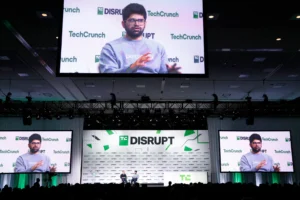
Nishant Singh, the founder and CEO of BusinessNext, emphasized that the partnership allows his company to "borrow" ServiceNow’s extensive global go-to-market machinery. For a company like BusinessNext, which has a strong foothold in emerging markets but is still scaling its presence in the United States and Europe, the ability to tap into ServiceNow’s massive sales infrastructure and existing relationships with Fortune 500 companies is a transformative growth catalyst.
A History of Evolution: From CRM to Autonomous Banking
The journey of BusinessNext reflects the broader evolution of the Indian software-as-a-service (SaaS) ecosystem. Founded in 2002, the company initially focused on Customer Relationship Management (CRM) specifically tailored for the high-volume, high-security needs of the banking sector. Unlike general-purpose CRMs, the firm’s platform was built to handle the rigorous regulatory requirements of the financial industry from the outset.
In 2021, the company was valued at $181 million following a funding round that saw participation from prominent investors such as Norwest Venture Partners and Avataar Ventures. However, the subsequent years saw a radical shift in the company’s product philosophy. Recognizing the limits of traditional CRM systems in an era of rapid automation, the firm rebranded to BusinessNext in 2022 and began a fundamental rewrite of its software stack.
The goal of this overhaul was to transition from a system of record to a system of action. This led to the development of what Singh describes as an "autonomous banking" platform. This system utilizes AI agents capable of performing complex tasks independently, such as verifying documents, assessing credit risk, and managing cross-sell opportunities, without constant human intervention. Crucially, BusinessNext designed its AI to operate on private infrastructure, ensuring that sensitive financial data remains within the bank’s control—a non-negotiable requirement for central banks and large-scale lenders.
Market Footprint and Financial Performance
BusinessNext enters this partnership from a position of financial stability, a rarity in the current high-growth tech environment. The company reported approximately $32 million in revenue for its most recent financial year and remains profitable. Its client list includes some of the most influential financial entities in the world, particularly in the Indo-Pacific region.
In India, BusinessNext serves the "big three" of the banking sector: the Reserve Bank of India (the nation’s central bank), the State Bank of India (the largest public-sector lender), and HDFC Bank (the largest private-sector lender). Beyond the Indian subcontinent, the company has successfully expanded into Southeast Asia, the Middle East, and the United States. Currently, roughly 50% of the company’s revenue is generated from international markets, a figure that is expected to rise as the partnership with ServiceNow matures.
The $40 million investment from ServiceNow follows a total of over $60 million raised from external investors, including Ascent Capital. The dramatic jump in valuation to $700 million underscores the market’s appetite for "AI-native" enterprise tools that offer immediate vertical-specific utility rather than broad, horizontal AI capabilities.
The Indian Inflection Point
The timing of this deal coincides with a period of unprecedented digital transformation in India’s financial sector. Under the leadership of Kulmeet Bawa, ServiceNow’s Group Vice President and Managing Director for India and SAARC, the American firm has identified India as a critical growth engine.
"India’s financial services sector is at an inflection point," Bawa noted in a statement regarding the investment. He highlighted that institutions are no longer merely experimenting with digital tools but are moving toward full-scale, AI-led operations. India’s unique digital public infrastructure, including the Unified Payments Interface (UPI) and the Account Aggregator framework, has created a fertile environment for software companies that can automate the massive volumes of data and transactions generated by hundreds of millions of digital-first consumers.
By investing in BusinessNext, ServiceNow is not just buying a stake in a company; it is securing a front-row seat to the digital overhaul of one of the world’s fastest-growing major economies. The partnership allows ServiceNow to integrate its workflow platform with a partner that understands the nuances of Indian banking regulations, local language support, and the specific operational challenges of serving a diverse population.
Chronology of the Partnership and Expansion
The path to this $40 million deal was paved by several years of increasing collaboration between the two entities.
- 2002-2020: BusinessNext (as CRMNext) establishes itself as the dominant CRM provider for large Indian banks.
- 2021: The company raises capital at a $181 million valuation, signaling its intent to expand globally.
- 2022: The rebranding to BusinessNext takes place, accompanied by the launch of the "autonomous banking" suite and an AI-first architecture.
- 2023: ServiceNow and BusinessNext begin exploring technical integrations, allowing mutual clients to sync back-office workflows with front-office customer data.
- Late 2024: ServiceNow formalizes the relationship with a $40 million strategic investment, choosing to act as a strategic partner rather than a purely financial investor.
This timeline highlights a shift in strategy for both firms. For BusinessNext, it represents a move away from seeking traditional venture capital toward finding a "big brother" in the SaaS world who can provide the global reach necessary for the next stage of growth. For ServiceNow, it reflects an aggressive pursuit of industry-specific AI solutions to stay ahead of competitors like Salesforce and Microsoft.
Broader Implications for the Enterprise Software Market
The ServiceNow-BusinessNext deal is indicative of a broader trend in the software industry: the rise of "Vertical AI." As general-purpose AI models become commoditized, the real value in the enterprise space is shifting toward companies that can apply AI to specific industry problems with high accuracy and regulatory compliance.
Traditional SaaS vendors are currently facing a "value gap." Customers are increasingly skeptical of paying high subscription fees for tools that only act as digital filing cabinets. There is a growing demand for software that "does the work"—software that can resolve a customer’s loan application or handle a complex insurance claim autonomously. By backing BusinessNext, ServiceNow is positioning itself to lead this transition in the banking sector.
Furthermore, this deal highlights the growing importance of "sovereign AI" and data privacy. Because BusinessNext allows banks to run AI on their own private clouds or on-premise servers, it addresses the primary concern of financial regulators: data leakage. As more countries implement strict data residency and privacy laws, the BusinessNext model of "private AI" becomes a significant competitive advantage that ServiceNow can now promote globally.
Future Outlook: A Unified Banking Ecosystem
Looking ahead, the partnership is expected to result in a series of joint product offerings. Financial institutions can expect a "single pane of glass" experience where a customer service agent can see a customer’s entire history (via BusinessNext) while simultaneously triggering back-office processes like credit checks or account updates (via ServiceNow) through a single AI-driven interface.
For BusinessNext, the immediate priority will be scaling its workforce—which already exceeds 1,300 employees—and expanding its presence in the U.S. market. With ServiceNow’s backing, the company is well-positioned to challenge established legacy players in the banking software space, offering a more agile, AI-centric alternative.
For ServiceNow, this investment serves as a blueprint for future vertical expansions. It is likely that the company will continue to seek out "best-in-class" regional leaders in sectors like healthcare, manufacturing, and telecommunications to replicate this model of strategic investment and deep product integration.
In conclusion, the $40 million investment in BusinessNext is more than a transaction; it is a signal of the future of the enterprise. As AI continues to redefine what software can do, the winners will be those who can combine global scale with deep, localized industry expertise. ServiceNow and BusinessNext have placed a $700 million bet that the future of banking is not just digital, but autonomous.