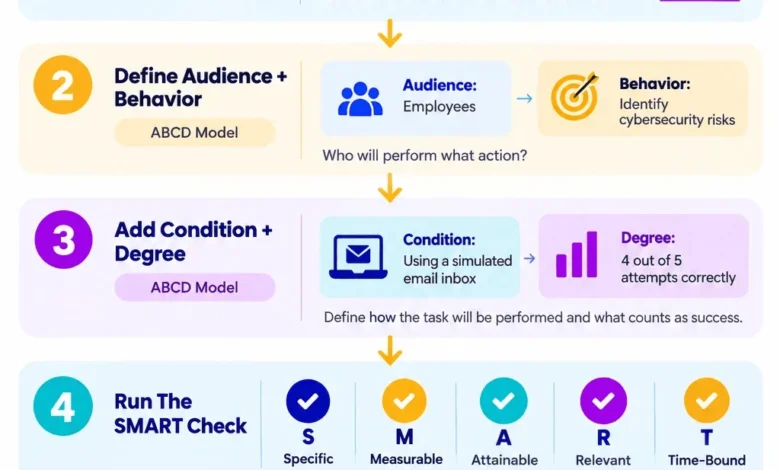
Even the most sophisticated corporate training programs often falter not because of inadequate content, but because of a fundamental misalignment between instructional intent and learner expectation. Learning objectives serve as the architectural blueprint for any educational initiative, yet they are frequently misunderstood or poorly implemented. By defining exactly what a participant should be capable of achieving upon the conclusion of a session, these objectives provide the necessary structure to transition from passive information consumption to active skill acquisition.
The Evolution and Purpose of Learning Objectives
Historically, the practice of documenting educational goals traces back to the mid-20th century, gaining significant traction with the publication of Benjamin Bloom’s taxonomy in 1956. Originally intended for academic environments, this framework has become the cornerstone of corporate instructional design. In a professional context, learning objectives have shifted from mere administrative requirements to essential performance indicators. They act as a contract between the organization and the employee, clarifying the value proposition of the training time invested.
Data from recent workplace learning studies indicate that organizations providing clear, competency-based learning outcomes see a 22% higher rate of knowledge retention compared to programs that rely on vague "overview" style descriptions. When a professional understands the specific performance standard they are expected to meet—such as "demonstrating the ability to troubleshoot a network latency issue" rather than simply "learning about network security"—the brain engages in more focused neural processing.
Categorizing Competency: Cognitive, Affective, and Psychomotor
Instructional designers typically categorize objectives into three domains to ensure a holistic development approach. Each domain requires a distinct strategy for delivery and measurement.
Cognitive Objectives focus on the intellectual aspects of learning. This is the bedrock of compliance and technical training, where the primary goal is the acquisition and application of knowledge. These objectives are best measured through assessments that require the learner to analyze, evaluate, or create solutions based on the provided information.
Affective Objectives are often the most challenging to define because they relate to the internal states of the learner, such as values, attitudes, and motivation. While these are less tangible, they are critical for leadership training and cultural onboarding. To make these measurable, designers must pivot from subjective feelings to observable behaviors. Instead of measuring "appreciation for diversity," a well-constructed objective might focus on "the ability to identify and mitigate unconscious bias in team-based decision-making processes."
Psychomotor Objectives pertain to physical dexterity and the practical application of manual skills. These are vital in manufacturing, surgical training, and field operations. Here, the emphasis is on the precision, speed, and safety with which a task is performed. Unlike the other categories, these objectives are easily validated through direct observation and "check-off" assessments.
Frameworks for Precision: SMART, ABCD, and Bloom’s Taxonomy
The industry standard for crafting these objectives relies on established frameworks that prevent ambiguity. The SMART acronym—Specific, Measurable, Attainable, Relevant, and Time-Bound—remains the most widely adopted methodology.

- Specific: The objective must target a single skill or knowledge point.
- Measurable: There must be a clear way to verify that the objective has been met.
- Attainable: The expectation must be realistic given the time and resources provided.
- Relevant: The goal must align with broader organizational performance KPIs.
- Time-Bound: There should be a defined window in which the skill is expected to be demonstrated.
Complementing this is the ABCD model: Audience (who is learning), Behavior (what they will do), Condition (under what circumstances), and Degree (to what standard of excellence). By combining these frameworks, an instructional designer transforms a vague goal—such as "improve sales skills"—into a rigorous, actionable objective: "By the end of this module, the sales representative (Audience) will be able to handle three common customer objections (Behavior) using the company’s new CRM script (Condition) with an 85% success rate in role-play simulations (Degree)."
The Critical Role of Action Verbs
The linguistic choice within an objective determines its effectiveness. Vague terminology—such as "know," "understand," or "learn"—is notoriously difficult to measure, leading to ambiguity in performance reviews. Conversely, using precise action verbs provides a clear roadmap for both the instructor and the participant.
Verbs such as "calculate," "assemble," "design," or "critique" imply a high level of cognitive or physical involvement. When a syllabus uses these specific verbs, it signals to the learner that they are expected to do more than simply observe. The shift from "understand the software" to "execute a data migration protocol" changes the psychological contract of the training session from passive reception to active performance.
Common Pitfalls and Strategic Implications
A common error in modern corporate training is the "over-objective" trap, where designers attempt to cram too many goals into a single module, leading to cognitive overload. Research suggests that learners retain information most effectively when a training session focuses on no more than three to five core objectives.
Furthermore, a failure to align objectives with real-world business outcomes is a significant contributor to the "training-performance gap." When objectives are designed in a silo, detached from the actual workflow, they may successfully teach a skill that the employee never actually needs to use. This creates a disconnect between the time invested in the Learning Management System (LMS) and the actual productivity gains observed on the floor.
The Broader Impact on Organizational Culture
Effective learning objectives are the primary drivers of organizational agility. In a rapidly changing economic landscape, the ability to quickly upskill a workforce is a competitive advantage. When an organization can clearly define the skills required for a new project and translate those into clear, modular learning objectives, they can pivot their training efforts in real-time.
From an administrative standpoint, clear objectives also simplify the auditing process. For industries under strict regulatory oversight, such as finance or healthcare, being able to demonstrate that specific, measurable objectives were met by every participant is a non-negotiable compliance requirement.
Ultimately, the mastery of writing learning objectives is not merely a technical skill for designers; it is a strategic business capability. It requires a deep understanding of what the organization needs to achieve and a precise command of language to ensure those needs are clearly communicated. By shifting the focus from "what is being taught" to "what is being mastered," companies can ensure that their training programs generate tangible, long-term ROI, turning the learning process into a measurable engine for sustained growth and innovation.
As technology continues to integrate AI and personalized learning paths, the role of the learning objective will become even more pivotal. AI-driven platforms rely on these clear, structured objectives to map content to the individual needs of the learner, suggesting that the ability to write precise, outcome-oriented goals will remain a core competency for L&D professionals for the foreseeable future.
Related posts: