India’s IT Services Sector Faces a Complex Talent Crisis as AI Demand Outstrips Supply

The landscape of India’s massive IT services sector is undergoing a profound structural shift, one that is being defined not merely by a return to hiring, but by a radical transformation in the qualifications required to survive in the digital economy. As industry giants—including HCLTech, Tata Consultancy Services (TCS), Infosys, and Wipro—recalibrate their recruitment engines, the focus has moved decisively away from the volume-based hiring models of the past decade. Today, the industry is engaged in a high-stakes hunt for "AI-native" engineers, a specialized cohort capable of architecting and deploying complex enterprise AI systems. However, as firms race to secure this expertise, they are hitting a wall: the supply of industry-ready AI professionals is failing to keep pace with the exponential growth in demand, creating a bottleneck that threatens to slow the sector’s rebound.
A Shifting Paradigm: From Tool Users to AI Architects
The traditional hiring playbook for India’s IT majors—which relied on large-scale campus recruitment of engineering graduates—is being rewritten. HCLTech is currently pioneering the creation of a cadre of "Forward Deployed Engineers," a specialized team tasked with embedding advanced AI solutions directly into client environments. Similarly, TCS is prioritizing "AI-native" talent, specifically targeting candidates who demonstrate advanced critical thinking and mathematical depth rather than simple proficiency in prompt engineering.
Infosys has overhauled its entire campus hiring infrastructure to prioritize generative AI and data engineering, while Wipro has embraced a "skills-first" model. This approach intentionally moves away from traditional academic credentials, choosing instead to value demonstrable, project-based capabilities. This shift reflects a harsh reality: in the current enterprise climate, the ability to operate a generative AI interface is a commodity, whereas the ability to architect, secure, and scale an enterprise AI model is a rare and highly prized skill.
The Quantitative Disconnect: A 4:1 Signal-to-Noise Problem
Data from the June 2026 edition of the Naukri JobSpeak report highlights the intensity of this transition. While overall IT sector job listings experienced a modest decline of 3 percent, AI-specific hiring surged by 16 percent year-on-year. This decoupling of general hiring from AI hiring signals a market in the midst of a pivot. However, a critical Nasscom report offers a sobering assessment of the current talent pool. While over 90 percent of early-career technology professionals report using AI tools in their daily workflows, only 23 percent possess the technical rigor to be classified as "AI-native."
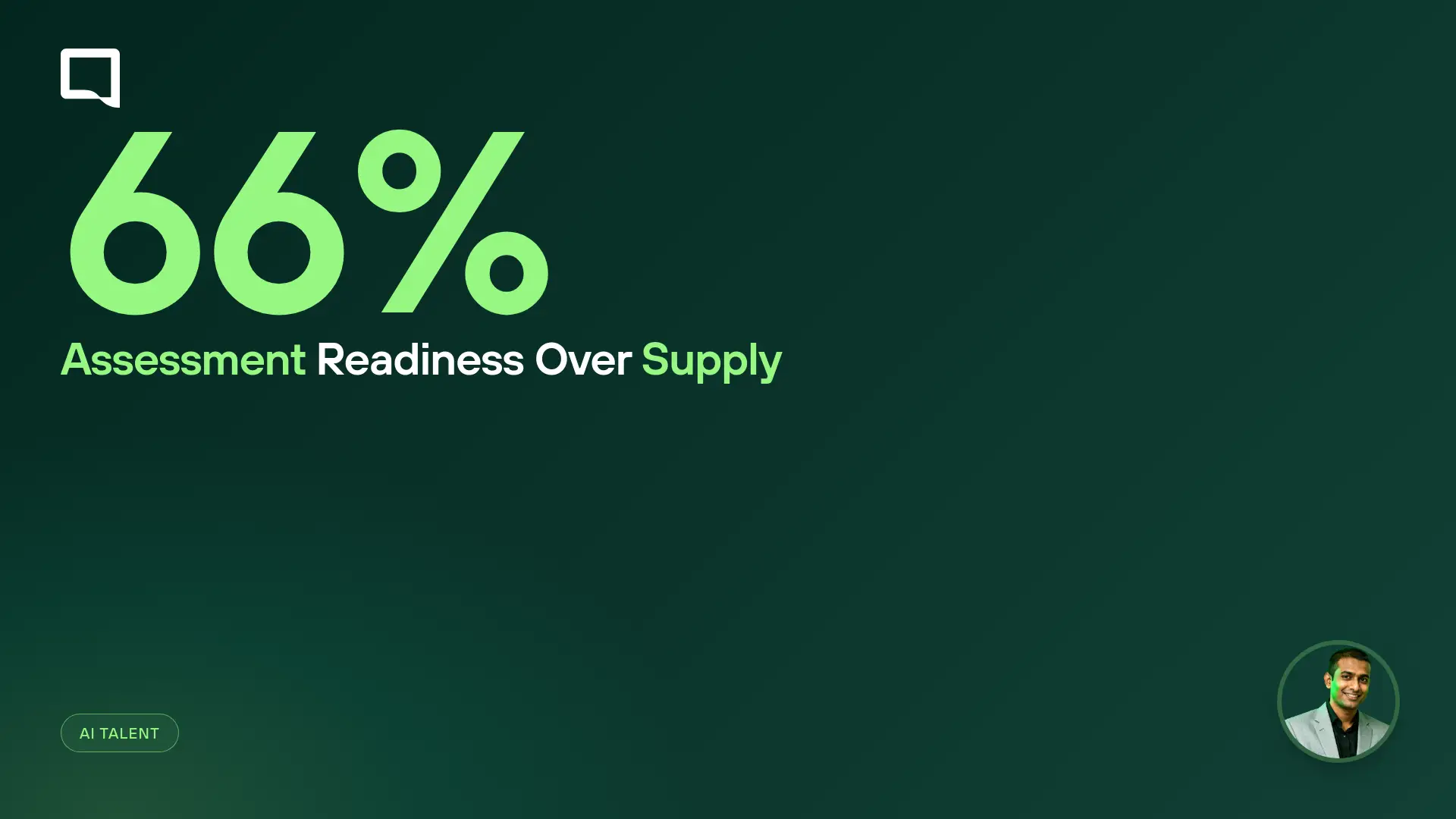
This creates a "4:1 signal-to-noise" problem for human resources departments. The difficulty lies in distinguishing between those who have merely experimented with ChatGPT or similar interfaces and those who possess the fundamental understanding of machine learning, data engineering, and MLOps required to build robust, scalable, and compliant enterprise applications. This discrepancy forces firms to implement more rigorous, simulation-based technical assessments, as traditional interview formats often fail to filter out candidates who are "AI-literate" but not "AI-capable."
Chronology of the Talent Gap: A Structural Bottleneck
The current shortage is not a sudden phenomenon but the culmination of several years of systemic lags.
- 2022-2023: The rapid mainstreaming of Generative AI caught the Indian higher education system off-guard. As the industry demand exploded, university curricula remained largely tethered to legacy software development models.
- 2024: Industry leaders began expressing public concern over the "curriculum lag," noting that AI’s rapid evolution was outpacing the two-to-three-year revision cycles of technical universities.
- 2025: The competitive landscape intensified as Global Capability Centers (GCCs), multinational technology firms, and well-funded AI startups began poaching experienced AI talent from IT services firms, offering higher compensation and more focused R&D environments.
- 2026: The current "hiring rebound" is underway, but firms are finding that the "middle layer" of experienced AI engineers is largely depleted, forcing a reliance on internal reskilling and high-end lateral hiring.
Why External Hiring is Stalling
The ManpowerGroup’s Global Talent Shortage Survey 2026 indicates that 82 percent of employers worldwide are struggling to find the talent they need, with AI literacy and application development ranking among the most difficult capabilities to source. In India, this is compounded by a lack of institutional infrastructure. Only a handful of elite institutes possess the specialized faculty and advanced GPU-computing clusters required to produce graduates with practical, large-scale AI experience.
Furthermore, the multidisciplinary nature of AI—requiring a synthesis of mathematics, data science, software engineering, and domain-specific knowledge—makes it difficult for traditional computer science departments to produce "ready-to-work" talent. This is further exacerbated by the "brain drain" to global hubs and the rapid turnover rates within the tech sector, which makes long-term retention of specialized AI staff a significant operational risk for service providers.
The Rise of Internal Reskilling as a Strategic Imperative
In response to these supply constraints, many firms are pivoting to internal reskilling as a more reliable, albeit slower, mechanism for growth. Tushar Dhawan, CEO of TrueSales, suggests that internal reskilling is increasingly viewed as more scalable and sustainable than the volatile and expensive external market.

By establishing proprietary "AI Academies," companies are creating role-based learning pathways that combine theoretical knowledge with hands-on exposure to internal projects. This approach allows firms to vet employees’ capabilities in real-time, effectively mitigating the risk of the "AI-literacy vs. AI-native" gap. While external hiring remains critical for specialized domains—such as Agentic AI, secure AI integration, and complex MLOps—the bulk of the enterprise workload is being transitioned to a workforce that the companies themselves are molding.
Broader Implications for the Indian IT Services Sector
The implications of this talent crisis are profound. If Indian IT services firms fail to bridge the AI talent gap, they risk losing their competitive advantage to more agile global players or being relegated to lower-value maintenance tasks while higher-value AI implementation projects shift toward firms with more robust AI talent pipelines.
The pressure is now on to modernize assessment methodologies. If hiring managers cannot distinguish between tool-users and engineers, the hiring process itself becomes a liability, leading to high training costs and suboptimal project outcomes. Moving forward, the industry’s success will likely depend on three pillars: the aggressive expansion of internal reskilling programs, a closer collaboration with academia to reform curricula, and the adoption of high-fidelity, simulation-based assessment technologies that accurately identify "AI-native" capabilities.
As the industry looks toward 2027—a year in which Nasscom predicts a shortage of over 600,000 AI professionals—the focus must shift from the volume of headcount to the depth of expertise. The "hiring rebound" is clearly underway, but the definition of a "hireable" candidate has fundamentally changed. The firms that will dominate the next cycle are not necessarily those that hire the most, but those that can most effectively identify, train, and retain the elite minority of engineers capable of building the AI-driven future.
The talent shortage is not merely a staffing challenge; it is a fundamental test of the resilience and adaptability of India’s IT service model. Whether the industry succeeds in meeting this challenge will determine its relevance in a world where AI is not just a tool, but the foundation of global commerce.