From Ballet Shoes to Billionaire Status: How Luana Lopes Lara Revolutionized Prediction Markets

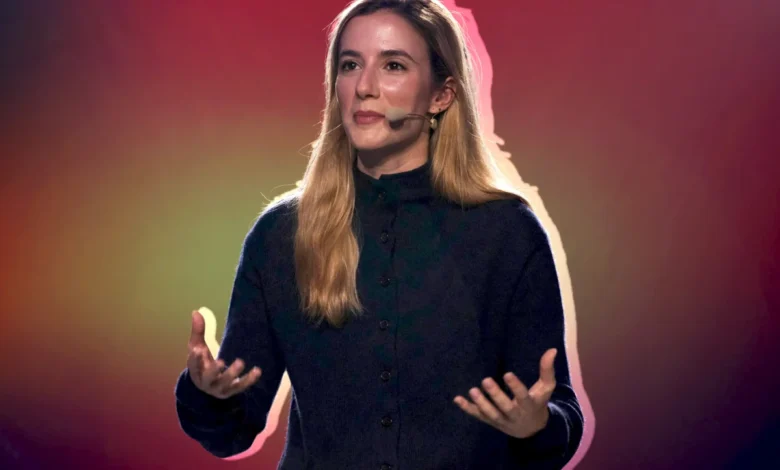
Luana Lopes Lara stands today as a testament to an unconventional career path, transitioning from the rigorous, high-pressure world of elite classical ballet to the pinnacle of global finance. At just 30 years old, Lopes Lara has been recognized by Forbes as the world’s youngest self-made female billionaire, boasting a net worth of $2.6 billion. Her ascent to this extraordinary financial milestone—unseating high-profile figures such as Taylor Swift and tech entrepreneur Lucy Guo in late 2025—was forged through intense early discipline, academic rigor, and the creation of Kalshi, the first federally regulated financial exchange dedicated exclusively to event-based trading.
Main Facts: The Rise of a Financial Pioneer
The core of Lopes Lara’s immense wealth stems from her role as co-founder and chief technology officer of Kalshi, an innovative prediction market exchange. Founded alongside Tarek Mansour, Kalshi allows everyday users and institutional participants alike to buy and sell yes-or-no contracts tied to the outcomes of real-world future events. These contracts span a vast array of topics, including upcoming federal elections, macroeconomic indicators like inflation and employment data, weather patterns, and major sporting events.
While prediction markets have historical roots in academic institutions and niche online communities, Kalshi’s distinction lies in its regulatory compliance. Operating under the strict oversight of the Commodity Futures Trading Commission (CFTC), Kalshi bridges the gap between speculative forecasting and regulated financial derivatives. Under Lopes Lara’s operational and technical guidance, the platform has scaled dramatically, reflecting a massive, previously untapped market appetite for trading real-world outcomes. Recent industry evaluations place Kalshi’s valuation at an estimated $22 billion, with ongoing funding rounds signaling even higher valuations as the company eyes public market listings and international expansion.
Chronology: From the Bolshoi Theater to Wall Street and Silicon Valley
Lopes Lara’s journey to becoming a self-made billionaire is defined by a distinct chronology of high-stakes environments, beginning in her native Brazil and culminating in the heart of the global financial technology sector.
As a teenager, Lopes Lara immersed herself in the grueling world of professional dance, studying at the prestigious Bolshoi Theater School in Brazil. The environment was notoriously cutthroat, characterized by intense rivalries where students occasionally resorted to extreme tactics, such as hiding glass fragments in competitors’ pointe shoes, to secure leading roles. Managing this competitive pressure required relentless time management; Lopes Lara attended technical school during the morning hours before dedicating her afternoons and evenings entirely to rigorous ballet training. This formative environment instilled a level of mental fortitude and physical endurance that would later define her entrepreneurial career.
Shifting her focus from the arts to analytical sciences, Lopes Lara enrolled in higher education, where she crossed paths with Tarek Mansour. Both pursued demanding academic programs—Lopes Lara majoring in computer science and mathematics, and Mansour focusing on electrical engineering, computer science, and mathematics. Their academic partnership began organically in shared classes, where Lopes Lara’s habit of sitting in the front row drew the attention of peers seeking academic excellence.
During her college summers, Lopes Lara gained critical industry experience interning at prominent quantitative trading firms, including Five Rings in New York. It was during an internship in 2018 that a casual observation planted the seed for Kalshi. While scrolling through social media, she noticed widespread public speculation regarding whether celebrity entrepreneur Kylie Jenner was pregnant. Eager to formalize the debate, Lopes Lara realized there was no legal, mainstream platform where individuals could place financial wagers on cultural or news-driven events. Recognizing a systemic void where millions of people held strong convictions about future events but lacked a regulated outlet to express them, she teamed up with Mansour to build the infrastructure that would become Kalshi.
Supporting Data and Market Implications
The valuation metrics surrounding Kalshi underscore a broader macroeconomic shift toward alternative asset classes and retail-accessible financial products. When Lopes Lara and Mansour launched the platform in 2018, the regulatory hurdles were immense. Convincing federal regulators to approve a market dedicated to wagering on elections, weather anomalies, and political outcomes required unprecedented legal and technical frameworks.
The strategy paid off exponentially. By December 2025, Kalshi’s exponential transaction volume propelled Lopes Lara’s equity stake to a net worth of $2.6 billion, officially making her the youngest self-made woman billionaire globally. This milestone reflects a broader generational wealth shift, as tech-native founders in their twenties and thirties capture market share by digitizing and democratizing traditional financial concepts. Industry analysts note that prediction markets are increasingly utilized not just by retail speculators, but by corporate entities and policymakers seeking alternative sentiment data that often outperforms traditional polling methods.
Leadership Philosophy and the "Probability Trap"
Beyond her technical contributions, Lopes Lara has garnered significant attention within the startup community for her distinctive philosophy on leadership, risk, and corporate culture. In recent media appearances, including a detailed interview on the podcast Confession with Ali Partovi, she warned against a psychological pitfall common among analytical founders: becoming "obsessed with probabilities."
Lopes Lara articulated that hyper-rational founders often paralyze their organizations by over-analyzing statistical failure rates, effectively psyching themselves out of pursuing ambitious ideas. According to her, if a startup’s workforce is consumed entirely by the mathematical probability of failure, the internal culture devolves into a hyper-negative environment that overreacts to every minor piece of incoming data. To counteract this, Lopes Lara advocates for fostering an organizational culture driven by radical optimism and an intrinsic desire to build, emphasizing that calculated risk-taking and an inherent belief in eventual success are non-negotiable prerequisites for breakthrough innovation.
Broader Impact and the Future of Prediction Exchanges
The rapid maturation of Kalshi under Lopes Lara’s leadership signals a fundamental evolution in how society processes and prices uncertainty. By transforming geopolitical events, economic data releases, and cultural milestones into tradeable assets, the platform has effectively created a real-time crowdsourced forecasting mechanism. Financial economists have increasingly looked to Kalshi’s order books as reliable leading indicators for legislative votes and central bank interest rate decisions, often rivaling traditional expert consensus.
As regulatory bodies globally observe Kalshi’s integration into mainstream finance, the implications for traditional gambling, insurance, and investment sectors are profound. Lopes Lara’s vision extends far beyond current market offerings; she actively champions a future where virtually any quantifiable future event can be hedged or traded. By bridging the gap between rigorous mathematical science, regulatory compliance, and cultural intuition, Luana Lopes Lara has not only secured a historic financial milestone for herself but has fundamentally rewritten the playbook for modern market creation.