How Claude Integrations are Transforming Go-To-Market Operations and Solving the Context Switching Crisis

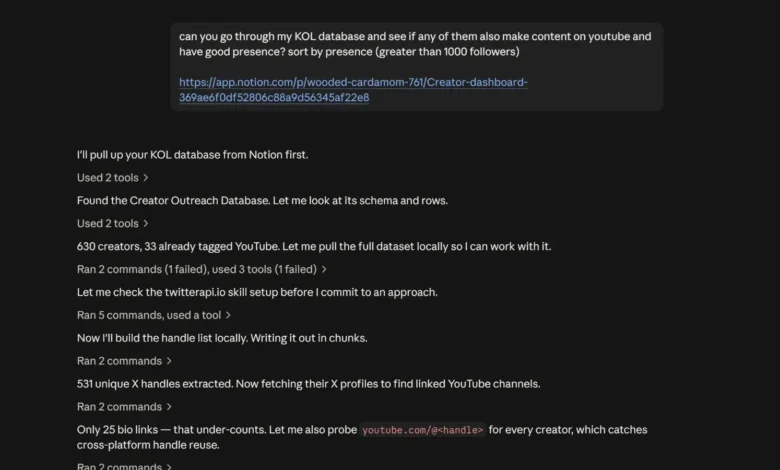
The modern marketing and sales landscape has become increasingly fragmented, with teams juggling a disparate array of digital tools to manage customer relationships, project workflows, and content generation. Research suggests that the average enterprise employee switches between apps more than 1,000 times per day, a phenomenon known as "context switching" that significantly degrades cognitive focus and operational efficiency. To address this, Anthropic has introduced Claude connectors, a sophisticated integration layer built on the Model Context Protocol (MCP) that allows the Claude AI assistant to interface directly with external platforms like HubSpot, Slack, and Salesforce. By enabling Claude to read, write, and analyze data across these services, businesses are moving away from manual data entry toward an automated, intelligence-driven workflow.
The Evolution of AI-Assisted Workflows

The history of AI in the workplace has largely been defined by isolated experiences. In the early stages of the generative AI boom, tools like Claude functioned primarily as "walled gardens"—standalone interfaces where users had to manually copy and paste data to receive meaningful analysis. This manual process was not only inefficient but also prone to human error and security risks. The introduction of the Model Context Protocol represents a significant architectural shift. Developed as an open standard, MCP allows AI models to discover and call tools in a manner analogous to how a browser interacts with an API. This development marks the transition from static AI chatbots to active, agentic systems capable of executing complex multi-step tasks across a company’s entire software stack.
How Claude Connectors Operate: The Technical Foundation
Claude connectors function as a bridge between the AI’s reasoning capabilities and a user’s operational data. When a user authenticates a connector, Claude does not gain a "master key" to the organization’s systems. Instead, it inherits the specific permissions assigned to that individual user. If a sales representative is authorized to view a specific set of deal records in a CRM, Claude is restricted to that same visibility.

From a technical perspective, the integration process is designed for security and auditability. Every action taken by Claude—whether it is drafting an email, updating a deal stage, or summarizing a support ticket—is logged within the source application. This ensures that managers can audit AI activity with the same rigor they apply to human employee activity. By operating within the existing security guardrails of the host platforms, organizations can adopt these integrations without reconfiguring their entire data governance framework.
Strategic Use Cases in Marketing and Sales
The implementation of Claude connectors has proven particularly transformative for Go-To-Market (GTM) teams. Marketing departments, for instance, are utilizing the HubSpot Connector for Claude to streamline end-to-end campaign management. Instead of pulling call transcripts from one app, manually drafting copy in another, and updating a CRM record in a third, marketers can now prompt Claude to execute the entire sequence. Industry data indicates that teams leveraging these deep-linked AI integrations have reported up to a 40% increase in productivity across content creation and lead nurturing workflows.

In the realm of sales, the integration of real-time CRM context is a game-changer. Sales professionals often spend hours preparing for calls by aggregating data from various sources. With Claude connectors, an account executive can request a pre-call briefing that synthesizes engagement history, recent support ticket activity, and deal stage velocity in seconds. This allows the sales team to pivot from administrative data gathering to high-value strategic interaction with prospects.
Cross-Functional Impact and Organizational Synergy
Beyond individual productivity, the broader implication of Claude integrations is the creation of a centralized "intelligence layer" for an organization. Platforms like Slack and Notion, when connected to Claude, allow teams to query their own internal knowledge base. A RevOps lead, for example, can task Claude with synthesizing a week’s worth of internal communication across multiple Slack channels to generate a project roadmap or identify emerging product escalations. This capability turns passive historical data into an active asset, enabling leadership to make data-informed decisions without needing to navigate complex internal silos.

Data security remains the primary concern for large-scale adoption. To mitigate risks, organizations are increasingly employing admin-managed allowlists. By strictly controlling which connectors are approved for use and enforcing role-based access controls, enterprises can ensure that sensitive information—such as PII (Personally Identifiable Information) or proprietary financial data—is handled according to strict compliance standards. Furthermore, Anthropic has committed to not using data shared through these connectors for model training, a vital distinction for companies concerned with data privacy and intellectual property.
Fact-Based Analysis of Implementation Challenges
While the benefits of these integrations are significant, they are not without challenges. The primary obstacle for many firms is the "data quality" threshold. Because Claude relies on the context it is provided, the accuracy of its output is strictly limited by the quality of the data in the host application. If a CRM is populated with outdated or incomplete records, the AI’s analysis will reflect those flaws. Consequently, companies are finding that the move toward AI integration necessitates a simultaneous improvement in data hygiene and record-keeping practices.

Additionally, not every workflow is a candidate for full automation. During the evaluation process, organizations must distinguish between "high-intent" tasks—those that require human nuance, such as complex contract negotiations—and "high-volume" tasks, such as ticket triage or routine outreach, which are prime candidates for AI intervention. The most successful organizations are those that adopt a "human-in-the-loop" approach, where Claude handles the information synthesis and drafting, while human professionals handle the final validation and strategic decision-making.
The Future of Connected AI Ecosystems
As the ecosystem of connectors continues to expand, the reliance on proprietary, manual workflows is expected to decline. The current roadmap for Anthropic suggests that more connectors for niche industry software are in development, further bridging the gap between general-purpose AI and domain-specific operational needs. The shift is clear: the future of work will not be defined by how many tabs a user can manage, but by how effectively they can orchestrate AI agents to perform work across their entire digital ecosystem.

The economic implications of this shift are profound. By reducing the time spent on low-leverage, manual tasks, businesses can reallocate human capital toward innovation, creative strategy, and long-term relationship building. For companies that have not yet begun the transition to integrated AI, the competitive disadvantage is twofold: they are not only losing the efficiency gains of automation but are also failing to leverage the full depth of the data they already possess.
In conclusion, Claude integrations represent a fundamental maturity in the application of generative AI in the enterprise. By moving beyond the novelty of chatbots and into the realm of integrated, permission-aware agents, Anthropic has provided a framework that aligns with the realities of modern business operations. As organizations continue to refine their internal data strategies and adopt these connective technologies, the focus will increasingly shift from the AI model itself to the richness of the context provided to it, marking the next chapter in the digital transformation of the global workforce.