Mastering the Discovery Call: How Technical Teams Balance Expertise and Inquiry in the Age of Agentic AI

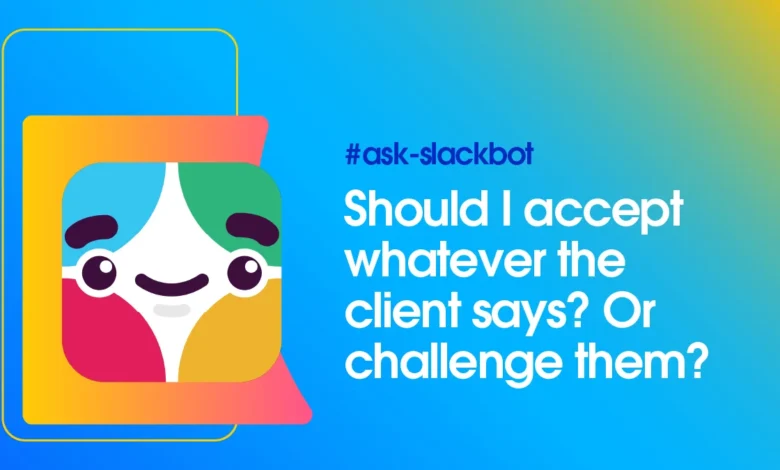
The modern technology sector operates at an unprecedented velocity, driven largely by the integration of agentic artificial intelligence into enterprise workflows. Within this rapidly evolving landscape, forward-deployed engineers face a delicate professional balancing act. These specialized technical professionals must walk a fine line during client discovery calls, acting simultaneously as authoritative domain experts and empathetic, attentive listeners. This dual mandate often creates friction for engineers who find themselves oscillating between two unproductive extremes: accepting initial client directives without critical examination or subjecting stakeholders to aggressive interrogations that resemble cross-examinations rather than collaborative sessions.
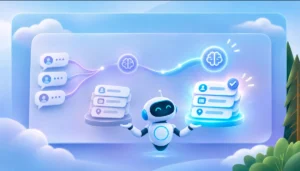
To address these challenges, enterprise platforms and industry experts are increasingly turning to advanced digital assistants to analyze historical communication patterns, client implementations, and technical documentation. By leveraging data-backed insights harvested securely within enterprise-grade architectures like the Salesforce Trust Layer, organizations are discovering repeatable methodologies to refine client interactions. The core objective of these interventions is to help technical teams challenge customer assumptions without appearing adversarial, ensuring that software development projects align precisely with underlying business needs rather than superficial initial requests.
The Evolution of Technical Discovery in Enterprise Software
Historically, the client onboarding process in enterprise software development relied heavily on rigid requirements-gathering phases. Clients presented comprehensive specification documents, and engineering teams executed them. However, the rise of sophisticated, agentic AI has transformed software deployment into an iterative, highly collaborative journey. Forward-deployed engineers are now embedded earlier in the customer lifecycle, often participating in initial discovery calls when project scopes remain fluid and customer opinions are deeply entrenched.
Industry research consistently demonstrates that clients who arrive at discovery sessions with rigid, predetermined opinions have typically lived with their specific pain points for extended periods. Consequently, their requested solutions often manifest as compressed, highly edited narratives of operational frustration. For technical experts entering these environments, the primary professional hazard involves accepting these initial proposals at face value, thereby bypassing the crucial root-cause analysis necessary for long-term software success. Conversely, aggressively dismantling a client’s preconceived notions can alienate key stakeholders, eroding the trust required for a successful implementation.
Analyzing Client Conversations Through Data-Driven Insights
Recent workplace analyses conducted via advanced collaboration tools shed light on how top-tier engineers successfully navigate this dichotomy. By examining anonymized message threads, project kickoff notes, and mid-build design pivots, communication experts have identified several actionable patterns that bridge the gap between technical authority and active listening.
Treating the initial customer request as a draft rather than a definitive verdict serves as a foundational principle. Rather than openly disputing a client’s technical proposal, successful engineers prompt stakeholders to describe the specific operational events that led them to view their chosen approach as the obvious remedy. Observational data from recent enterprise implementations reveals that original architectural plans are frequently replaced mid-build by alternative designs once underlying workflows are fully understood. The initial customer ask is rarely invalid; rather, it typically represents only a fraction of the broader operational picture.
Refining Interrogative Language: From Confrontation to Collaboration
The linguistic framing of questions during discovery sessions significantly influences client reception and project outcomes. Communication specialists emphasize the importance of substituting confrontational interrogatives with outcome-oriented inquiries. For example, asking why a client demands a specific feature can easily be interpreted as a direct challenge to their judgment. In contrast, inquiring about the specific operational capabilities that a feature unlocks for their team signals genuine professional interest while extracting the exact same technical intelligence.
Data analysis of high-performing engineering channels highlights the efficacy of collaborative phrasing. Instead of asserting disagreement, successful technical leaders frequently introduce empirical data into the dialogue. Phrases such as "Here is what I am observing in the numbers" prove significantly more palatable to stakeholders than declarative statements of dissent. By presenting concrete metrics—such as the exact count of existing mapping records or categorization hierarchies—engineers enable clients to independently arrive at necessary architectural conclusions. When stakeholders reach these realizations autonomously, the resulting design modifications demonstrate considerably higher adoption rates during subsequent deployment phases.
The Strategic Value of Intellectual Transparency
Another critical dimension of modern technical discovery involves the strategic admission of knowledge gaps. Within complex enterprise environments characterized by rapid technological advancement, absolute omniscience is an unrealistic expectation. Enterprise communications data indicates that technical leads who explicitly delineate their domains of absolute confidence from areas requiring collaborative validation routinely foster more productive working environments.
By opening technical write-ups and kickoff sessions with transparent statements regarding what is known and what requires further investigation, engineers effectively disarm defensive client postures. This approach
aligns with timeless philosophical tenets regarding intellectual humility, demonstrating to clients that technical authority does not preclude a willingness to learn.
Implications for the Future of Technical Consulting
The implications of these communication methodologies extend far beyond individual software deployments. As artificial intelligence systems take over routine coding and administrative tasks, the human element of software engineering increasingly centers on high-level problem framing, stakeholder alignment, and consultative diplomacy.
Organizations that systematically train their forward-deployed engineers to master the art of consultative inquiry are observing measurable improvements in project delivery timelines and client satisfaction scores. By replacing adversarial interrogation with evidence-backed exploration and intellectual transparency, technical teams can successfully uncover foundational business requirements without alienating the stakeholders they serve. Ultimately, the modern engineer’s mandate is not to dominate the discovery room with answers, but to enter the conversation equipped with superior questions, leaving the definitive building for collaborative phases yet to come.
Related posts: