Google AI Max Unlocks Billions in New Ad Opportunities as Alphabet Shifts Search Paradigm Toward Conversational Intent

During Alphabet’s Q2 2026 earnings call, Google executives unveiled a transformative milestone in the evolution of digital advertising, announcing that its AI Max platform has successfully exited its beta phase and is now actively monetizing billions of previously untapped search queries. The transition marks a pivotal moment for the technology giant as it moves away from traditional keyword-based advertising toward a sophisticated, intent-driven model powered by large language models. Philipp Schindler, Google’s Senior Vice President and Chief Business Officer, detailed how AI Max is bridging the gap between complex user inquiries and commercial relevance, effectively expanding the total addressable market for Search revenue.
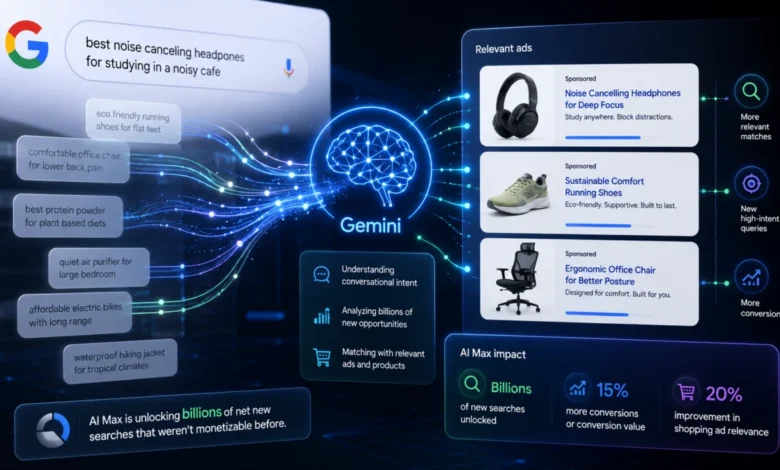
The core of this advancement lies in Google’s ability to decode "unmonetized" searches—queries that were historically too long, conversational, or ambiguous for standard keyword matching to address. By leveraging the Gemini generative AI architecture, Google is now able to interpret the underlying intent of these complex interactions, allowing advertisers to reach consumers in moments that were previously invisible to the ad auction system. This shift represents not just an incremental improvement in ad delivery, but a fundamental redesign of how Alphabet approaches the search ecosystem in an era dominated by conversational AI.
The Evolution of AI-Driven Advertising: From Beta to Global Scale
The journey toward AI Max began as part of Google’s broader initiative to automate the advertising lifecycle, following the successful implementation of Performance Max (PMax) in previous years. While PMax focused on cross-channel optimization, AI Max was designed specifically to handle the nuances of the "AI-first" search experience. According to the Q2 2026 report, the platform has seen rapid adoption, with more than 500,000 advertisers integrated into the system since its limited release.
The transition out of beta signifies that AI Max is now the primary engine for Google’s next-generation search ad inventory. Advertisers utilizing the tool have reported an average 15% increase in conversions or conversion value, maintaining a consistent return on ad spend (ROAS). This efficiency is attributed to the platform’s ability to dynamically generate ad headlines, descriptions, and visual assets that align perfectly with the specific context of a user’s conversational query.
The timeline of this rollout suggests a strategic response to the changing landscape of information retrieval. In 2024 and 2025, Google integrated Gemini-powered summaries into the top of search results. However, the monetization of these summaries remained a point of skepticism among market analysts. The 2026 data confirms that Google has solved the "monetization gap" by creating ad formats that feel native to the AI-generated response, rather than disruptive to it.
Gemini and the 20% Relevance Leap in Shopping Ads
A significant portion of the earnings call focused on the technical prowess of the Gemini model in enhancing the Shopping experience. Google reported that Gemini has improved the relevance of Shopping ads for complex queries by approximately 20%. This metric is particularly vital for the retail sector, where the path to purchase often involves specific, multi-layered requirements.
For example, a traditional search for "running shoes" is easily monetized via keywords. However, a conversational query such as "I need waterproof running shoes for a marathon in a rainy climate that offer extra arch support for flat feet" creates a challenge for keyword-only systems. Gemini’s ability to parse this long-tail query allows Google to match it with highly specific product feeds. It interprets the "waterproof" requirement, the "marathon" durability need, and the "arch support" medical specification simultaneously, serving an ad that meets all three criteria.
This "interpretive matching" reduces the friction between the user’s need and the advertiser’s offering. By understanding commercial intent rather than just matching strings of text, Google is effectively turning the Search bar into a digital personal shopper. This has led to higher click-through rates (CTR) and a decrease in wasted ad spend for brands that maintain high-quality product data feeds.
Strategic Shift: Moving Beyond the Keyword Era
For over two decades, the "keyword" has been the fundamental unit of currency in digital marketing. Google’s latest announcements signal that this era is rapidly concluding. The company is encouraging advertisers to focus less on bidding for specific words and more on providing high-quality creative assets, comprehensive product feeds, and optimized landing pages.
This shift toward "signal-based matching" means that Google’s AI now takes the lead in determining which ad best serves a user’s query. While this provides a significant boost in performance and reach, it also fundamentally alters the role of the search engine marketer. The industry is moving from a tactical role—managing bids and keyword lists—to a strategic role—managing data inputs and brand messaging.

The "billions" of searches mentioned by Schindler refer to the long-tail of the internet. Historically, about 15% of daily searches on Google are entirely new, never-before-seen queries. In the past, these were often left without ads because no advertiser had bid on those specific, unique combinations of words. AI Max eliminates this limitation by recognizing the "intent" behind those unique queries and matching them with relevant existing campaigns.
Official Responses and Market Reactions
The financial community has responded positively to the Q2 2026 earnings, particularly noting the resilience of Search revenue in the face of rising competition from alternative AI search platforms. Analysts from major financial institutions noted that Google’s ability to maintain a 15% lift in conversions suggests that the AI-led transition is not just a defensive move, but an offensive growth strategy.
Philipp Schindler emphasized that AI Max is "not just a feature, but a foundational pillar" of how Google will grow its inventory. "We are seeing a democratization of complex search," Schindler stated during the call. "Users are no longer afraid to ask the search engine difficult, multi-step questions. AI Max ensures that our advertising partners are present for those high-value conversations, providing answers and products in real-time."
Advertiser reactions, however, remain a mix of optimism and caution. While the 15% conversion lift is a compelling headline figure, some digital marketing agencies have expressed concerns regarding "black box" transparency. As Google’s AI takes more control over query matching, advertisers have less visibility into the specific search terms that triggered their ads. This lack of granular data makes it more difficult for brands to conduct traditional market research based on search trends.
The Rise of "AI Mode" Ads
Another significant revelation from the earnings call was the progress of "AI Mode" ads. As Google Search evolves into a more interactive, chat-like interface, the company is testing ad formats that are integrated directly into the conversational flow. These ads are designed to appear as helpful suggestions within the AI’s response.
Unlike traditional sponsored links that sit at the top of a page, AI Mode ads might appear as a "recommended next step." For instance, if a user is using Google to plan a vacation itinerary, the AI might suggest a specific hotel or travel insurance provider as part of the planning process. This integration represents a shift from "interruption marketing" to "utility marketing," where the ad is perceived as a valuable part of the information-gathering process.
Broader Impact and Industry Implications
The implications of AI Max extend far beyond Alphabet’s balance sheet. The broader digital economy is likely to see several cascading effects:
- The Premium on First-Party Data: As keyword targeting wanes, the importance of an advertiser’s first-party data increases. Google’s AI needs to understand who an advertiser’s ideal customer is to find them among billions of conversational queries.
- Creative as the New Variable: With bidding and targeting handled by AI, the primary way for a brand to differentiate itself is through its creative assets. High-quality imagery, video, and persuasive copy are becoming the main drivers of performance.
- SEO and SEM Convergence: The line between organic search and paid search is blurring. If AI is interpreting intent to serve ads, it is doing the same to serve organic results. Brands must ensure their websites are structured in a way that AI can easily "read" and understand their value proposition.
- The Death of the "Zero-Click" Concern: For years, publishers and advertisers feared that AI summaries would lead to "zero-click" searches, where users get their answers without clicking through to a site. AI Max suggests that Google is countering this by turning those summaries into high-intent click-through opportunities, effectively monetizing the "answer" itself.
Conclusion: A New Frontier for Search
Alphabet’s Q2 2026 earnings call serves as a definitive statement on the future of the internet’s most profitable business model. By unlocking billions of previously unmonetized searches, Google has demonstrated that AI is not a threat to the search ad business, but its greatest catalyst for expansion.
The move from keywords to intent, powered by the technical sophistication of Gemini and the automated reach of AI Max, ensures that Search remains the central hub of global commerce. As the platform continues to evolve, the success of advertisers will increasingly depend on their ability to feed the AI "engine" with the right signals, assets, and data, ushering in a new era of highly personalized, conversational, and effective digital advertising.
The "Bottom Line" for the industry is clear: AI Max is the new standard. It is no longer an experimental tool for early adopters, but the primary infrastructure through which the world’s most powerful search engine will generate its next era of growth. For Alphabet, the path to expanded Search revenue is now firmly paved with artificial intelligence.